You open a grocery app and the price of milk jumps mid-checkout. I remember the moment I realized something unseen was controlling who pays more. That small shock is the very thing Maryland says it wants to stop.
I’ve tracked these laws and the lobby fights pushing against them; you should know what passed, what didn’t, and why it matters to anyone who buys food.
I watched a shopper scan two barcodes and wince at the difference. What the new Maryland law actually does
Governor Wes Moore has signed the Protection From Predatory Pricing Act, a law that stops food retailers and third-party delivery services from using personal data to set individualized grocery prices. On paper, it targets “surveillance pricing” — the practice of adjusting a price for a person based on things like ZIP code, purchase history, race, or inferred income.
The law applies to grocery stores, supermarkets, and food delivery platforms. The state Attorney General is the only official with power to enforce it, and that matters because the AG’s office already juggles many priorities.
What is surveillance pricing?
It’s dynamic pricing driven by data about you — not just supply and demand but your profile. Think of it like surge pricing on a ride app but aimed at essentials: algorithms that can raise or lower the cost of the same item depending on who’s buying.
A cashier shrugged while a manager scrolled a tablet. How the law leaves openings
At checkout, I heard staff say some prices are set by “the system.” That system still finds gaps in Maryland’s law.
Consumer Reports flagged several flaws before the bill became law: the ban only covers personalized higher pricing without defining a baseline price, it forbids individual-level customization but not hyper-specific groups, and it exempts loyalty memberships and subscription-linked pricing. Those carve-outs mean a retailer could advertise a “discount” while quietly charging higher prices to certain customers.
- Ban applies only when personal data is used to set a higher individualized price — no defined standard price means every offer can be framed as a discount.
- Law blocks individualized prices but allows niche segment pricing (for example: “shoppers over 70 who live alone”), which can replicate the same harm at scale.
- Loyalty and subscription pricing are exempted, even if those channels result in higher prices for some people.
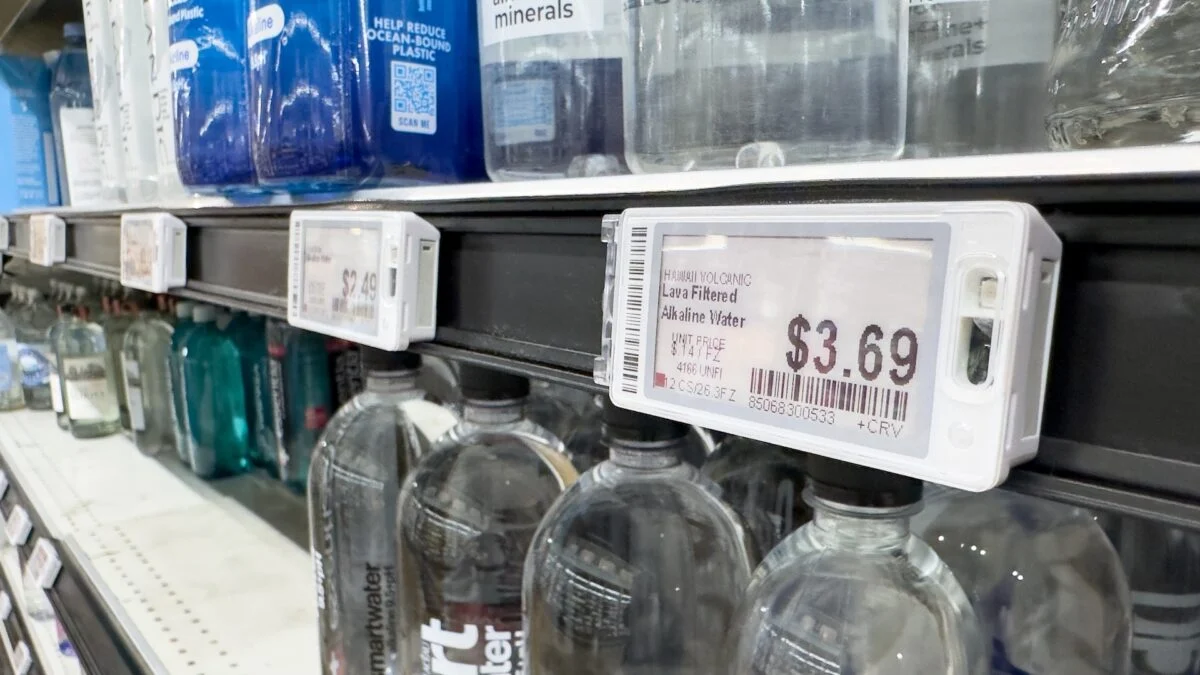
That’s why Ademola Oyefeso, UFCW International Vice President, compares this future to automated systems that can flip prices multiple times a day. He warns that electronic shelf labels — the digital tags Walmart is rolling out nationwide — make minute-to-minute changes plausible. In his words, letting a program tweak essentials day-to-day would feel like living under the command of a screen. I agree you shouldn’t have to fight a machine for fair prices.
Does Maryland’s law protect shoppers?
Not fully. It is a defensive move but not a finished shield. Enforcement rests with one office, the law’s scope is limited to food, and industry-friendly exemptions leave room for algorithmic pricing to continue in practice.
I checked bill trackers in New York, New Jersey, and Illinois. What comes next
Legislatures in at least a dozen states are watching Maryland and drafting their own bans; New York, New Jersey, and Illinois are among those actively considering measures.
Some advocates hope states will tighten language: set clear baseline prices, close the segmenting loophole, and give local attorneys general or consumer bureaus more authority to bring cases. Unions like UFCW have produced short ads and grassroots campaigns to make the public picture of algorithmic price-gouging stick. Consumer Reports continues to press for stronger protections.
Tech and retail players are already part of the debate. Walmart has argued that electronic shelf labels are modernization and says humans remain in the loop, even as patents and internal systems suggest dynamic pricing is on the roadmap. Meanwhile, platforms that invented surge pricing — Uber among them — provide the operational model companies might copy if regulators don’t close the gaps. If algorithms become a revolving door of prices, shoppers could be left guessing who pays more and why. Could a business model become a digital slot machine for who gets the best deal?
Which states are considering similar bans?
New York, New Jersey, and Illinois are notable examples with active proposals. Several other states have draft language or hearings scheduled. The coming legislative sessions will be where the differences between symbolic bills and enforceable protections are decided.
You should watch three things in the next round of bills: whether lawmakers define a standard price, whether they close the segmenting and loyalty exemptions, and who can sue to enforce the rules. If those boxes aren’t checked, Maryland will have signaled permission more than protection — and you might still pay the price; what will legislators do next?