
I opened a Glassdoor post before my coffee and watched replies stack up like unread notifications. You felt the charge of it too—the single line about unpaid overtime that sent players and journalists scrambling. I’ve seen how one claim can collapse into a chorus demanding answers.
A Glassdoor post hit X and the threads lit up: GTA 6 Devs ‘Overworked’? Glassdoor Review Claims Crunch at Rockstar Ahead of Release
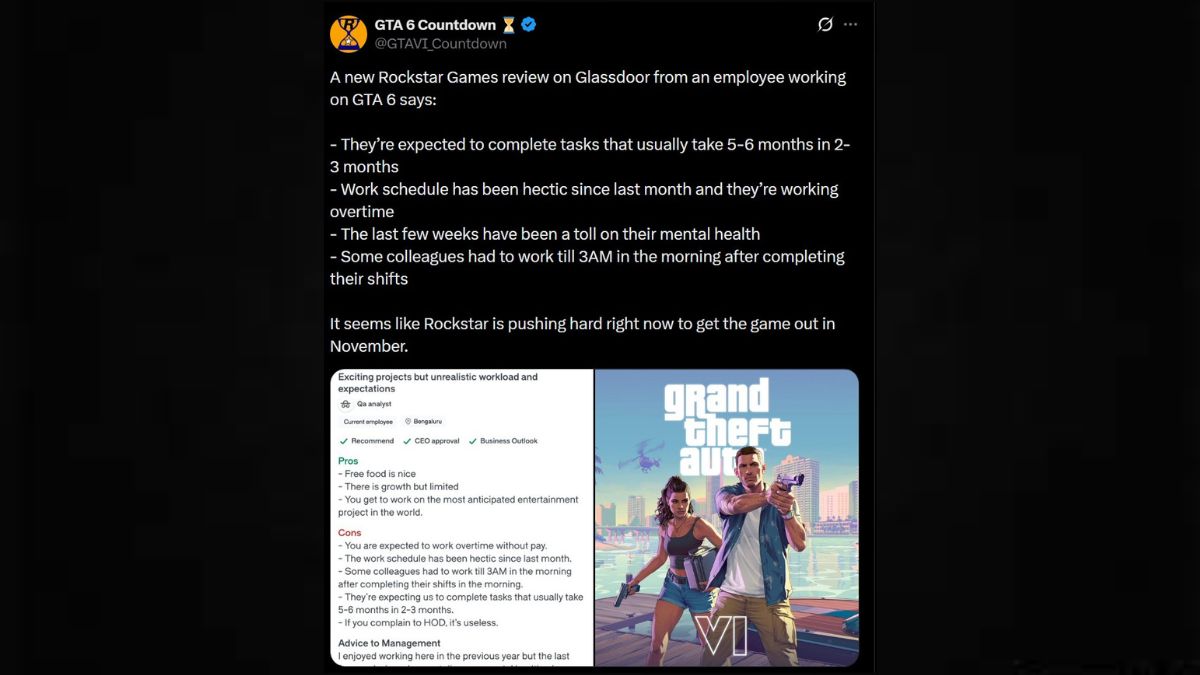
I’ll tell you what matters and what’s noise. The review claims developers on GTA 6 are working “overtime without pay” and that raising the issue with the HOD is pointless. That single complaint is now splashed across X, Reddit, and coverage from outlets like IGN and Kotaku, and it’s forcing Take-Two and Rockstar Games into a fast PR orbit.
Are GTA 6 developers overworked?
There’s a habit in games journalism—one post becomes a headline, then a rumor, then a timeline that everyone treats like fact. I checked the timestamps, replies, and reposts: the original Glassdoor entry came from an anonymous profile and was amplified by fans worried about GTA Online’s massive cash flow. Remember, GTA Online has been reported to pull in about $1 billion (€920M) in regular revenue streams, so the optics sting. The claim itself is plausible in an industry that still tolerates crunch cycles, but proof requires multiple corroborating voices inside the studio or an independent audit.
The studio response so far is quiet and formal. Rockstar’s public statements historically come through Take-Two’s PR machine or company-wide memos; both are designed to stop panic, not always to answer every detail. You should expect internal HR threads, LinkedIn whispering, and senior developers who might leak context—either to defend practices or confirm them.
The team’s situation feels immediate: deadlines for a global franchise release, millions of players waiting, and a staff under pressure. The studio has become a pressure cooker. If multiple anonymous reviews point in the same direction, that builds a pattern that reporters and regulators will follow.
Can Glassdoor reviews be trusted?
Glassdoor is a blunt instrument: it offers firsthand accounts and equal doses of grievance. I’ve used it as a source for reporting and seen both whistleblowers and trolls. A single review can be legitimate, satirical, or maliciously timed. Your job as a reader is to watch for corroboration: repeated claims across profiles, matching LinkedIn departures, internal Slack logs published to X, or confirmation from a union rep if one exists.
Platforms matter here. X accelerates outrage, Reddit groups collect patterns, and journalistic outlets triangulate with public records and former employees. When I verified past crunch stories, a combination of payroll records, exit interviews, and multiple independent sources sealed the narrative. Until that happens, treat one Glassdoor post as a signal worth checking, not a verdict.
Is Rockstar enforcing crunch on GTA 6?
I watched community reaction shift from anger to policy demands within hours. Veteran fans reminded each other that Rockstar’s culture has been debated for years, that AAA development timelines breed burnout, and that quality demands can translate into mandatory overtime. That historical context matters when interpreting a fresh accusation.
Rockstar and Take-Two face incentives: they want GTA 6 to launch polished, and they also monetize GTA Online heavily. When a company pulls in large sums, you expect worker protections to follow; when transparency is missing, suspicion fills the gap. The team’s morale is a fraying rope.
What happens next will depend on three things: whether more employees speak up, whether mainstream outlets like The New York Times or Bloomberg pick the story up, and whether regulators or industry groups press for labor reviews. Games unions and organizations such as Game Workers Unite have become faster at responding to these claims than they were a few years ago, which changes the dynamics.
I’ve covered studios where a single anonymous post led to formal investigations, and others where it vanished under legal pressure. You should watch for concrete indicators: payroll leaks, mass resignations on LinkedIn, HR responses that confirm policy changes, or independent audits. Absent those, the debate lives in opinion threads and influencers’ livestreams.
Whatever you believe about this review, it has already shaped expectations for GTA 6’s launch: more scrutiny, louder fan demands, and a spotlight on workplace conduct. That spotlight is turning companies into case studies overnight, and public pressure is now part of how the games industry manages reputation.
So you’re left with a choice as a reader and a fan: accept the statement at face value, investigate the signals yourself, or wait for corroboration. I’ll be watching the follow-ups on X, the reposts on Reddit, and any statements from Take-Two or Rockstar—and I’ll tell you what they mean when they arrive. If a single review can shift public trust this fast, what will you believe when GTA 6 actually launches?