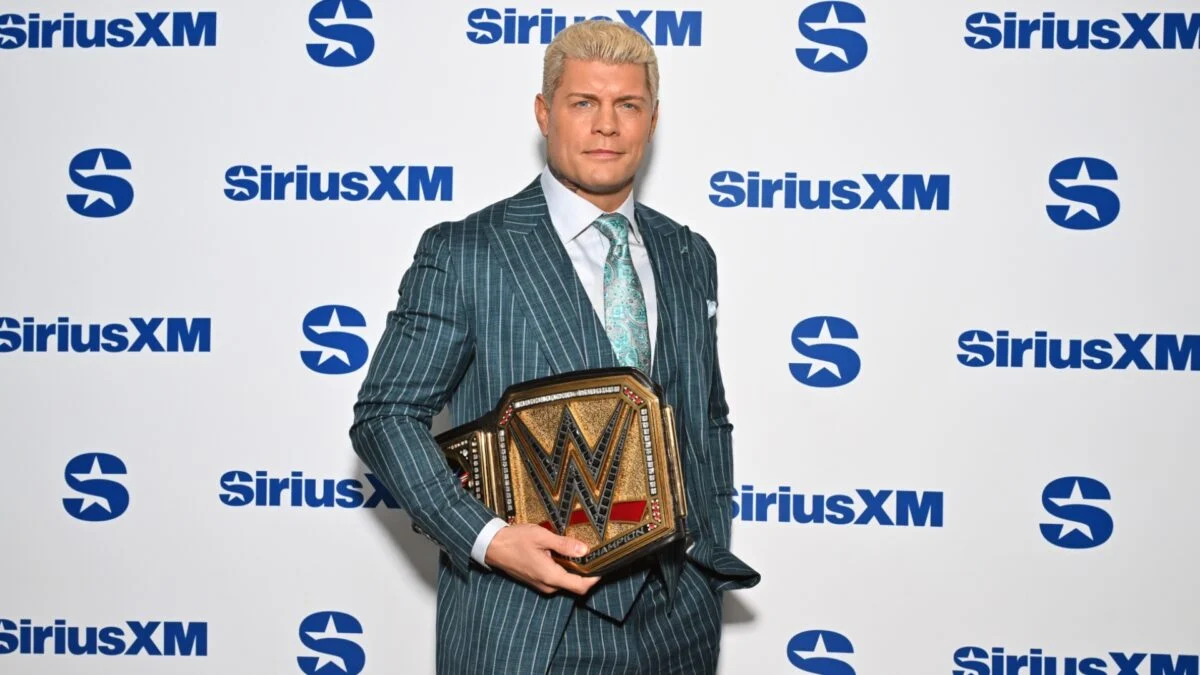
My feed went quiet for a second. A WWE champion—midway through his promo on social—drops a line about Luke Skywalker and suddenly the argument spikes again. You feel it: the private ache of a fan and the public jolt of a hot take crossing arenas.
I’ve chased angles and narratives for years, and this one landed differently. Cody Rhodes didn’t post a dry ranking; he offered a personal lens that hooks wrestling and Star Wars into the same emotional currency. If you follow WWE, Lucasfilm, IGN, or X (formerly Twitter), you’ve already felt the ripple.
I love it. LOVE. But my reason is fairly personal and oddly wrestling related
When these legends come back, they’re not the same. Didn’t want Luke with dyed hair and an 8 pack doing flips…I got a broken old man with one last real punch in him. But it was a helluva punch. Kinda’…
— Cody Rhodes (@CodyRhodes) May 4, 2026
On May 4, my timeline lit up with an IGN ranking and a reply from Cody Rhodes.
He placed The Last Jedi at number four and said he’d swap Episodes VII and V. That alone would be standard fan debate fodder—until someone pointed out his reason was wrestling-shaped. You don’t have to be a ringside regular to see why that matters. Rhodes isn’t a casual fan posting for clout; he’s a storyteller who builds comebacks and legacies for a living.
Why does Cody Rhodes love The Last Jedi?
He framed it as a personal hit. Rhodes wrote that he wanted a Luke who carried scars, not a glitzy action hero — someone real, flawed, and capable of one final, consequential act. That’s a plot beat wrestlers know: the veteran who returns broken but honest, and whose last move rewires how we remember them.
At a WWE show you learn to read physical storytelling; on a screen you learn to read choices.
Rian Johnson’s decision to age Luke and give him a sacrificial, nonviolent payoff mirrors a wrestling comeback that trades flash for meaning. I think of Terry Funk—whose late-career returns rewrote how we measure grit—and Rhodes explicitly nodded to that lineage. The comparison lands because both mediums trade spectacle for truth when they want to hit you hard.
Did Rhodes compare Luke to a wrestler?
Yes. He named Funk and used his own ring experience to explain why the defeated-but-defiant archetype resonates. For Rhodes, Luke’s final act wasn’t weakness; it was a last, unmistakable punch that changed the fight. That image is one of my two metaphors here: it sits in the chest like a worn championship belt that still gleams.
At a glance, fans polarize; under the surface, values align.
You’ll see the usual tribal chatter—countless threads on IGN, io9, and X about betrayal and authorship—but the deeper conversation is about what we want our heroes to mean. J.J. Abrams hid Luke to set up yearning. Rian Johnson answered that longing by making sacrifice the answer. Kathleen Kennedy and Lucasfilm watched this argument ripple through fandom and into franchise strategy. You can trace influence like a heatmap across social platforms.
Here’s why I side with Rhodes on this one: the choice to render a legend human changes how future stories can land. It’s not surrendering to cynicism; it’s accepting that endings can reframe beginnings. My second metaphor: the moment hits the saga as if a comet had burned one last bright trail across a familiar sky.
I’m not trying to shut down the argument. You’re allowed to hate the choice. You’re allowed to love the shock. But when a performer like Rhodes—who builds narratives on crowds, cameras, and precise timing—uses the language of the ring to explain a film, you should listen. He’s translating between two attention economies: the squared circle and the cinema seat.
At the next scroll, you’ll see the same debate returning.
It’ll show up in rankings, podcasts, and articles on platforms from IGN to io9, and in locker-room conversations that leak into morning shows. If you care about cultural sway, watch how a single tweet from a high-profile voice pushes conversations back into Lucasfilm’s orbit and shapes what fans demand next. That influence is measurable in headlines and in the tone of future pitches.
I’ll leave you with this: which version of Luke changes the stories you want to tell about heroes—one who returns flawless, or one who carries his final truth like a scar—and why will you defend it?