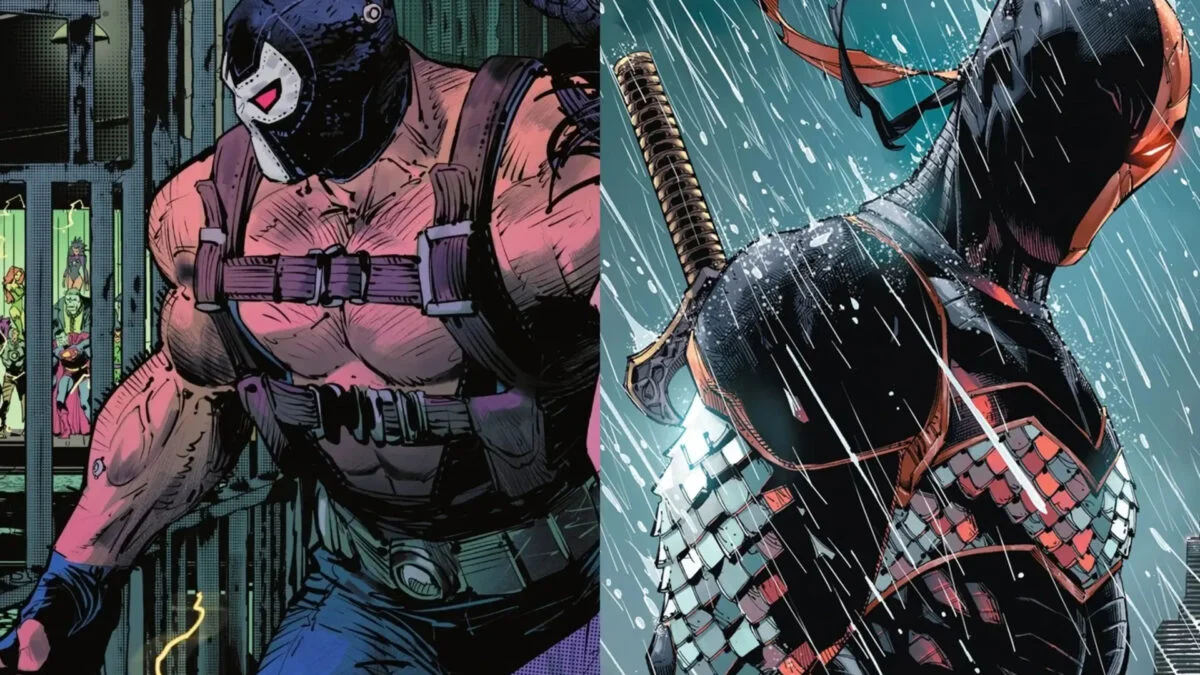
I was standing over a late-night thread of headlines when a line caught my eye: Warner Bros. had quietly kept a Deathstroke and Bane movie alive. You felt the small, sharp relief of a rumor refusing to die.
I write this so you don’t have to chase every crumb. I follow industry moves for a living, and I’ll give you what matters now, what’s speculation, and why the quiet is not the same as cancellation.
On studio slates, titles disappear and reappear like weather reports. Where the Deathstroke/Bane project actually stands
The short version: it’s breathing, but shallow. According to Deadline, Greg Mottola is a frontrunner to direct, yet the film is still very early—no finished script, no signed deals, and no casting locks. That silence from Warner Bros. isn’t unusual; studios often let projects incubate while they test talent fit, tone, and commercial math.
You should track two signals: announcements of a submitted script, and any first-look or producing deals attached to the property. Those are the moments a project moves from hopeful to tangible.
In meetings, TV directors who can handle tonal shifts get extra attention. Why Greg Mottola matters
Mottola’s résumé includes Paul and Confess, Fletch, and critically he directed episodes of Peacemaker, which is why he’s on the shortlist. You can see why a studio would prefer someone who’s proven funny and bruising at once—the job asks for dialogue that bites and action that lands.
His TV work gives him a leg up in tonal calibration; studios now prize directors who can shepherd episodic character work into a two-hour arc. Think of that advantage like a shark circling a wounded ship: it’s not inevitable, but it gives you a clear predatory focus on what the film could be.
Is the Deathstroke and Bane movie still happening?
Short answer: yes, but slowly. Deadline’s reporting confirms active consideration rather than cancellation. Slow movement is common—Warner Bros. has been restructuring its DC strategy after the DCEU shakeups, and projects often queue until a broader plan for character crossovers and release windows is settled.
On screens beyond cinemas, villains keep their presence alive. How Bane and Deathstroke have stayed relevant
Bane has had the bigger box-office footprint—remember Batman & Robin and Christopher Nolan’s The Dark Knight Rises—but both characters live loud in TV and games. Bane will star in WB Animation’s adaptation of the Knightfall storyline, while Deathstroke pops up in Arrow, Young Justice, and many direct-to-video titles.
Those appearances are breadcrumbs, not blueprints: they indicate audience appetite and creative templates. The prior media presence helps the film in two ways—built-in recognition and a repository of character beats writers can mine. That foundation is small cash in a big bank of goodwill, and studios monitor it closely.
Who is directing the Deathstroke and Bane movie?
Deadline lists Greg Mottola as a front-runner, but other candidates were not named. Mottola’s TV skill set—balancing humor, trauma, and kinetic set pieces—matters because a villains-first movie has to sell motive as much as menace. If you’re watching for a directional signal, his potential hiring signals a tonal approach that favors character sketch over pure spectacle.
In fandoms, casting rumors spread like cold weather. What casting signals will tell us the most
There is no obvious “lock” for either villain yet. Casting will be the clearest moment of commitment: a marquee name or a breakout actor attached to Deathstroke or Bane would turn whispers into headlines and trigger marketing plans. You should expect casting leaks, teases, and then an official reveal once the studio is ready to position the film against other DC releases.
Also watch related announcements: a Batman casting, a release window, or a producer credit often accompanies villain leads in order to frame the movie within a shared universe—or not.
Will Batman appear in Deathstroke and Bane?
Short answer: unknown. The film could be a villains-forward story without a mainline Batman, or it might introduce a version of the Dark Knight as a counterweight. Both approaches have precedent in comics and animation; what matters is how Warner Bros. wants to thread this into its wider DC plan, which remains in flux.
Here are the practical things I’d track for you: Deadline scoops, Warner Bros. casting calls, official WB Animation timing (for parallel projects like Knightfall), and Festival or Comic-Con panels where producers often float early footage. Those are the cues that turn industry whisper into public momentum.
Clayface’s September release is the immediate test: if that film lands and marketing finds an audience, Warner Bros. will feel safer greenlighting more villain-led features. That momentum acts like a locked safe slowly being cracked—one successful combination at a time.
If you were placing a bet, would you hedge on a director with TV chops and wait for casting signals, or would you expect Warner Bros. to attach a Batman name first and then build outward?