
I remember the demo room at PAX East: a line of people, pale faces lit by laptop screens, a demo that made strangers laugh and then go quiet. I sat beside Philippe Morin and felt the room tilt—this was the moment a small Montreal team turned a gamble into a culture marker. You can feel that same tension in the studio today: careful, restless, and quietly hungry.
I spoke with Morin, co-founder of Red Barrels, about fifteen years of Outlast, near-death development decisions, and where the franchise might go next. Below I pull out the moments that matter: the early streamer-driven surge, why the team tried co-op, how the studio built a sustainable model, and what the future of Murkoff might still hide.
At PAX East I watched strangers scream: How Outlast found its audience
I asked Morin how a former Ubisoft scriptwriter and ex-Naughty Dog collaborator ended up building one of horror’s most recognizable brands. The short version: a handful of developers at EA Montréal got stuck on a shelved project, decided to quit, and spent a year-and-a-half pitching until the Canada Media Fund said yes in June 2012.
There’s a moment that matters more than the paperwork: the first trailer. It landed during the rise of YouTube streamers and made the right kind of noise. IGN’s demo videos introduced the game to press, but it was PewDiePie and other creators who gave it an audience millions deep. Morin still laughs about reading comments calling attention to the studio name—Red Barrels—long before he knew who some creators were.
That viral spark mattered because single-player horror was mostly dormant among big studios then. Frictional Games’ Amnesia had proved the market, and Outlast arrived ready to lean into the streamer economy. The result felt less like planning and more like seizing a moment; the studio shipped the PC version in 14 months after the green light.
Will there be an Outlast 3?
Short answer: Morin says the studio has talked about it and “we did say we were going to work on it at some point.” The Outlast Trials is large enough that making another mainline game would make sense, but Red Barrels is balancing Trials’ live life with new development. If you’re asking whether a numbered sequel is guaranteed: it’s not promised, but it’s on the radar—tucked behind comics, lore threads, and Dr. Wernicke cameos that already hint at more.
In late-night playtests I watched friends bicker: Why co-op happened
After the grind of Outlast 2, the team was burnt out. Morin admits they didn’t think another game was coming. Then they noticed something odd online: groups passing controllers, people laughing through fear, friends trading screams. That observation led them to ask a very specific design question—what if players could experience fear together?
The result was The Outlast Trials, designed to let players choose whether to cling together or split up. Red Barrels wanted social tension, not forced teamwork. They studied escape rooms, Saw, and Cube for feel; early playtests proved the concept but also showed how fragile co-op horror can be. One failed test sent the team back to the drawing board.
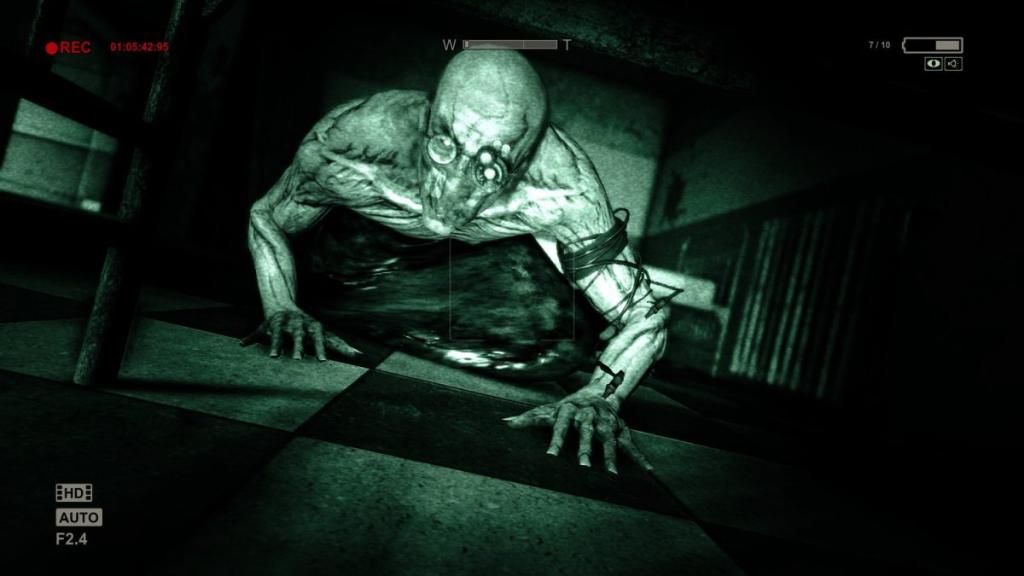
Designwise, the studio avoided the Left 4 Dead model that corrals players. Instead they built risk-reward systems: night vision helps you see but degrades image quality; sticking close gives safety but raises noise. The goal was to make choices feel meaningful, to turn your friends into variables, and to let dread ripple through a small group.
Is The Outlast Trials multiplayer?
Yes. Trials is built for co-op horror where up to four players can experience the same trial together. Morin explains that making multiplayer required hiring people with multiplayer experience and accepting a harder development path. The game still honors the brand’s no-guns DNA—if you want bullets, you should expect something else to carry that name.
On Steam I saw refund timers tick: The business of sustaining horror
Steam changed the rules. Where the original Outlast survived on shock and short playtimes—the average play of Outlast 1 on Steam clocks at about 90 minutes—refund windows now create perverse incentives. If players are scared out before two hours they can claim a refund. Morin is blunt: that’s not great for a game designed to make you put the controller down.
So Red Barrels adopted a model that mixes live updates and cosmetic revenue to keep content flowing and the studio solvent. The Outlast Trials spent roughly six years in development before early access; once it shipped the studio committed to ongoing content and a small economy to support it. Those microtransactions are framed as optional cosmetics that pay for continued updates.
Financially, the studio told me they’re now able to run two projects concurrently because Trials reached a sustainable point. That means fans can expect more than seasonal tweaks: there’s breathing room to experiment with new IP and new creative teams inside the company. Morin won’t promise anything that’s not planned, but the capacity is there.
Are horror games oversaturated on Steam?
There are far more releases now than when Outlast first shipped. That volume creates discoverability problems: good games can go unnoticed. Morin’s take is pragmatic—quantity forces quality, but it also strains attention. In short, more titles is a double-edged market pressure for indie teams.
At fan forums I read theory threads: How Red Barrels treats mystery and lore
One striking thing Morin said: ambiguity is harder to sell in games than in movies. Players invest hours and want payoff. That tension—between leaving doors open to keep interest and closing enough of them to satisfy—guides their storytelling. Morin compares their approach to a TV series: episodes and seasons that weave long-running threads.
He also flagged practical places where lore will appear: comics, Trials updates, and character cameos like Dr. Wernicke wandering a lobby. Expect the studio to hand you pieces of the puzzle, not the full map. If you liked the open-ended Walrider questions, know that Red Barrels wants to give answers but not clear-out every shadow at once.
Philippe warned about the Lost problem—close a door and you open two more. That’s deliberate: horror’s engine is curiosity plus dread. The studio wants to reward obsession without collapsing the mystery into an FAQ.
At fifteen candles on a cake I felt grateful: A note to fans and the future
Morin didn’t use platitudes. He talked about a team that’s earned its position, a healthy niche, and the strange luck that helps projects survive. Fans kept the brand alive: from IGN videos to PewDiePie streams, to the thousands of community theories that still orbit Murkoff.
Red Barrels is growing, not because it chased trends like friendslop—titles such as Lethal Company and R.E.P.O. show the market’s appetite—but because it carved a persistent identity: no firearms under the Outlast label, a willingness to test multiplayer, and a long-term plan that uses cosmetic sales to bankroll new content.
I’ve watched studios fold under hype and I’ve watched a small Montreal team survive the boom-and-bust. If you’re a fan, keep asking questions and pushing theory threads—the studio reads you. If you’re a developer, take the lesson Morin quietly repeated: focus trumps frantic copying. The last word? Red Barrels is cautious, curious, and still making horror that sticks with you like a rusted key turning in a locked house.
Are you ready to argue whether ambiguity or closure makes horror better, or are you convinced Red Barrels is playing the long game in a market that punishes flash and rewards patience?