I opened a fresh world after the latest Minecraft drop and felt that familiar tingle—except it fizzled out in five minutes. You probably felt it too: a new mob gets a highlight reel on YouTube, then disappears from your daily play. I walked away thinking: when did updates stop changing how I play?
I write about games for a living, and I still play as if I have something to prove. You should care because updates shape the stories you tell in your worlds. Mojang and Microsoft (who bought Mojang for $2.5 billion (€2.3 billion)) are steering the update cadence; the result is worth tracking.
Minecraft drops feel additive, not transformational
I remember the first time the Nether overhaul hit and my Discord blew up with people trying new routes through lava seas.
That shock was structural: biomes that reworked navigation, threats that rewired early-game strategy. Recent drops, by contrast, behave like patchwork: a mob here, a block there, features you test for a night and forget. They dress the game in fresh fabrics but rarely rewrite the pattern. Players now often treat drops as optional side quests—nice to notice, not necessary to master. That difference isn’t trivial: it changes how communities, creators, and servers plan content and long-term challenges.
Minecraft’s survival loop has been sidelined
When I went hunting for the first Ender Dragon kill, the route felt like a rite of passage shared by everyone in chat.
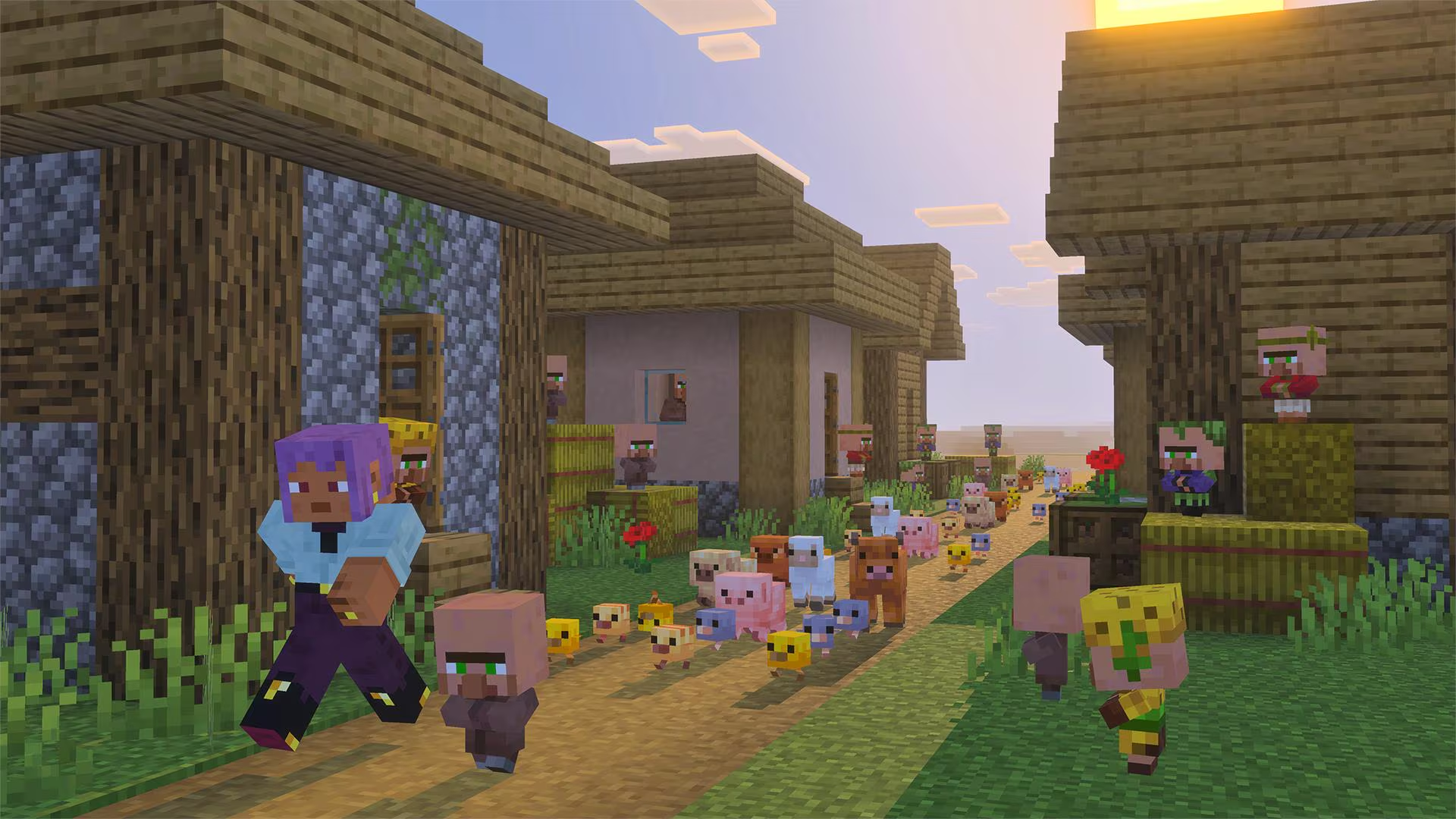
Survival used to be the backbone: exploration, scarcity, risk, and reward. Recent drops tilt toward cosmetics, building blocks, or minigame-friendly mobs that expand creative play but do little to shake up survival pacing. The Tiny Takeover update, for instance, gave baby mobs a remodel and a trumpet sound—it’s charming, but it doesn’t add weight to the late-game chase for resources and bosses. The result is a split personality: builders and creators get steady toys, while those hungry for mechanical surprises get fewer moments of real danger or discovery.
Why are Minecraft updates smaller now?
Mojang moved from annual major updates to a cadence of several smaller drops a year to keep engagement high across platforms—Java, Bedrock, consoles, and mobile. That strategy favors steady content streams and easier QA across disparate systems, but it fragments the big-bang moments that used to pull entire communities back in at once.
Frequent drops have diluted the “wow”
I used to count down to major updates; feeds and servers would synchronize their hype weeks in advance.
Hype is a marketable resource. When updates arrive rarely, each one becomes an event: content creators plan premieres, streamers craft challenge series, and players fresh-start servers together. Now the calendar is a series of small sparks, not a festival. The consequence is simple: the average drop gets a smaller slice of attention, and the collective gasp is replaced by polite applause. It’s like adding sprinkles to a cake—you notice them, but the cake tastes the same.
New drops rarely build on what came before
I scrolled Reddit threads where players sketched how a new biome could have been woven into existing systems, then watched that idea die in the comments.
Good updates don’t just add things; they create relationships between systems. The Sulfur Caves, for example, could have introduced materials that fed into potioncraft or new mechanics that rebalanced existing biomes. Instead, many drops live solo: neat, isolated, and easily ignored. That independence limits emergent gameplay and reduces the incentive to revisit older worlds. The updates feel like postcards from the same vacation—pretty images, but no connecting story. Like turning a novel into a collection of postcards, the chapters stop reading as a whole.
Are drops worse than full updates?
Not inherently. Small drops keep servers lively and let Mojang react faster to player feedback. But they trade the cultural reset that a major update once provided. If you value continuous novelty on social platforms—YouTube, Twitch, Reddit—drops are beneficial. If you value seismic changes to game systems, you miss the era when a single update could change how everyone played for months.
What this means for players and creators
I watch creators pivot: some lean into micro-content to ride every drop, others hoard saves and plan a big ‘restart’ once a proper overhaul arrives.
Servers patch events and minigames around micro-features; survival communities lobby for an End rework that actually matters. The marketplace is bifurcating: creators chasing constant engagement versus players waiting for a substantive update. Long-form survival stories have never been more valuable precisely because they’re rarer.
There are wins: the Copper Golem’s comeback, polish to classic features, and creative platforms like mods and data packs that still give players control. But if you want the kind of update that rearranges priorities and rekindles discovery, demand that from Mojang—and use your platform to show what matters to you. Will they listen, or will drops remain neat little additions that never change the game’s core—what do you want to bet on?