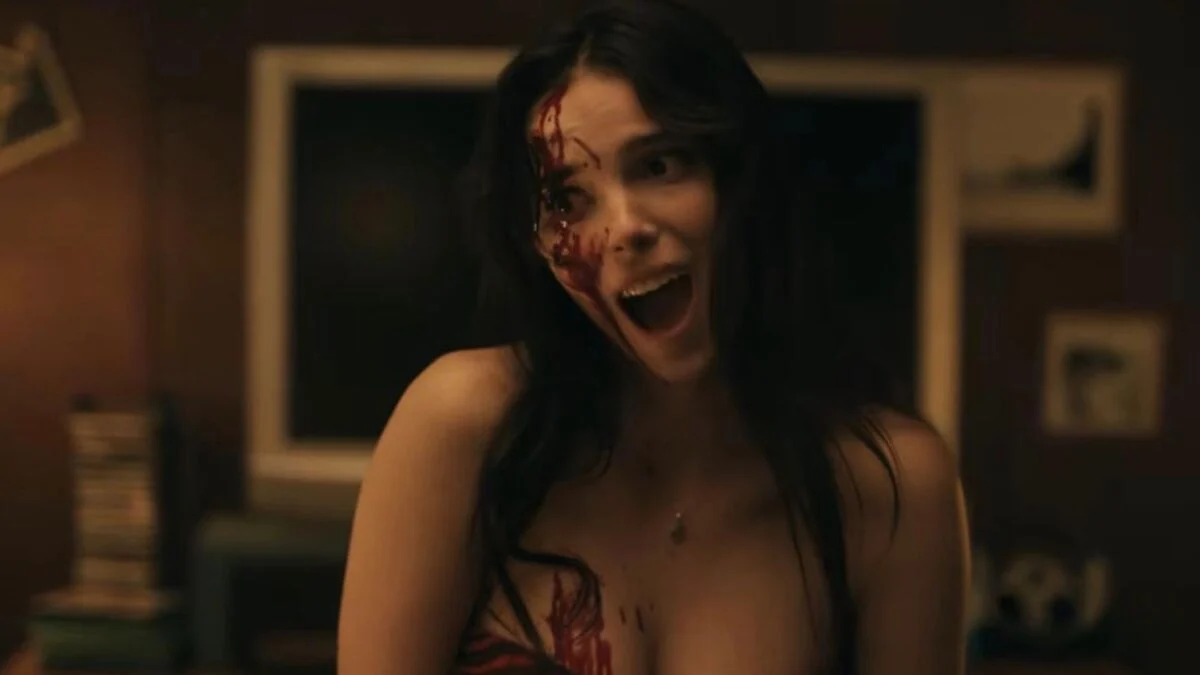
The lobby smelled like buttered popcorn and sweaty excitement. I watched a group of strangers trade a grin after the lights went down, and for a moment you could see the same thought in all of them: that movie just did something. I left the theater feeling like I’d watched a small cultural mutiny begin.
I write this as someone who follows box office ripples and online currents, and you should read this if you want to know how a low-budget horror film suddenly owned the weekend. I’ll tell you what happened, why it matters, and what I think will stick long after the trailers roll.
Received with SPECTACULAR WOM, #Focus’ R-rated horror romcom #Obsession almost doubled industry’s projections at US #BoxOffice!
The original horror directed by YouTuber #CurryBarker grossed SPECTACULAR 16.1M on 3-day Opening weekend (vs #Companion’s 9.3M, #TalkToMe’s 10.4M,… pic.twitter.com/nbGaDPpTVt
— Luiz Fernando (@Luiz_Fernando_J) May 17, 2026
I stood in a packed lobby and noticed conversations spinning off into Group Chats. Box office numbers aren’t just numbers—they’re a signal that something is moving in culture.
Obsession opened to $23.1 million (≈€21.5 million) worldwide, according to Variety. Most of that came from North America, and the film nearly doubled industry expectations. For a project reportedly made for a maximum of $750,000 (≈€700,000)—a budget the New Yorker described as “max”—that return is not noise. It’s a statement.
Compare that to other recent horror openings: Send Help started at $19.1 million (≈€17.8 million), and Iron Lung opened to $17.8 million (≈€16.6 million). Obsession landed one of the biggest domestic starts for horror so far in 2026.
How much did Obsession make at the box office?
The headline number is $23.1M worldwide (≈€21.5M), with a domestic three-day of roughly $16.1M (≈€15.0M). Those figures came with unusually strong social amplification: festival buzz, positive reviews, and a marketing push that blurred the line between ad and story—most notably the eerie One Wish Willow site that folded the audience into the movie’s premise.
I scanned comments on YouTube and saw fans tagging friends by the dozen. That online chatter translated into theater seats.
YouTube remains one of the film’s secret weapons. Director Curry Barker is not a blank name to that platform—he built an audience on sketch comedy and used that fanbase to seed early screenings and clips. When someone with a following like Barker’s nudges a release, it functions more like intimate recommendation than mass advertising.
The film’s marketing behaved like a living thing, and you noticed it spreading in your feeds. That social organicism—short clips, meme-ready moments, and the deliberate “discoverable” website—made the movie feel less like a product and more like a communal experience.
Who is Curry Barker and why does he matter?
Curry Barker is a YouTuber-turned-director whose sketch-comedy history gave him direct lines into an audience that trusts him. His feature debut, Milk & Serial, established him as a filmmaker willing to bend tone. Now he’s moved deeper into horror, attached to new projects with familiar names—he’ll star in Anything but Ghosts alongside Cooper Tomlinson and Aaron Paul, and he’s linked to A24’s revival work on Texas Chainsaw Massacre.
I listened to a friend describe the movie in a single breath and realized critics weren’t the only ones deciding taste. Word of mouth had teeth.
Critics and festivals helped, but the decisive factor was the audience telling other audiences to go. Twitter threads, TikTok edits, and Reddit threads amplified personal reactions into collective curiosity. The film’s R-rated horror-romcom tone made it shareable: it scares, it shocks, and it invites hot takes.
For marketing pros, this is a case study in lowering friction: integrate a narrative element (the One Wish Willow site), leverage creator networks (YouTube and social stars), and let real viewers do the persuading. The result played out on opening weekend like a contagion in a group chat—fast, messy, and impossible to ignore.
Is Obsession a good horror movie?
“Good” is subjective, but the indicators line up. Festival praise, strong Rotten Tomatoes reception, and the box office bump suggest viewers found the film effective. If you care about a horror that blends romance, dark humor, and a propulsive concept, this one scratches those itches. If you prefer slow-burn art-house scares, this might not be your night.
I walked out thinking of future releases and how they’ll measure against this surprise. The calendar is crowded, but momentum has a habit of carrying things forward.
May stacks more genre releases: The Mandalorian and Grogu on May 22, and Backrooms on May 29. Even if those tentpoles grab headlines, Obsession has already proven it can thrive amid heavy competition. For a film made on a tiny budget, its commercial success is a lesson for studios and indies alike about what audiences will reward.
I’ve tracked films that started small and finished large. This one feels poised to stick: it’s cheap to promote compared with blockbusters, it leverages creator culture, and it gives viewers something to trade—an experience rather than just another ticket. Think of it as a match that found dry tinder and then lit the whole block on fire.
Want more io9 news? Check out when to expect the latest Marvel, Star Wars, and Star Trek releases, what’s next for the DC Universe on film and TV, and everything you need to know about the future of Doctor Who.
If you want to follow the ripple effects, watch social trends on platforms like YouTube, Twitter, and TikTok and read industry coverage from outlets such as Variety and The New Yorker—they’ll show you where momentum lands next. So do you think a small-budget horror can reshape studio strategies this summer?