I opened the 113-page disclosure and my eyes snagged on a line that didn’t belong: a seven-figure purchase at a conveyor-belt sushi chain. I read it twice, then called a trader friend. You felt that small jolt too — the moment when a routine document suddenly smells of something else.
I’ve followed markets and political money for years, and I want to walk you through what that odd trade might mean, how it fits into the rest of the portfolio, and why people online are already turning it into a mystery. I’ll point to the sources — the OGE filing, the AP coverage, Bloomberg, Nikkei Asia, and market pages like Yahoo Finance — and I’ll flag the oddities you would notice if you were scanning this sheet with me.
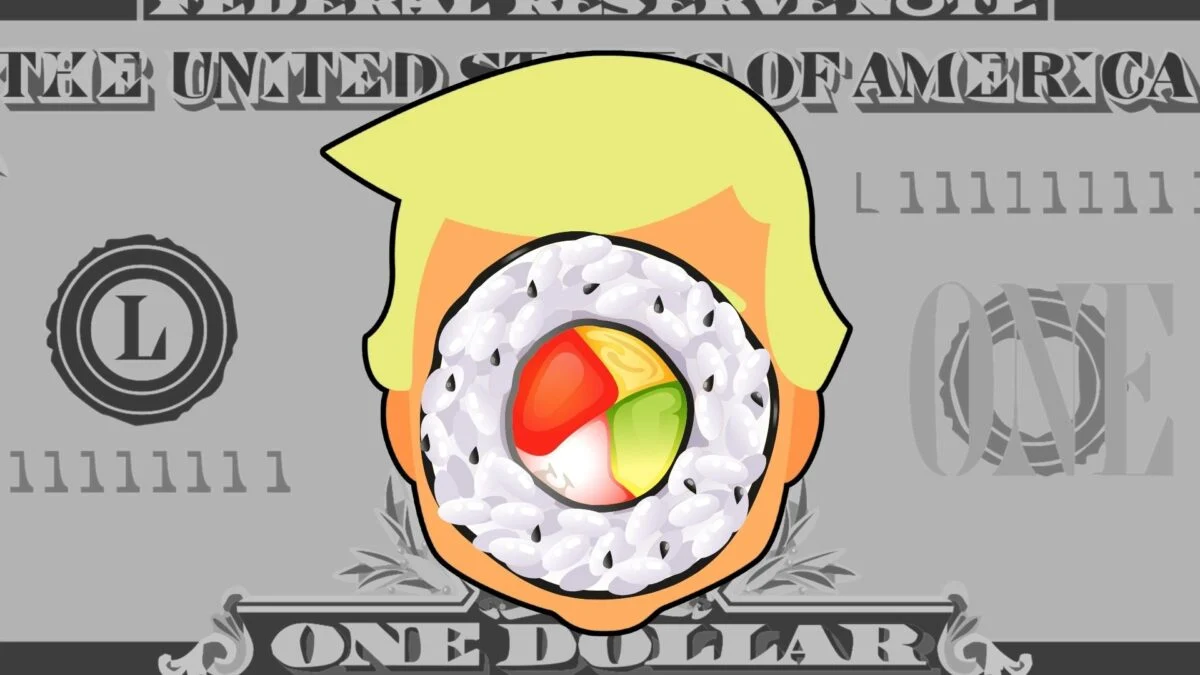
On Feb. 2 he bought between $1 million and $5 million in Kura Sushi.
The filing lists a purchase of Kura Sushi on Feb. 2 of $1,000,000–$5,000,000 (≈€930,000–€4,650,000). That range is how these forms work: they let officials report broad bands rather than exact dollar amounts, which can turn a single line into a Rorschach test for the internet.
Why did this stick out? Because the rest of the president’s purchases in that same range are predictable blue-chips or big contractors — Boeing, Oracle, Apple — companies you’d expect in a high-net-worth portfolio. Kura Sushi, a conveyor-belt restaurant with 91 U.S. locations and aggressive expansion plans, is an odd fit amid Nvidia, RTX (the company formerly known as Raytheon), Palantir, Micron, Dell and Microsoft.
At a sushi counter, the purchase looks accidental; in a portfolio it looks strategic.
There are three plausible explanations, each with a different mood: simple human error, deliberate but odd diversification, or intentional targeting of a company for reasons we don’t yet see.
- Human error: tickers get transposed. People have suggested the team meant KURA (Kura Oncology) or Fujikura, an electrical equipment maker. The former makes cancer drugs and trades under KURA; the latter is FUJIKURA on some exchanges. A slipped ticker is one explanation — and mistakes happen. But a seven-figure mistake is an expensive typo.
- Random bet or personal contact: the president could simply be buying into a consumer concept he likes, or following a tip from a contact at the company as it pushes U.S. expansion. Kura Sushi has announced plans to grow to 300 locations and lists multiple openings in California, Texas and New Jersey, according to Nikkei Asia.
- Market game: sometimes purchases are intended to move headlines. After the filing, Kura Oncology (KURA) popped about 9% on the day, per Yahoo Finance, and people online tied the activity together fast. That kind of spillover happens when tickers are similar and speculation spreads on platforms like X and Bluesky.
Did Trump accidentally buy Kura Sushi instead of KURA Oncology or Fujikura?
I asked traders and compliance lawyers. The filing itself won’t tell you a motive; it just shows that a purchase happened and the band it fell into. The crowd on X and on Bluesky has favored the typo theory because there’s precedent for chaotic campaign logistics (remember Four Seasons Total Landscaping). But accidental trades of that magnitude are rare — and even rare mistakes tend to leave a track: options, prior small buys, or a broker note. I checked market pages and Reuters/Bloomberg threads and found no obvious breadcrumb trail leading to an accidental click, only questions.
On-screen endorsements and timed buys make people suspicious.
Here’s a hard pattern: purchases that sit near public praise. Journalist Judd Legum plotted comments and trades and highlighted moments that look awkward — for instance, a Micron purchase on March 25 followed by a public praise call the next day. On Feb. 10 the filing shows a $1–5 million purchase in Dell (≈€930,000–€4,650,000), and nine days later he told an audience to “go out and buy a Dell computer.” I watched the clips; the sequence is exactly the kind of timing that attracts attention.
These are the same companies he’s cozy with: Apple, Nvidia, Amazon, Microsoft. He’s also bought into Philip Morris, GEO Group, Axon, and others. When those purchases align with public praise on Fox News or campaign events, the public asks hard questions about conflicts and influence. You should too.
Is it legal for the president to trade stocks while in office?
The law is murky. Presidents are not explicitly barred by statute from owning or trading stocks, but ethics rules and longstanding norms push public officials toward divestment or blind trusts. That’s why filings like this — the 113-page document released via the Office of Government Ethics — draw attention: they show what you own, and if your public comments map onto those holdings, watchdogs and reporters will probe.
On message boards, the Kura trade became a meme; in markets it had real effects.
The social reaction was instant. Threads on X pointed to the Four Seasons Total Landscaping moment. Creators on Bluesky and Twitter suggested conspiracy or comic error. Kura Oncology’s price popped; FujiKura slid after a separate forecast disappointment covered by Bloomberg. Online chatter can move small stocks quickly, and when a person in power is involved, even rumor becomes market fuel.
That’s how a single line on a disclosure can ripple: the filing allows ranges — which, AP notes, can stretch to as much as $100 million (≈€93,000,000) in some entries — and that ambiguity invites speculation, which breeds headlines, which moves shares.
The pattern matters more than the sushi. The president’s trades include defense contractors like RTX and tech giants like Nvidia and Apple, and he’s also invested in media-related businesses: a position in Versant Media Group ($15,001–$50,000, ≈€14,000–€46,500), the Comcast spin-off that includes CNBC and, yes, networks the president often attacks. That irony landed the way a publicist’s joke lands in a newsroom.
For context, Trump placed roughly 3,600 buy and sell orders in the first three months of the year, according to the AP’s tally — a level of activity that turns every oddball line into a potential needle for scrutiny.
On the ground, Kura Sushi is expanding; in Washington it’s now a headache.
The restaurant has 91 U.S. locations, most in California, Texas and New Jersey, and public expansion goals that were reported by Nikkei Asia. If this was a genuine bet on fast casual growth, that’s a normal investment thesis. If it was a mistaken ticker, it’s an expensive one. If it was intended to influence perception, the optics are worse.
I’ll say this plainly: the filing reads like a scavenger-hunt map with arrows drawn in Sharpie, and that is why other journalists and lawyers are circling.
We can keep guessing. Or we can press for specifics: exact trade slips, broker records, and statements about whether these holdings were advised by an outside manager or placed with direct instruction. Platforms and tools matter here — filings on the OGE site, real-time quotes on Yahoo Finance, investigative threads on Bloomberg and AP — because they’re the paper trail and the amplifiers.
The president owning part of a cable-media spin-off that includes MSNBC, or investing in companies he publicly praises, raises the question any voter should ask: when money and messaging cross paths, who benefits and why?
1. What I found in Trump’s new 113-page financial disclosure report. It doesn’t look good.
— Judd Legum (@juddlegum.bsky.social) May 18, 2026 at 6:58 AM
I’ve pointed at the records, the market effects, and the online speculation; you should watch for broker confirmations, corrections, or explanations from the campaign’s financial handlers. If you were advising a client, you’d want clarity fast — and so should voters. Which would you believe: an expensive mistake, a private tip, or a purposeful move that smells fishy on purpose?