You’re late for a meeting and the Cherokee in front of you nudges through a gap while the driver barely blinks. I felt that same small jolt of trust and suspicion when I watched a prototype steer itself without asking permission. You should know what that moment will mean for Jeep, Ram, and Dodge owners.
I’ve been tracking autonomous-driving partnerships for years, and this one matters: Stellantis announced a deal with U.K. startup Wayve to fold Wayve’s AI Driver into the automaker’s STLA AutoDrive platform. The pitch is hands-free, supervised driving on city streets and highways—what Stellantis and Wayve call a Level 2++ system, where you still keep an eye on the road.
Stellantis signs a formal deal with Wayve
On many commutes you still perform every steering correction yourself.
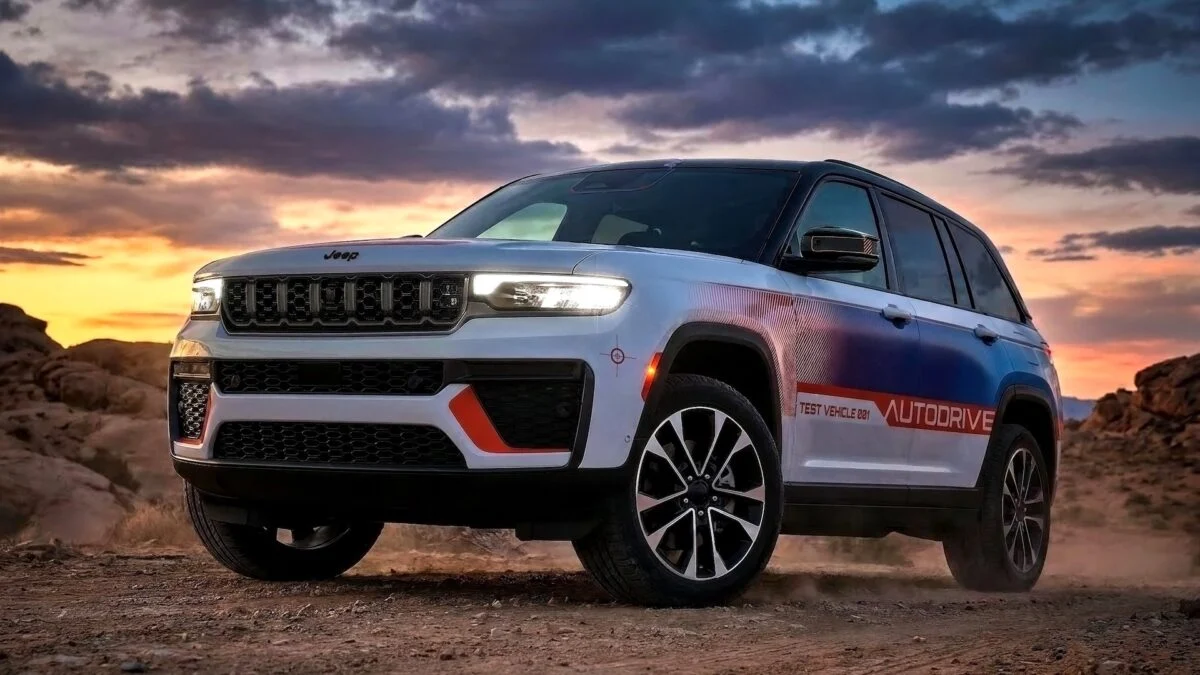
Stellantis will integrate Wayve’s AI Driver across STLA AutoDrive, with the first vehicle integration planned for North America in 2028. The companies say the platform is built to accept more advanced automated features later as rules and buyer expectations shift. Wayve scrambled a prototype on a Jeep Cherokee platform in under two months, which the startup points to as evidence of rapid integration.
Wayve CEO Alex Kendall framed the move as a scaling play: his team claims quick proof-of-concept work and a path to broader deployment. I’ll be blunt—you should expect an incremental rollout rather than a sudden full takeover of steering.
When will Wayve tech arrive in North America?
Stellantis plans the first integrations for North America in 2028; announcement language leaves room for future upgrades as regulations and customer appetite change.
Wayve’s camera-first system acts differently than map-heavy rivals
You probably assume self-driving needs flawless, high-definition maps everywhere you go.
Wayve trains its stack from camera data and machine learning collected in real-world traffic, avoiding the detailed, pre-built maps companies like Cruise or Waymo rely on. It teaches the car like a co-pilot who learned by watching buses and taxis. That approach is vehicle-agnostic by design: the software can be adapted for passenger cars, vans, and robotaxis that Uber intends to run.
The company recently closed a $1.2 billion Series D round (about €1.1 billion) and later a $60 million extension (about €55 million), with backers including SoftBank, Microsoft, Nvidia, Advanced Micro Devices, Arm, Qualcomm Ventures, and Uber. Those names matter because the compute and cloud partners you choose shape how quickly features move from lab to highway—think NVIDIA chips, Microsoft cloud tooling, and automotive silicon from AMD and Qualcomm powering inference in production vehicles.
How does Wayve’s AI Driver work?
It relies mainly on cameras, machine learning models trained on messy urban behavior, and software designed to be ported into different vehicle platforms rather than custom-built robots.
Which Stellantis models will show up with Wayve first?
Jeep Cherokees have already acted as the testbed.
Stellantis hasn’t named the first consumer models, but the prototype work on the Jeep Cherokee suggests Jeep — and by extension, brands like Ram and Dodge — could be early candidates. Nissan, separately, signed on to integrate Wayve’s tech in many of its models starting in 2027, and Uber’s cash is earmarked for Wayve-powered robotaxis launching in London in 2026. Expect staged rollouts: fleet or higher-trim models first, then broader availability if regulators and buyers accept the technology.
Which Stellantis models will get Wayve’s self-driving system?
No definitive list yet. Watch Jeep test programs closely and the company’s product announcements for model-level details.
Money and partners are moving faster than many carmakers
Investors are putting large bets on camera-first autonomy this year.
Wayve’s funding rounds and a roll call of partners—Microsoft, Nvidia, AMD, Arm, Qualcomm, SoftBank, and Uber—give it the financial and technical runway to scale. For Stellantis, the partnership is a strategic shortcut: instead of building a full-stack autonomous program from scratch, it folds an external, learning-first stack into STLA AutoDrive. If the platform is a chassis, Wayve is the brain that learned the neighborhood on foot.
That model contrasts with Tesla and Rivian, which develop more vertically integrated driver-assist systems. Nissan’s 2027 plan to ship Wayve-enabled cars is another indicator: automakers are increasingly open to software partnerships rather than trying to own every layer themselves.
I don’t want to overpromise: this is still supervised driving, not driver elimination. But the rate of integration, the investor list, and the first-in-market targets (Uber robotaxis in London in 2026; Stellantis vehicles in North America in 2028) create momentum you can track in model lineups and dealer options lists.
If you own a Jeep, Ram, or Dodge, pay attention to software updates, ADAS package names, and Stellantis announcements—because the next upgrade could change what “hands on the wheel” means for your daily route. Would you hand more control to your next vehicle if it learned the city’s worst intersections by watching them for months instead of relying on a static map?