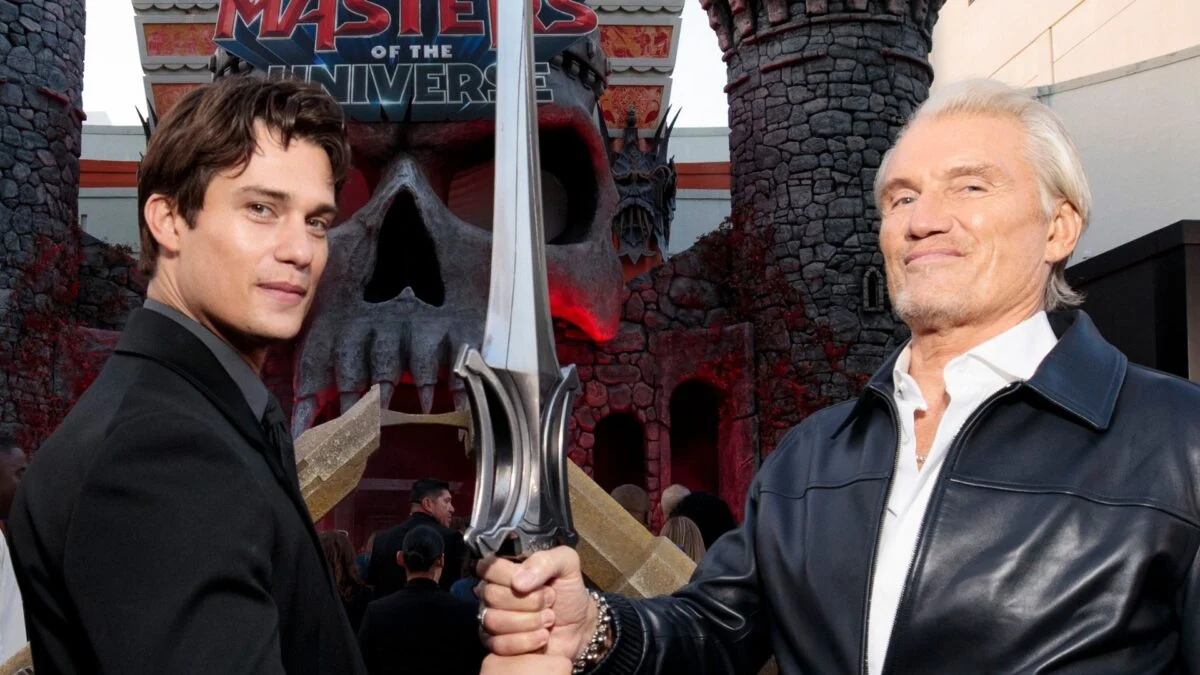
The gym fell quiet when an older man set the barbell down and smiled at a younger He-Man. I felt the same jolt watching Travis Knight describe how he threaded the 1987 film through his new Masters of the Universe. You can sense when a director borrows more than aesthetics — he borrows history.
At CinemaCon, reporters pressed in as Knight spoke about honoring old versions of the story — and then he gave specifics.
I’ve covered movies long enough to tell the difference between homage and nostalgia for nostalgia’s sake. Knight said he picked what “worked best” for his film, but he also admitted he wanted to salute many eras of Masters of the Universe, especially the 1987 live-action effort.
The result: small, deliberate winks that signal respect without turning the movie into a museum piece. Cameos and costume notes act as breadcrumbs for fans; they reward recognition without confusing newcomers.
Does Dolph Lundgren appear in the new Masters of the Universe?
Yes. Lundgren shows up on screen as an older, unexpectedly sage weightlifter who shares a moment with Nicholas Galitzine’s Adam. The press notes describe him as a “surprisingly insightful weightlifter,” and Lundgren helped reshape the cameo into a teaching beat: “The muscles don’t make the man, kid.” That line reframes the cameo from stunt casting into a small moral anchor.
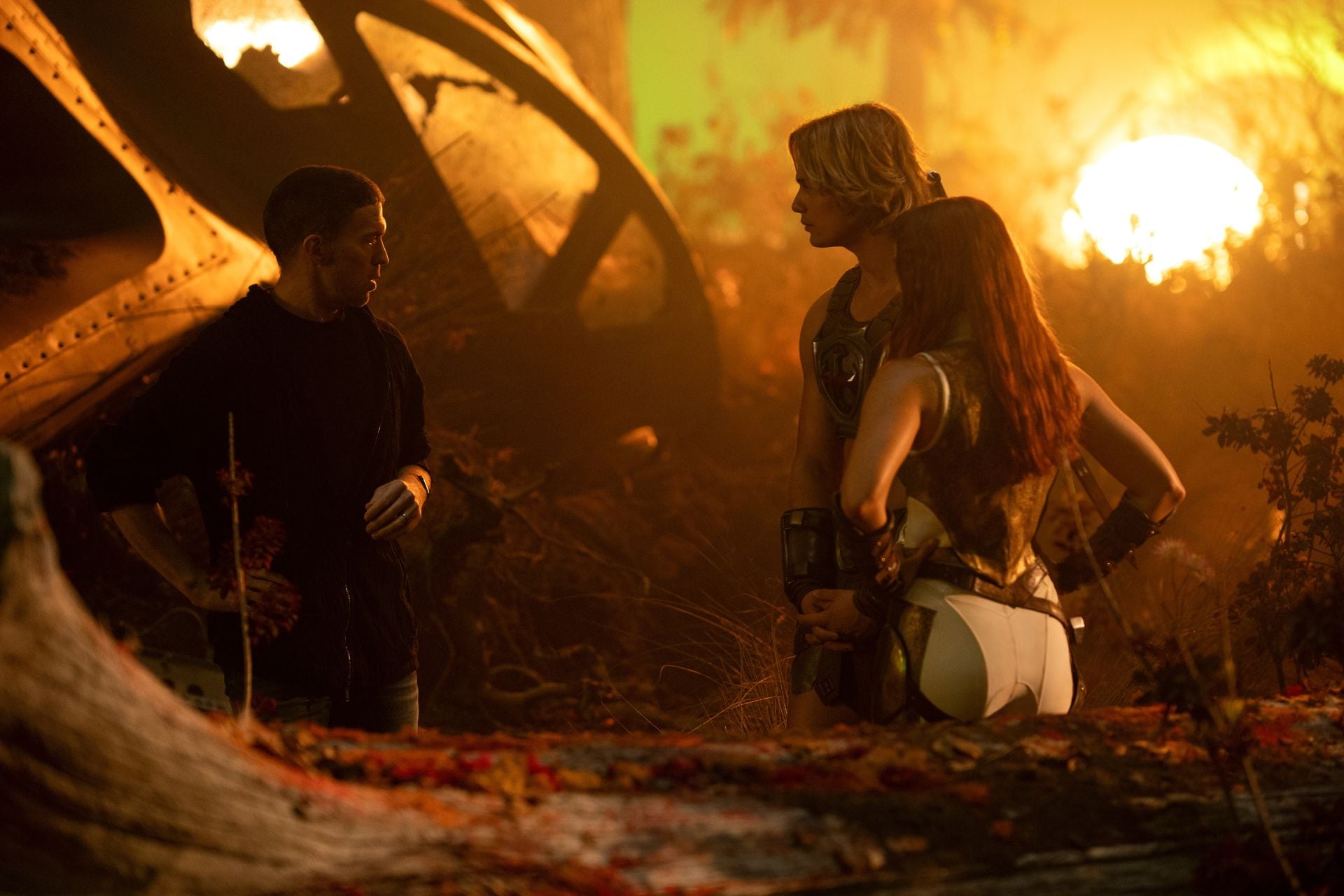
In a crowded editing room, costume sketches from multiple decades sat side by side — and Teela’s outfit told the story.
One real-world observation: the final Teela costume is a hybrid, intentionally built from two reference points. Knight described it as part of the classic one-piece from the cartoon and part of the gunslinger look Chelsea Field wore in 1987.
That combination matters. Costuming here operates like a compass; it points audiences toward lineage without demanding prior knowledge. Fans who cherish the cartoon spot the silhouette. Viewers new to Eternia simply see a coherent character design that reads on screen.
How does the new film reference the 1987 movie?
References come in three main forms: cameos, costume cues, and tonal echoes. Characters introduced in the 1987 film — like Karg and Pigface — pop up as minions. Teela’s costume borrows from both eras. And the film studies past performances to shape its villainy while carving out its own identity.
A conversation in the press room made one thing clear — performances carry memory across generations.
Frank Langella’s Skeletor is still cited as the highlight of the 1987 film, and Knight referenced Langella, Alan Oppenheimer, and the original voice work while designing Jared Leto’s take. He wasn’t copying; he was curating sources of energy.
Performance lineage can be contagious. Knight sampled the theatricality — Langella’s scene-chewing — and paired it with the cartoon’s voice origins to create a new Skeletor that feels familiar without repeating old beats. Fans will recognize the DNA; newcomers will feel the theatrical presence without prior context.
Is Frank Langella’s Skeletor referenced in the new movie?
Yes, indirectly. Knight credits Langella’s performance as inspiration for the energy and flamboyance that inform the new Skeletor. The team studied Langella and Oppenheimer to locate the character’s roots, then layered in Jared Leto’s own instincts.
Outside the screening room, conversations among fans revealed what the movie aims to do — bridge generations without flattening them.
Travis Knight’s goal reads like a simple editorial rule: honor predecessors, but don’t become a pastiche. That intention shows in how he staged Lundgren’s cameo — he rewrote the moment with Lundgren to make it a moral touchstone rather than a mere Easter egg.
Karg and Pigface are tiny answers to a big question: can a blockbuster respect toyline lore and still tell a modern story? The film says yes, with a few well-placed nods and a willingness to remake character beats for today’s audience.
The references act as a filmic heirloom — an object passed down that gains meaning with each retelling, not a museum piece locked behind glass. For studios like MGM and festival stages like CinemaCon, that approach sells both tickets and trust: you get spectacle with a conscience.
Masters of the Universe opens June 5, and whether you grew up on Filmation, the mini-comics, or the Lundgren movie, the film is built to reward recognition while inviting fresh arguments about fidelity and reinvention. Which era will you defend when fans start debating which nod mattered most?
