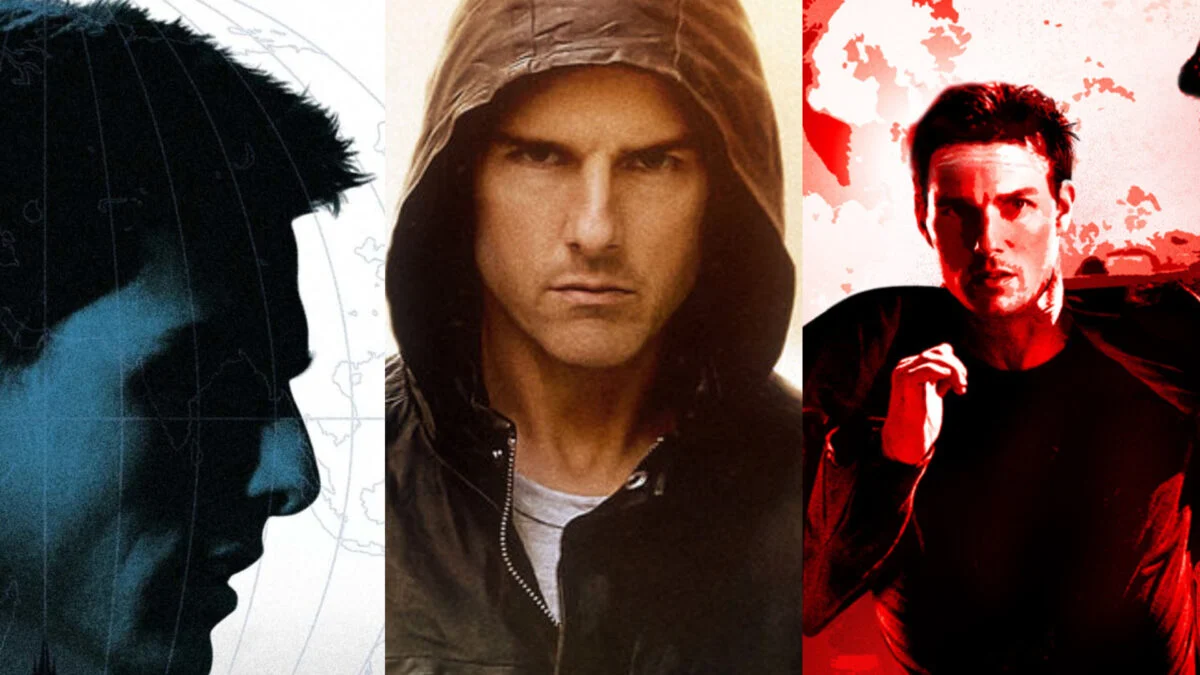
I can still feel the theater go dark the first time Ethan Hunt dropped from the ceiling: a hush, then a collective intake of breath. You remember that quiet — the moment a stunt rewrote what an action movie could ask of its audience. I want to show you why the franchise has mattered, and how it keeps daring you to care.
Theater lights dimmed and the credits rolled — how a 1996 reboot forced Hollywood to pay attention
I watched the original Mission: Impossible in a packed multiplex; people walked out buzzing. Brian De Palma’s 1996 film recast a TV property into a feature that felt cinematic and aggressive, and it did what few reboots had then: it made the title a tentpole promise, not just a nostalgia wink. That promise turned Tom Cruise into more than a star; he became the public face of high-stakes spectacle, willing to put his body and brand on the line so studios could sell a ticket.
When was the first Mission: Impossible released?
The first film opened on May 22, 1996. It arrived during a moment when studios were testing the economics of reviving known IP — and it showed how a single charismatic lead and a director with a taste for formal flair could reset expectations for a franchise.
I once saw a theater go from laughter to stunned silence — why the second film is still debated
A friend laughed at Mission: Impossible II while I sat rigid. The second entry split audiences; some called it excess, others defended its style. That debate mattered because it forced the creative team to answer a simple question: do you thrill with spectacle alone, or do you give the central figure something human to lose?
A midnight phone call from a production office — how Mission: Impossible 3 and Ghost Protocol reshaped Ethan Hunt
I got one of those late-night calls about rewrites once, and I’ve seen how a script change can alter a character’s trajectory. Mission: Impossible 3 and Ghost Protocol pulled Ethan toward vulnerability — relationships, near-death moments, the idea that the hero could bleed emotionally as well as physically. That softening didn’t weaken the franchise; it made every stunt riskier because you now cared about who might not come back.
Why did Ghost Protocol matter?
Ghost Protocol (2011) was more than a box-office revival; it introduced Christopher McQuarrie into the franchise orbit. McQuarrie’s mid-production rewrites tightened pacing and recast Cruise’s onscreen persona as both reckless and tender. From that point forward, McQuarrie and Cruise formed a creative partnership that would steer the series through its most daring moments — and it helped set the stunt-first mentality that now defines the films.
A conversation in a producers’ room — the actor as producer and the mechanics of franchise control
I’ve sat in rooms where a single name swung decisions: Tom Cruise. With a producer credit from the start, Cruise has curated directors and shaped Ethan Hunt into a figure who oscillates between a charming rogue and a man who treats his body like test equipment. That choice made the films feel personal; you’re watching a star who bets his reputation on every leap, every fall, every near-miss.
Watching a train pull out of the station — how the franchise sold the stunt as cinema
I once watched a stunt reel loop in a creative meeting until people stopped talking and just watched. The franchise sells those moments like a magician selling an illusion — you know the trick is dangerous, and you fear what might be lost. The films operate like a coiled spring, always promising a bigger snap. And when Cruise climbs, crashes, or unplugs himself from a plane, the movies are a high-wire act that dares you not to look away.
Who is Christopher McQuarrie and why does he matter?
McQuarrie moved from script doctor to auteur within this series. He first worked with Cruise on Valkyrie, rewrote Ghost Protocol mid-shoot, and then helped craft every subsequent entry with a steady hand. His fingerprints are on the narrative beats and the daredevil set pieces; as a collaborator he’s as central to the franchise’s identity as the stunt coordination teams and studios like Paramount and Warner Bros.
A coffee shop argument — what the franchise says about cinema economics and audience appetite
I argued once over coffee that studios chase the same thing: enough spectacle to break through the noise. The Mission films proved you can tie huge practical stunts to a single star and a reliable tone, and that plate earns loyalty. You don’t need CGI to make a crowd gasp when a real body dangles above Dubai or when a sequence is shot in one seamless take; you need commitment, crewcraft, and the kind of director who can fuse performance with engineering.
If you track the series — De Palma’s formalism, John Woo’s operatic swagger in MI:2, J.J. Abrams’ sleekness, the McQuarrie-era pragmatism — you see a franchise that adapts without losing its spine. It taught Hollywood a practical lesson: invest in craftsmen, market the stunt, and cultivate a partnership between star and filmmaker. Platforms like YouTube and IMDb amplified those stunts into cultural moments; Variety and Box Office analysis turned them into studio case studies.
I’ll admit I’m biased: I want movies that take risks, and I respect a franchise where the hero is allowed to fail. You might scoff at the vanity of a star-turned-producer or prefer quieter dramas. But every time the lights go down and that theme begins, you feel a tension only these films reliably manufacture.
So if the current run pauses after The Final Reckoning while Cruise pursues other projects at Warner Bros. and McQuarrie pursues projects like Conan the Barbarian, remember this: the franchise has taught studios how to sell danger and intimacy together. Will another director and another stunt make you rush back to theaters, or has the formula finally peaked?