
I watched my second attempt collapse when a new objective popped in mid-run. You feel the air thin—every camera blink becomes a countdown. That single, fragile second tells you everything TacSim intends to test.
I’m going to walk you through how TacSim works and why it matters, from the tools you’ll care about to the systems that keep you returning. You’ll get practical notes I gathered playing the sim and a few sharp tips for scoring higher.
What is TacSim Mode in 007 First Light?
At a studio presentation I sat two rows back while Gemma Chan’s Selina Tan introduced the simulation—clinical, precise, unnervingly plausible.
TacSim stands for Tactical Simulation. It’s a replay-focused playground separate from the main story where IO Interactive hands you short, intense trials built out of campaign locations. Think of it as a focused training arena: you don’t follow the cinematic script; you solve the puzzle under pressure.
I’ll be blunt: if you liked Freelancer in Hitman, you’ll recognize the DNA. But TacSim pushes a different muscle—speed, adaptability, and efficient problem-solving over theatrical stealth moments.
How does TacSim differ from the main campaign?
The campaign is a 20-hour cinematic arc; TacSim is modular and repeatable. In the campaign you’re following beats and character-driven objectives. In TacSim you’re given randomized parameters and must execute under constraints. That makes it less about story and more about performance: routes, gadget timing, and clean execution.
Escalations and Operations
On the first run I had to abandon a carefully plotted route because an Escalation added a live objective—no warning, no mercy.
Escalations convert story maps into multi-tier challenges. Each Escalation offers three increasing difficulty tiers and drops you into a level with a set of randomized Game Changer modifiers. You won’t face a fixed script; instead, the sim rearranges the problem and forces you to improvise.
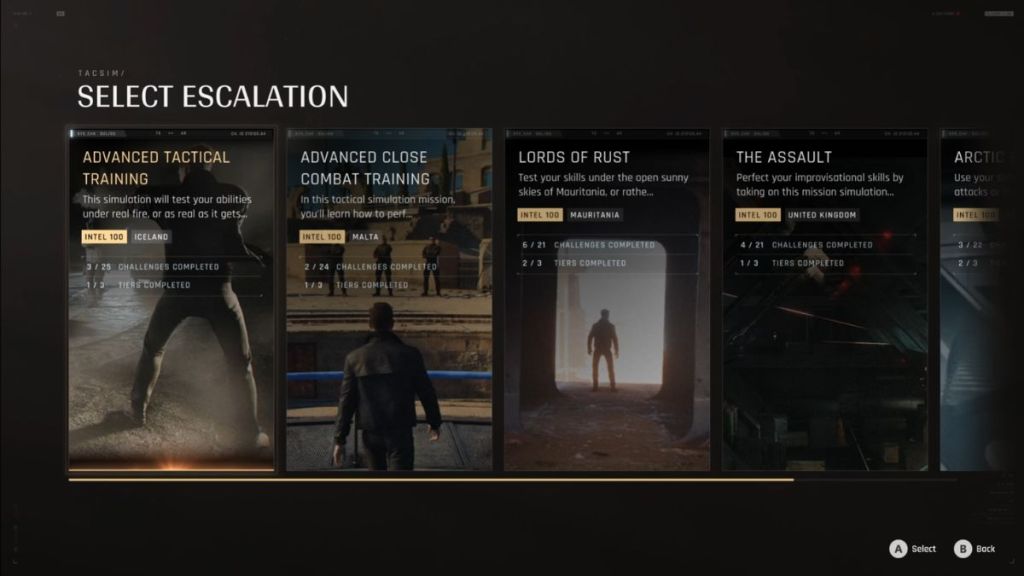
Operations are the calmer sibling: single-tier missions that let you feel out an area and adapt without the stacked pressure of Escalation tiers. Every TacSim mission, whether Operation or Escalation, attaches 7–10 bite-sized challenges—mini tasks that reward you for using gadgets such as the Q-Lens or Q-Watch in targeted ways.
Escalations are precise; they force you to shave seconds and avoid mistakes. TacSim is like a Swiss watch—every tiny adjustment changes the outcome.
What are Game Changer modifiers and how random are they?
Game Changer modifiers are the parameters that shuffle objectives, enemy patrols, and environmental rules. They range from plumbing in extra timed objectives to disabling certain gadgets. Randomness is controlled: the modifiers create variance without breaking a level’s core geometry, so you’re solving different puzzles within the same playable space.
Progression and Rewards
I noticed the first time I earned Intel that choices mattered—what you buy shapes future runs.
Your performance in TacSim translates into XP and Intel. XP raises Bond’s TacSim Clearance Level, which opens more items in the in-game shop. Intel is the special currency used to buy gadgets and suits, and it forces trade-offs: do you spend on a game-changing gadget or on multiple suit options?
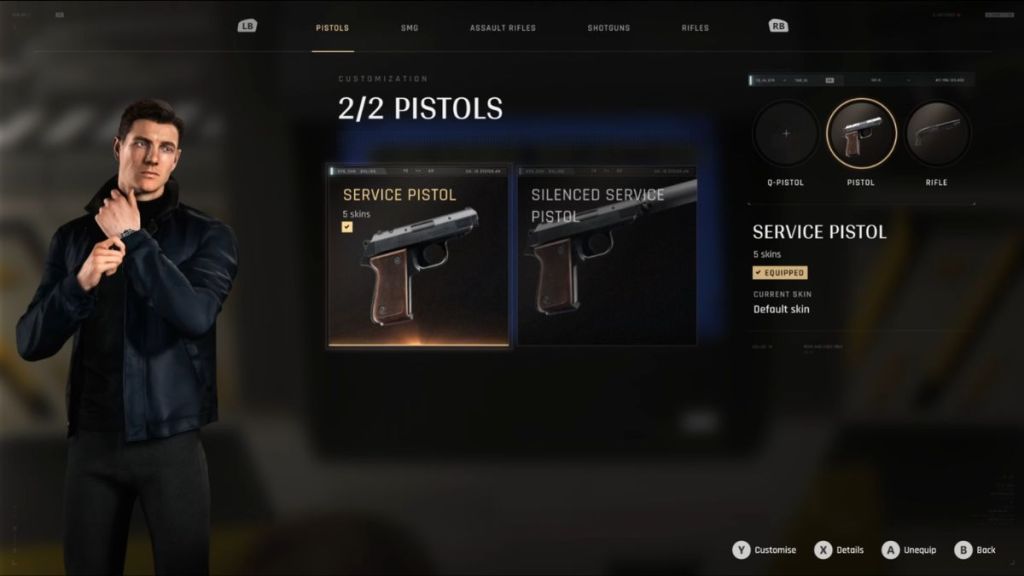
IO Interactive has said the TacSim suite will expand after the main story: expect new missions, gadgets, and simulation modifiers to arrive as post-launch content. That means your early choices about gear matter across future updates—the metagame grows over time.
What does TacSim reward players with?
Expect XP, Intel, cosmetic items, and gadgets that change how you approach levels. The system rewards efficiency: cleaner runs and faster completion times pay off. Progress feels tangible: you’ll see new options appear in the shop as your Clearance Level rises.
Competitive Edge
On launch week I refreshed the global leaderboard and watched my score tumble—the records move fast.
TacSim integrates a global leaderboard that scores every element of a run: speed, takedown style, cameras disabled, and gadgets used. The goal is clear—optimize performance and place higher against a worldwide pool of players. That creates a loop: you try a new route, shave off seconds, and climb the table.
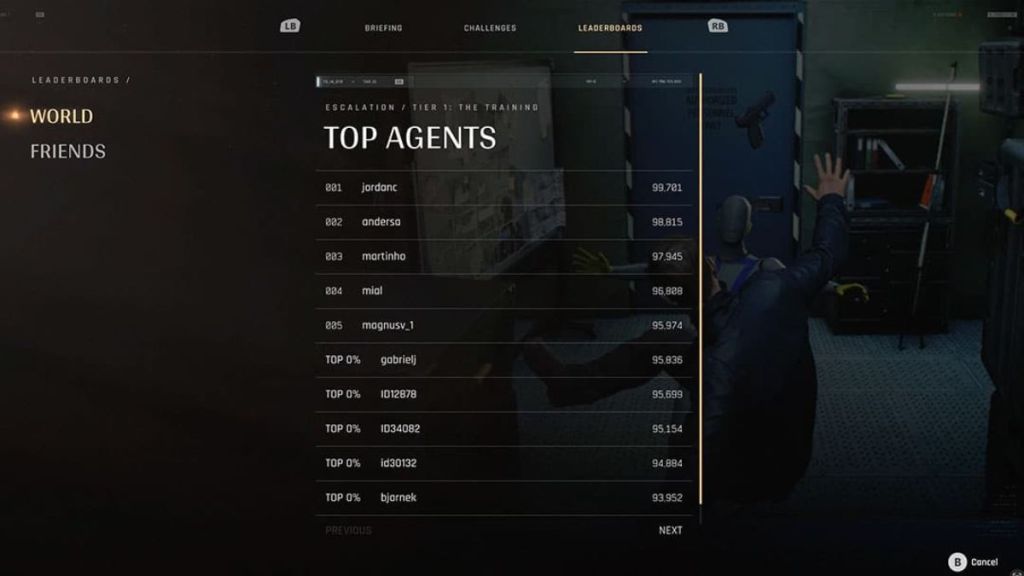
If you want community comparison, TacSim delivers. Scores are granular and transparent, and the system encourages multiple approaches—smoke-and-move, precision takedowns, or gadget-heavy runs. The leaderboard hits like a starting pistol: once it fires, you either chase or get left watching others improve.
Is TacSim similar to Freelancer mode in Hitman?
Yes, in spirit. Freelancer gave players emergent sandbox runs and persistent progression; TacSim channels that idea but with a Bond-flavored tempo. Expect faster rounds, more scoring normalization, and a heavier focus on short-form mastery.
If you want to practice routes, test gear like the Q-Lens or Q-Watch, and compete on a global table, TacSim is the place to refine those skills. Are you going to grind the leaderboards, or will you craft your own playstyle and ignore the scoreboard—what’s your move?