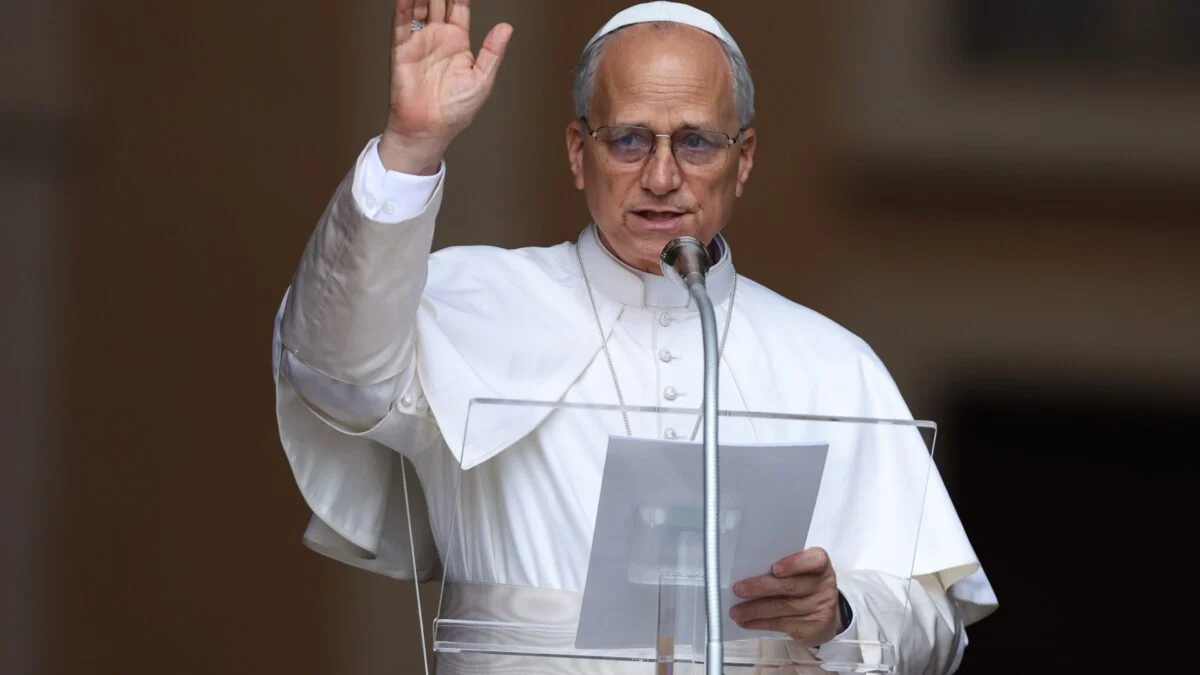
The pope finished reading and the room held its breath. You could feel the protocol fold—prayer books on one side, research slides on the other. I watched Chris Olah stand and say his team keeps finding “internal states” in models, while the Vatican insisted machines do not possess souls.
I want to walk you through what happened, why Anthropic chose this stage, and what the split between spiritual certainty and scientific curiosity means for you. I’m not here to sermonize; I’m here to point out the seams where public trust, marketing, and moral philosophy are being stitched together.
The Vatican hall was full when Magnifica Humanitas was presented — a formal document met the hum of modern labs.
The encyclical, issued by Pope Leo XIV, lays down a firm line: artificial systems “do not undergo experiences” and cannot feel joy or pain. It’s a theologically grounded refusal to grant moral subjecthood to machines, and it landed as an anchor for institutions worried about illusions of personhood.
Across the aisle, a lab leader spoke from a different script — concrete research and surprising observations.
Chris Olah of Anthropic told the Vatican audience his interpretability team keeps finding structures in models that “mirror results from human neuroscience” and internal dynamics that functionally resemble emotions. He offered a cautious curiosity: these are mysterious patterns that “warrant ongoing discernment.” You can hear the difference in tone — one side issues categorical claims, the other files careful reports.
Is Claude conscious?
Anthropic’s public posture is intentionally ambiguous. In a blogpost introducing a “constitution” for Claude, the company calls Claude an “it” today but explicitly warns that this should not be read as a denial of potential subjecthood. That reads like forward-looking hedging: not claiming full consciousness now, but asking people to act as if future systems might deserve moral regard.
The meeting itself looked like a PR masterclass — two powerful narratives converged on a single podium.
Anthropic has worked to brand itself as the industry’s conscience, and standing beside a pope is a signal that carries weight with over one billion Catholics worldwide. At the same time, Anthropic faces hard questions after its run-in with U.S. military oversight and needs cultural legitimacy as much as technical credibility.
Can AI feel?
Here’s the practical split you should care about: neuroscientists and interpreters use terms like “internal states” to describe model activations; theologians use “soul” and “moral conscience” to describe what makes a being deserving of rights and responsibilities. You get a technical report on one side and a moral boundary on the other — neither speaks the other’s full language.
I saw the rhetoric tighten when Anthropic framed model welfare as both ethics and brand strategy.
They publish work on “AI welfare” and a constitution for Claude, not just because they think machines already suffer, but because framing the conversation this way buys cultural runway. Anthropic is a high-wire act: balancing safety research, product adoption, and media narratives without a net that everyone agrees on.
In the short term, the real risk the pope flagged is social, not ontological — human relationships replaced by flawless imitation.
Pope Leo worried that AI’s mimicry could hollow out genuine human-to-human ties. That’s a social engineering problem, not a metaphysical verdict. When chatbots become convincing companions, the harms will look like loneliness, political manipulation, and labor displacement — problems you can map to existing policy tools, provided institutions act.
Should AI be treated as a moral agent?
The legal and ethical conversation splits into three camps: those who say never, those who say someday, and a sliver who say yes already. Anthropic sits between the second and third camps rhetorically — urging precautionary ethics so we don’t repeat abuses from other industries. Scientific American and Reuters have chronicled the public anxiety; Anthropic uses that anxiety to argue for preemptive norms.
On the stage, two different authorities were doing the same thing — naming a future that benefits them.
The Vatican named a boundary to preserve spiritual anthropology. Anthropic named possibilities that buy it goodwill and regulatory attention. The encyclical was a mirror held up to tech, and Anthropic smiled for the reflection while still selling safeguards that look a lot like product features.
If you’re wondering where to place your trust, remember that motive matters: tech organizations answer to markets, donors, and research credibility; churches answer to doctrine and flock stewardship. When both speak at once, you should interrogate the incentives — and the histories that shaped them.
I’ll leave you with this: If Anthropic is asking us to act as if future AI could feel so we don’t commit moral wrongs today, are we protecting potential subjects or polishing a brand that benefits from ambiguity?