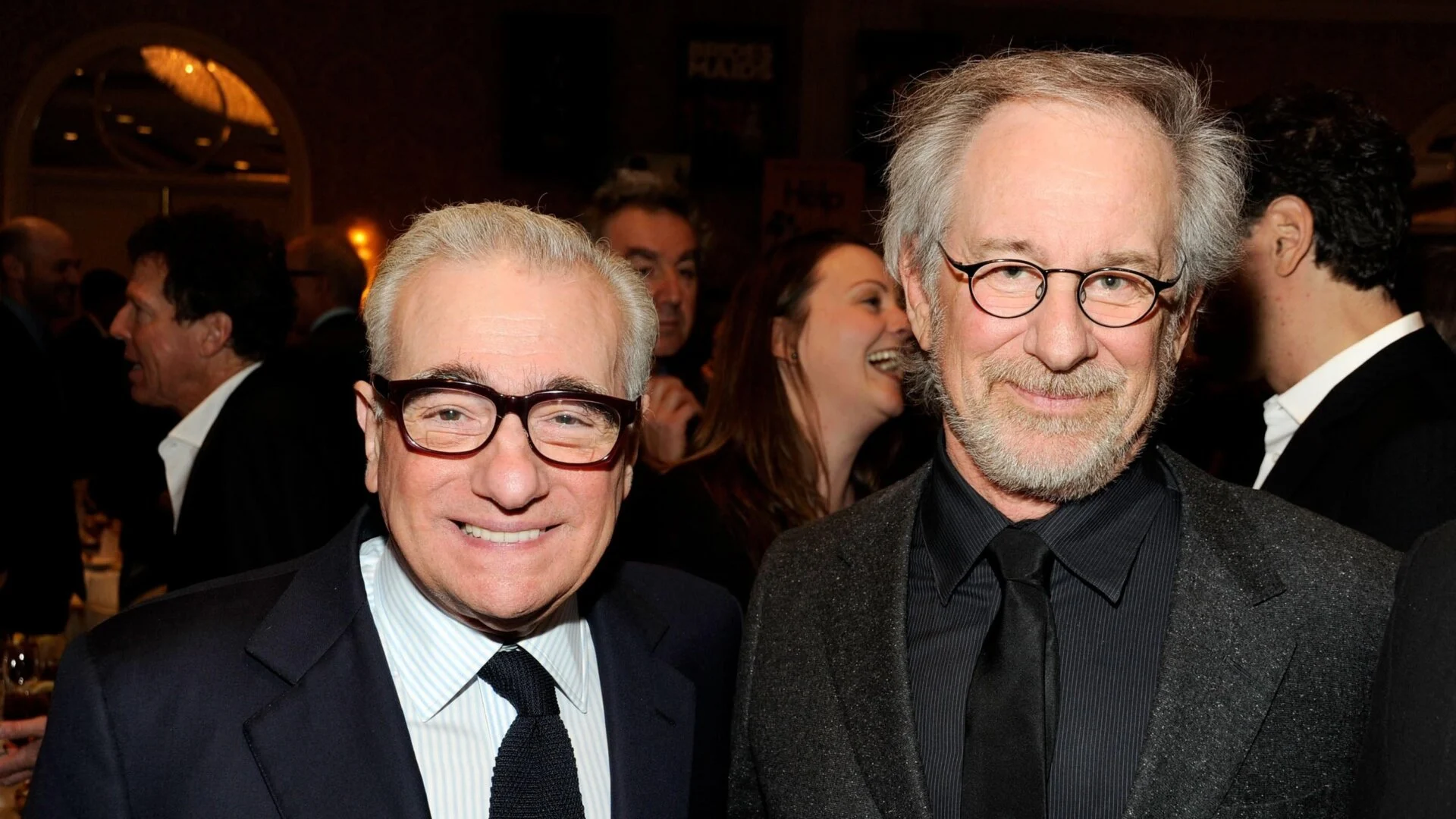
I sat with the image on my phone for a long minute: a Scorsese-angle that never touched a pencil. The call from an agent felt like a small seismic tremor—familiar ground shifting underfoot. You can feel the film world rearranging itself, whether you cheer or grit your teeth.
I’ve been watching this industry for years. I know when a change is a tool and when it becomes a shortcut. You deserve a clear read: Martin Scorsese has agreed to advise a generative-AI company and has started using that tech while storyboarding his next film—and that matters in ways you should care about.
I watched an AI-generated frame arrive in a producer’s inbox. Scorsese, the man who made storyboards a rite of passage, is now consulting for Black Forest Labs.
Black Forest Labs built Flux, a text-to-image and video model that companies like Adobe, VSCO and xAI have tapped. The firm raised a large round—$300 million (€276 million) at a $3.25 billion (€2.99 billion) valuation—and that money opens doors. One of those doors led to Rick Yorn, Scorsese’s talent manager and co-founder of BroadLight Capital, an investor in the company. Michael Ovitz, the CAA founder and a former neighbor, is another investor. In short: the introductions were made before the invitation was needed.
I remember Scorsese sketching on a napkin at a festival coffee break. He’s talked publicly about using tech; now he’s using it practically, for storyboards.
He told reporters he’s using AI to communicate visual ideas to his production designer, art director and cinematographer—what he framed as an efficiency upgrade. That’s honest, and it’s human: “The heart’s gotta be there,” he said in Taormina. But efficiency changes incentives. Storyboarding has been both a job and a craft. When an AI can produce a mood, a frame, a camera move in seconds, the work shifts from hand to prompt, from rehearsal room to server rack.
Why is Martin Scorsese using AI?
Because it’s faster at making an image that means something to a crew. Because his inner circle—agents and investors—are already embedded in the companies building these tools. Because, as he put it before, new tools should be learned. You should also note he didn’t sit for a Times interview about the adviser role; the statement to the paper likely rode in via a rep.
I’ve seen studios chase productivity like a new camera lens. The people who don’t storyboard will feel the pull to adopt whatever shortens prep time.
Scorsese isn’t shouting that AI should replace human creativity; he’s saying it helps him communicate. I’ll grant the point. But this is a momentum story: directors who never did storyboards will find the barrier to creating visual plans lower. That’s a promise and a risk. Films have always been collaborative. Now some of the craft that taught directors how to think visually may start to be outsourced to algorithms.
Will AI replace filmmakers?
No tool replaces the director’s judgment. But tools change what’s done by whom—and that changes the final film. When you let an image generator set the baseline, you trade a roomful of debate for a near-instant consensus. That can be a mercy or a mutiny.
I attended a festival Q&A where Scorsese warned against fear of technology. He kept saying the human heart must remain.
He has consistently urged filmmakers not to be slaves to tools—a line I agree with. Yet he also handed his name and influence to an AI maker, a move that normalizes the tech at the highest level. Imagine a master chef who starts using a machine to plate courses: the meal might look perfect, but someone else is deciding the rhythm. The first metaphor: it’s like a conductor handing his baton to a clever robot.
There are corporate realities, too. BroadLight Capital’s involvement and the presence of heavyweights like Ovitz mean the partnership isn’t purely artistic; it’s strategic. Flux will learn from the language of Scorsese, and that data trains models other directors use. If production shortcuts become the default, studios save money. If studios save money, certain processes won’t return. That’s the worry you should feel.
What is Black Forest Labs and Flux?
They’re a private AI lab producing tools for image and video generation. Flux is the model other companies license or integrate; think of it as a new on-ramp for visual ideas. Adobe, VSCO and xAI have already been linked to Flux usage, which means the tech will be funneled into familiar creative apps.
I’m not asking you to throw out your admiration for Scorsese. He’s a rare voice who has repeatedly argued for preserving human art. But influence is a currency, and endorsements move markets. When a director of his stature accepts an adviser role, others listen—and adopt.
The second metaphor: this feels like a Trojan horse of convenience parked at the studio gate.
You and I can pick a side. We can welcome faster collaboration and tighter visual communication, or we can watch a craft erode under the weight of efficiency. Either way, this choice won’t play out in a single headline—every storyboard, every call sheet, every prep room will be a voting booth. So what will you fight to keep human on screen?