The lights dimmed. I leaned forward and felt the small electric jolt you get when a familiar villain suddenly looks unfamiliar. For a second I wondered which one of them would make me cheer and which would make me flinch.
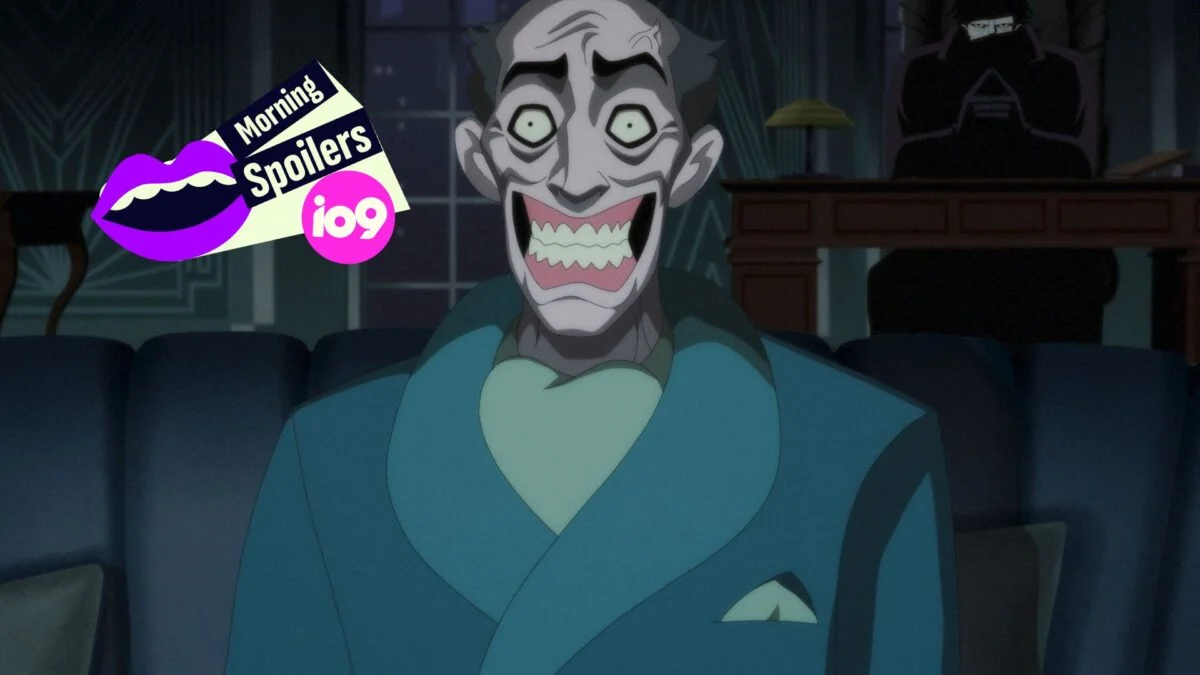
Here’s Your First Look at The Riddler, Mad Hatter, Scarecrow, and Roxy Rocket in Caped Crusader Season Two
The image dropped into my feed and cut through the usual noise on day one. You’re looking at Amazon and Warner Bros. Animation giving Gotham’s rogues a remix: sharper silhouettes, new textures, and a sense that these aren’t throwaway updates but a directed creative choice. I’ve seen promotional art that feels like a carnival mirror; this one does not—these designs bend history into fresh, unsettling angles.
I’ll be blunt: seeing a fresh Riddler, Scarecrow, Mad Hatter, and Roxy Rocket in motion matters because animated serials build authority one episode at a time. Amazon’s push behind the series and Warner Bros. Animation’s pedigree suggest this season will treat villain redesigns as character work, not costume swaps. Pay attention to the color palette, the props, and the way framing reassigns menace from physique to posture.
Who is playing The Riddler in Caped Crusader season two?
Amazon’s image release did not attach final casting details to every character, but the studio’s social-first rollout and Warner Bros. Animation’s casting track record mean you can expect actors who blur voice and physicality. I’ll flag Deadline and Variety for day-one casting confirmations; when they post, you’ll see the credit line before the episode list appears on Prime Video.
When will season two of Caped Crusader arrive?
There’s no official premiere date yet. The production images and new art indicate the season is well into its promotional window, which usually precedes a streaming launch by two to four months for shows on Amazon’s schedule.
Will the show keep the dark tone from season one?
From what I can read in the new art and Warner Bros. Animation’s staging, yes—the tone is still noir-tinged. Expect stylized violence and psychological beats that lean into old-school detective work as much as kinetic set pieces.
The Littlest Hobo
I noticed Deadline’s byline and that made the headline feel official. Seth Rogen and Evan Goldberg’s Point Grey are partnering with Lionsgate Canada and New Hobo Productions to develop a live-action reboot of The Littlest Hobo, meaning a canine-centered, globe-trotting procedural is back on the table.
This isn’t a nostalgia stunt. With Point Grey involved, the series will likely skew cinematic and comedic while respecting the franchise’s core: a crime-solving German Shepherd who moves from town to town. You should expect a modernized tone that can pivot between family-friendly beats and sly adult jokes—think procedural warmth with an indie film’s visual sensibility.
The Odyssey
TCL Chinese Theatres posted a rating and runtime that made people take notes. Christopher Nolan’s The Odyssey is listed as rated R and clocks at two hours and fifty-two minutes, and its reported production budget is $250,000,000 (€230,000,000), which would make it the priciest R-rated studio gamble on record.
I file that under “expensive confidence.” Nolan’s brand is a built-in authority cue; you don’t spend that kind of budget without intending to make a cultural event. Whether the R rating signals raw thematic ambition or strategic positioning for awards season, it’s a headline that brands and box-office analysts will watch like a slow-motion reveal.
Spider-Man: Brand New Day
Shaw Theaters’ runtime listing raised my eyebrow. Spider-Man: Brand New Day is showing a two-hour twenty-five-minute runtime on Shaw’s site, which stacks up as a major, full-length cinematic play for any superhero property on today’s release schedules.
Long runtimes can be a promise or a warning: either the film has earned its beats, or studios are testing audience stamina. With that length, expect plot threads that will feed multiple franchise pathways and merchandising angles—this is the kind of movie designed to be talked about for months.
Ray Gunn
Empire shared an image and I paused to read the credits. Brad Bird’s animated sci-fi noir Ray Gunn surfaced with an image showing Sam Rockwell’s voice work as a Chris Pine–type detective, which signals a playful, star-driven tone for this high-concept world.
Bird’s pedigree gives the project instant credibility, and Empire’s exclusive image functions like a soft launch: build curiosity, then measure reaction. Watch for whether the visual language skews retro or futurist—that choice will tell you whether Bird is making a noir pastiche or an original genre hybrid.
Ice Cream Man
I watched the trailer and winced at the practical gore. Eli Roth’s Ice Cream Man has a “red band” trailer that transforms demon-tainted treats into a contagion that turns children into cannibalistic creatures—Roth’s signature appetite for on-screen revulsion is intact.
If you follow genre marketing, you know Roth uses extreme imagery to separate adult horror from PG-13 franchising. That strategy keeps a core horror audience loyal, even as mainstream outlets debate boundaries.
Fall 2: Deadpoint
A trailer clip took a single set piece and made it the story’s spine. The sequel to Fall flips the premise horizontally: two women are trapped on a plank rather than a pole, and the entire trailer sells claustrophobia over spectacle.
I respect that restraint. It’s a reminder of how a focused gimmick can be stretched into new territory by changing scale and orientation—small changes, big nerves.
Ice Age: Boiling Point
A teaser committed to a single visual gag and leaned into it. The Ice Age cast is launched skyward by a volcanic geyser in the first teaser for Boiling Point, which means the franchise is still betting on kinetic, family-friendly chaos to drive tentpole returns.
Animated tentpoles trade on repeatability: broad comedic beats that play internationally and license easily. If you’re monitoring studio strategy, that geyser shot tells you marketing will sell spectacle first and character arcs second.
A Knight of the Seven Kingdoms
I noticed the director’s travel notes and they read like production proof. Owen Harris told The Playlist he’s halfway through season two, shooting in chunks between Belfast and Gran Canaria, which is a classic sign of a show solving logistical headaches while keeping creative momentum.
I’m in Belfast. We are halfway through season 2, slugging away. We are about to go off to Gran Canaria to shoot a part of it, and we have been shooting. We started shooting in November, I think, end of November. We’ve shot it in chunks. Another six episodes, and I’m doing four of them.
Chunked schedules often mean the production is balancing location needs, actor availability, and visual effects work. For you, that translates to staggered teasers and episodic reveals—production rhythm becomes the narrative’s pacing engine.
Batman: Caped Crusader
I saved the Batman images and looked at them twice. Amazon and Warner Bros. Animation released new images from season two that introduce new takes on The Riddler, Scarecrow, Mad Hatter, and Roxy Rocket—each one a production decision intended to steer audience expectation.
These images signal a season that plans to interrogate villainy through design: costume as shorthand for motive. If you study marketing, this is a move to make stills function like cold opens—each frame promising a story beat that the episode will pay off.
I’ll add one last note: the way they’ve reworked Scarecrow’s silhouette and Roxy Rocket’s flight rig suggests a heavier focus on physicality over camp—expect choreography and animation that treat action like character exposition, not filler.
Star Trek: Strange New Worlds
A convention anecdote carried the weight of a spoiler flag. Christina Chong told FedCon ’26 that episode nine of season four was “the hardest episode I’ve ever had to do” because someone she loves is in it, which signals emotional stakes beyond routine sci-fi beats.
Guest-star reveals and emotional pivots are classic ways to keep long-running franchises fresh. For you that means prepare for a tonal shift: character-driven drama wrapped in franchise continuity.
Rick and Morty
I watched a clip and felt the show testing genre limits again. A new scene teases Rick trying the “Five Point Exploding Heart Technique,” a callback that repurposes franchise lore as gag and plot device simultaneously.
That kind of layered reference rewards dedicated viewers and keeps casual watchers engaged enough to tune back in next week—serial comedy as subscriber glue.
The Guide
I read Deadline’s casting note and filed it under “psychedelic thriller.” James Badge Dale, Abigail Cowen, and Edouard Philipponnat are set to star in The Guide, a film about a psilocybin retreat from directors Inon and Natalie Shampanier that promises a session turning into a nightmare.
Psychotropic therapy in film is a narrative shortcut to memory, guilt, and unreliable perception. If the trailer capitalizes on atmosphere over exposition, the film will try to sell unease the way a score sells suspense—small cues that rebuild reality around the characters.
Sources I watch for verification: Deadline, Empire, TCL Chinese Theatres’ listings, Shaw Theaters, World of Reel, and studio social channels. They’re the distribution pipeline for careful readers who want primary signals rather than rumor.
Which redesign or remake are you bracing for as the one that will force the conversation about franchise reinvention?