
I froze as the AI version of Hideo Kojima blinked on my screen. You feel that odd betrayal when an icon becomes a prop. For a beat, I wondered if my childhood heroes could be rented out to algorithms.
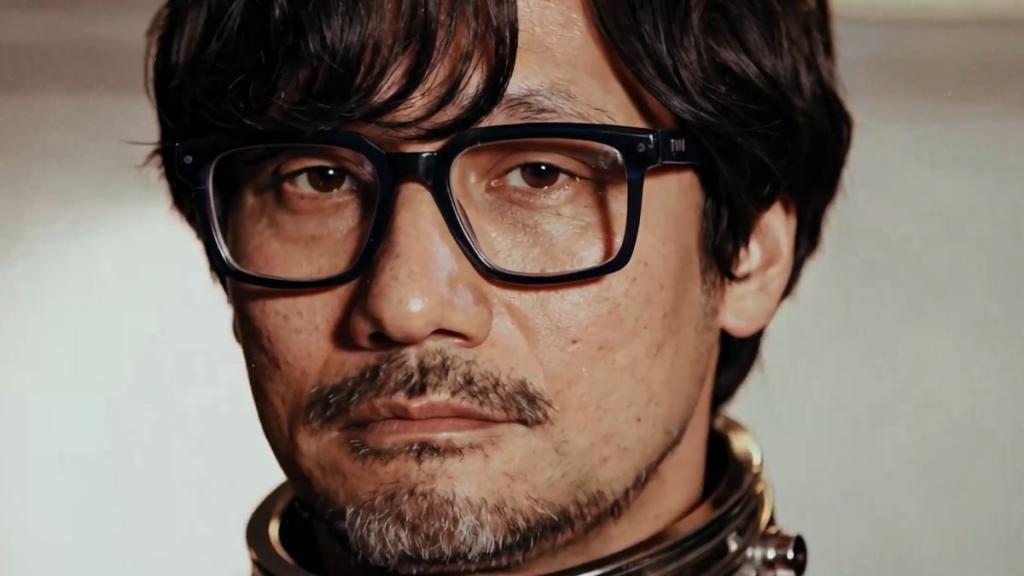
I’m writing as someone who grew up on Metal Gear Solid and stayed for Death Stranding. You can be skeptical about tech and still love the artist. When Nicolas Winding Refn’s AI-heavy promo for a Prada show rendered Kojima, my instinct was to flinch — like a mirror cracked across memory.
At Prada’s New York exhibit, a likeness of Kojima played on loop.
I watched the clip and noticed Kojima never shared it on his channels. That absence matters. If the creator doesn’t endorse a piece, the work drifts into the gray area between homage and forgery.
Kojima’s quote to Gene Park was plain: “Art is life,” and while AI might someday make art, Kojima doesn’t think he’ll see it in his lifetime. He added he’s not interested. Those are not the words of someone curious for curiosity’s sake; they’re a boundary being drawn.
Onstage with Refn, the promo felt like an experiment more than an invitation.
Nicolas Winding Refn publicly called AI “fascinating” and framed uncertainty as fuel. That’s a common slogan among creatives using generative models — from Midjourney to Stable Diffusion — to test identity and style.
Can AI create art?
Short answer: people argue both ways. Legally and ethically, AI can recompose imagery and generate novel combinations, but whether that output qualifies as art depends on authorship and intent. Platforms like Midjourney and OpenAI’s image tools produce work quickly; the debate shifts to who owns the voice and whether human artists were co-opted without consent.
Refn treats uncertainty like fuel. Kojima treats authorship like a covenant. You can see why those positions collide: one treats the face on screen as material, the other as a life story.
See You in New York@Prada With@Kojima_Hideo @kuhlandhan @camsugarmusic pic.twitter.com/HrClMNocqB
— byNWR Official (@NicolasWR) May 26, 2026
Kojima is working on new games; his public stance will shape those projects.
He has OD on Xbox and a long-term stealth project codenamed PHYSINT. That’s tangible. Those games will be tests — not just of design, but of principle.
Will Kojima use AI in his games?
Based on his statement, he’s unlikely to embrace generative methods for core creative work while he’s active. That doesn’t rule out smaller uses — tools for QA, procedural assets, or tooling from studios like Epic Games and Unity — but when the author’s voice is central, Kojima seems intent on keeping that voice human.
There’s a wider tension here. Studios and creators are being courted by companies offering AI asset pipelines and face-swap tech like DeepFaceLab. Some see efficiency; others see erosion of authorship. You can support both innovation and artistic consent, but you have to decide which side you prioritize.
For me, Kojima’s blunt line — “I’m not interested in it” — restored a kind of trust. Not because he’s anti-tech, but because he treated his identity as something you don’t rent out casually. He didn’t rage; he set a limit.
Refn and Kojima aren’t the first to argue about tools. Think of rock musicians debating sampling or directors arguing over CGI; this is another chapter. Artists will keep testing the edges while audiences test their loyalty.
If you value authorship, Kojima’s stance reads like a weathered lighthouse in a storm: not flashy, but obsessively clear. If you value whatever pushes novelty fastest, Refn’s “fascinating” will feel right.
Which do you trust more with the icons you grew up with — the director who experiments with whatever’s new, or the creator who refuses to let his likeness be repurposed without his say?