
The Steam page went live and my inbox lit up — not with praise, but with a single line that changed the mood. You could feel the shift: excitement folding into suspicion. I watched fans trade hope for outrage in a handful of posts.
I’m going to walk you through what happened, what Kenji Kanno said at Summer Game Fest, and why the reaction isn’t surprising. You’ll get sources, a clear read on the claim, and the stakes for developers and players.
The Steam listing showed a brief disclaimer, and people noticed
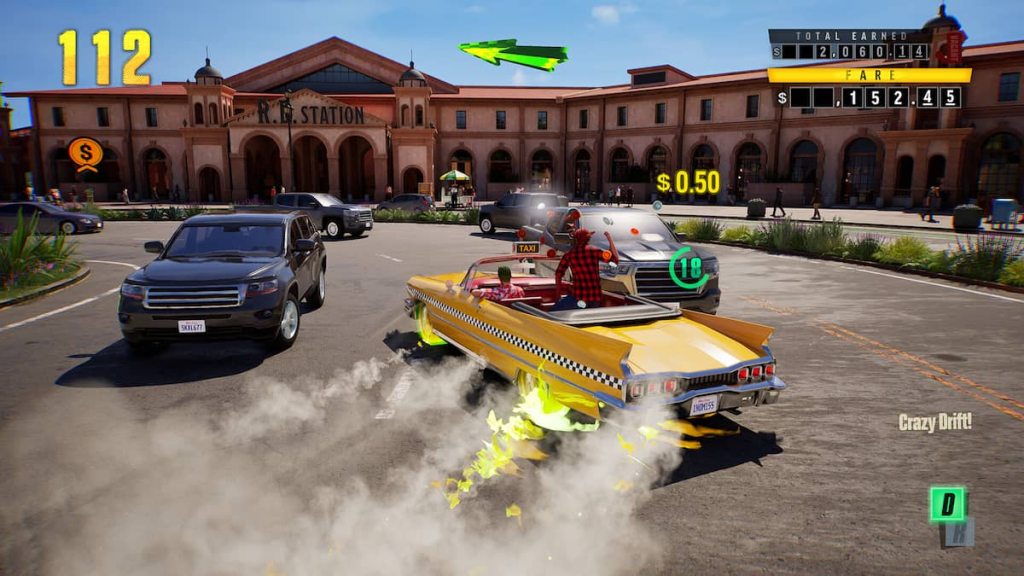
The Crazy Taxi: World Tour Steam page included a candid line: SEGA had used generative AI “as a support tool for developers.” That single sentence forced a much broader conversation — about trust, credit, and creative labor.
It’s not wild that gamers reacted. You and I both know a brand’s promise can be fragile; once that trust cracks, debate fills the gap.
Did SEGA use generative AI to create Crazy Taxi assets?
Short answer from the creator: no, not as the final asset. Kenji Kanno told attendees at Summer Game Fest, via a translator (reported by Kotaku), that artists used generative AI as a reference. They generated images for idea prompts, then hand-drew the actual assets.
SEGA’s Steam blurb mirrored that claim: generative AI helped speed idea generation, while performers and final assets were made by humans. You should treat that claim like any corporate line — credible but worth watching as evidence appears.
Kenji Kanno answered questions at a public event and the room listened
At Summer Game Fest, Kanno didn’t dodge the topic. He described a workflow where AI supplied options and human artists chose, adapted, and executed the final art. That puts responsibility squarely on the creative team, not the generator.
That’s comforting on paper, but it’s also the new normal: many studios now cite AI for ideation. Call of Duty teams and other major publishers have admitted similar use, which keeps the conversation from being isolated to SEGA.
Is generative AI going to replace developers on game teams?
You can read the headlines two ways. Some fear automation; others see time reclaimed for higher-level craft. Kanno framed AI as a reference tool — a fast way to collect visual starting points so artists can spend more time refining and coding.
Think of the toolchain like a precision instrument: it can erase tedious strokes, but someone still must compose the music. The risk is that process and credit get blurred, which is why transparency matters.
The cultural lens shifted how fans reacted across regions
Responses weren’t uniform. In parts of Asia, acceptance of AI assistance is higher; in the West, you’ll see sharper scrutiny. That difference matters for global franchises — SEGA sells to both audiences and must manage expectations accordingly.
I’ve seen developer chats where tools such as Midjourney, Stable Diffusion, and DALL·E are treated as idea engines. The moment those names appear, someone asks: who owns the idea and who gets credit?
A single line on Steam became a trigger for broader industry questions
After the Steam notice, coverage from outlets like Kotaku amplified the debate. That’s how perceptions harden: a short disclosure meets social media, then reporters and fans interrogate the finer points.
If you care about creative labor — or about whether your favorite franchises remain human-driven — this matters. The tools that helped artists will become a lightning rod unless studios offer clear policies and examples of how they were used.
SEGA’s language was plain: generative AI “support tools” for developers, not replacements for performers. Kanno added that as AI grows, it will be a “hot topic” — and he left room for future questions. That openness is a start, but it’s not the whole conversation.
I want you to notice two things: first, that the industry already uses these tools; second, that consumer trust will decide how far studios push their use. The tools are a sketchbook on fast-forward and a double-edged scalpel for creative teams.
So where do you stand — acceptable helper or unwelcome substitute for human creators?