
The Luminary menu was a locked vault of choices. I stared at one glowing node and felt the room tighten—one point, endless directions. You know that brief, uncomfortable decision when a single click can change the way you play.
I’ve spent hours parsing those nodes so you don’t have to fumble through every choice in the moment. I’ll show you how Luminaries work, where points come from, and the practical moves that speed a build forward.
How Luminaries behave and what they actually give you
I’ve watched players pause at the Luminary screen, confused by rows of icons and tiny tooltips.
In Witchspire, Luminaries are your progression gatekeepers. They are not merely skills: each node can grant an ability, a weapon upgrade, a recipe, a workbench, or even a decorative item. Think of them as the game’s permission system—pick a node and new mechanics or gear become available to you.
You decide your path. Pick resource-focused nodes to streamline crafting, or points that hand you offensive tools so you clear encounters faster. The system intentionally gives you freedom—your playstyle shapes the map you draw.

How do I use Luminaries in Witchspire?
Open the menu, read the node’s tooltip, and commit. That’s the micro-flow. You’ll receive one point per level; assign it immediately or plan a chain that supports the build you want.
Use these practical rules:
- Prioritize utility early: Workbenches and recipes widen your options for the midgame.
- Weapon nodes first if you clear slowly: A stronger Spellblade or Wand speeds every grind.
- Save for synergy: If two nodes combine—say a damage node plus a related passive—treat them as a pair, not single targets.
Community resources—Steam Guides, Reddit threads, and creator walkthroughs on YouTube—are excellent for seeing proven synergies. If you bought Witchspire on Steam (about $19.99 (€18)), check the Guides tab for build outlines that match your preferred playstyle.
How Luminary points arrive and how to get more of them
I’ve noticed that the fastest players are almost ritualistic: quest, fight, repeat.
Every level you gain grants a single Luminary point. So the speed of your progression equals the speed at which you earn XP. There are two reliable sources:
- Quests. Complete as many as you can. Optional tasks often hand out extra XP and helpful rewards—don’t skip them if you want steady gains.
- Combat. Killing enemies nets consistent XP. Engage fights you can comfortably handle; avoiding foes slows progression. Avoid creatures that are many levels above you unless you’re prepared to die and lose momentum.
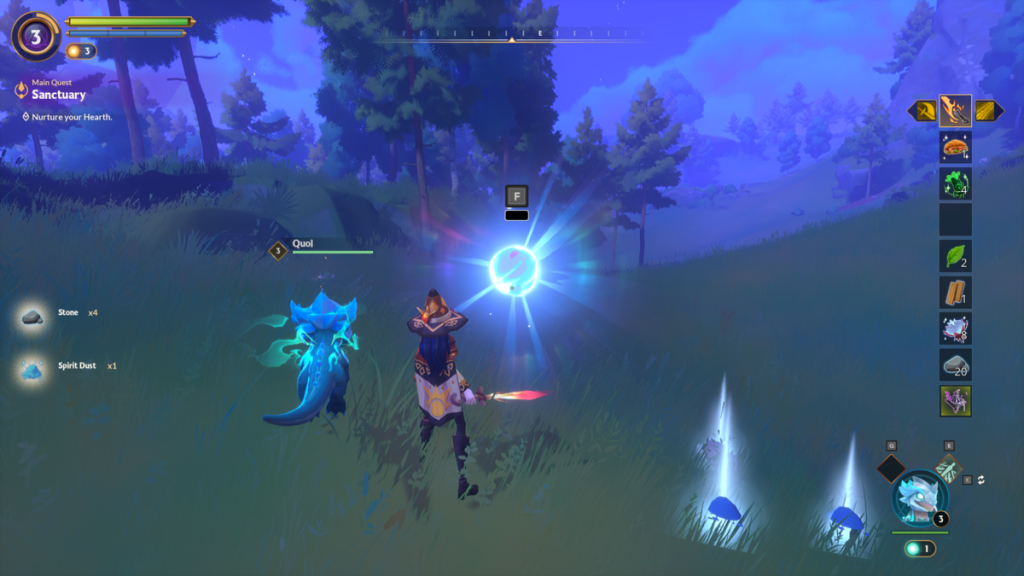
How can I get Luminaries fast?
Speed comes from focus and repeatability. Stack easy, repeatable quests and farming runs. Use saves and fast travel to restart efficient loops and keep XP flow steady.
Practical tips I use:
- Prioritize quests that give XP plus gear—two rewards at once reduces grind time.
- Optimize routes: clear areas where enemies match your level so fights finish quickly.
- Consult Steam Guides and the Witchspire subreddit for known XP farms and build templates—watch creators on Twitch for live runs to copy pacing and routing.
If you want the shortest path to new Luminaries, get a stronger weapon early. Damage cuts clear time, clear time multiplies XP per hour, and XP per hour is your real metric for points.
What to buy first and how to steer decisions
I’ve seen two camps: crafters who stack workbenches and fighters who rush damage.
Neither is wrong. Pick a direction and commit enough points to see the payoff. If you want faster clears, prioritize a Spellblade or Wand upgrade. If you plan to be a resource machine, buy tools and recipes that reduce grind. Each point you place should answer the question: will this node speed my next hour of play?
Each point is a keystone in the arch of your build—lose the middle piece and the rest can wobble.
So: will you be the player who hoards points until a perfect plan appears, or the one who spends them and learns by doing?