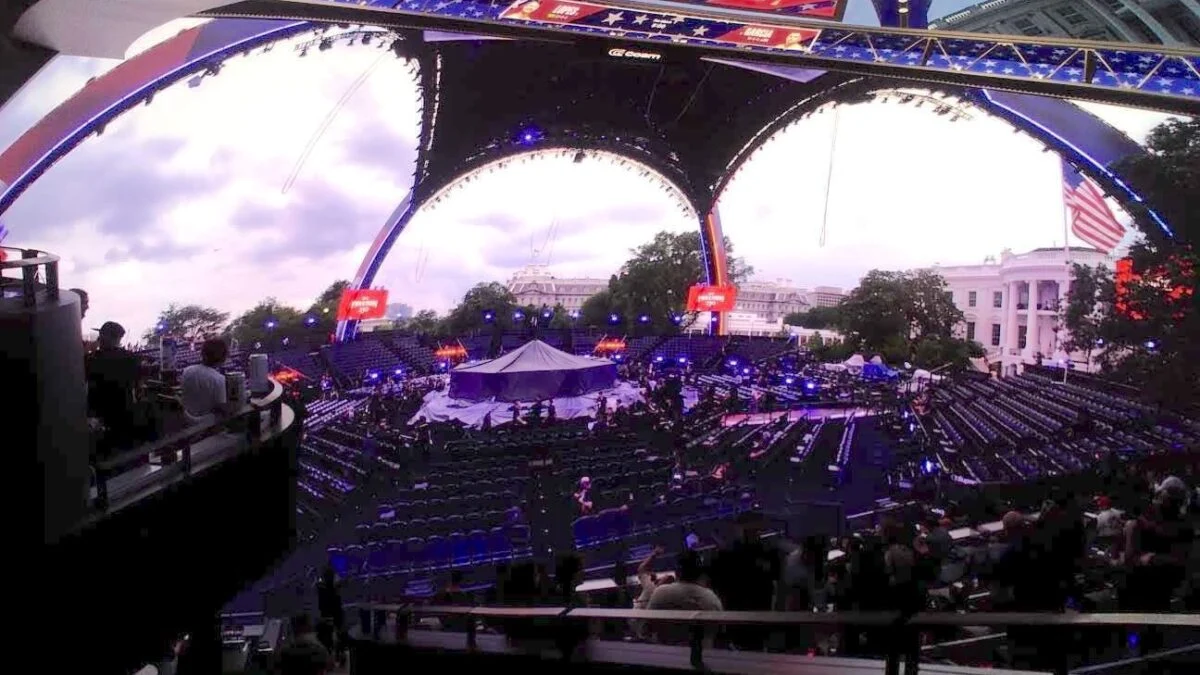
My assigned seat was in a branded box that blocked a sliver of the dome, and for a moment the screen felt more like an intruder than a miracle. The flyover roared in 8K and the room answered with a half-hearted cheer. I left five hours later knowing more about what America chooses to celebrate than I expected to.
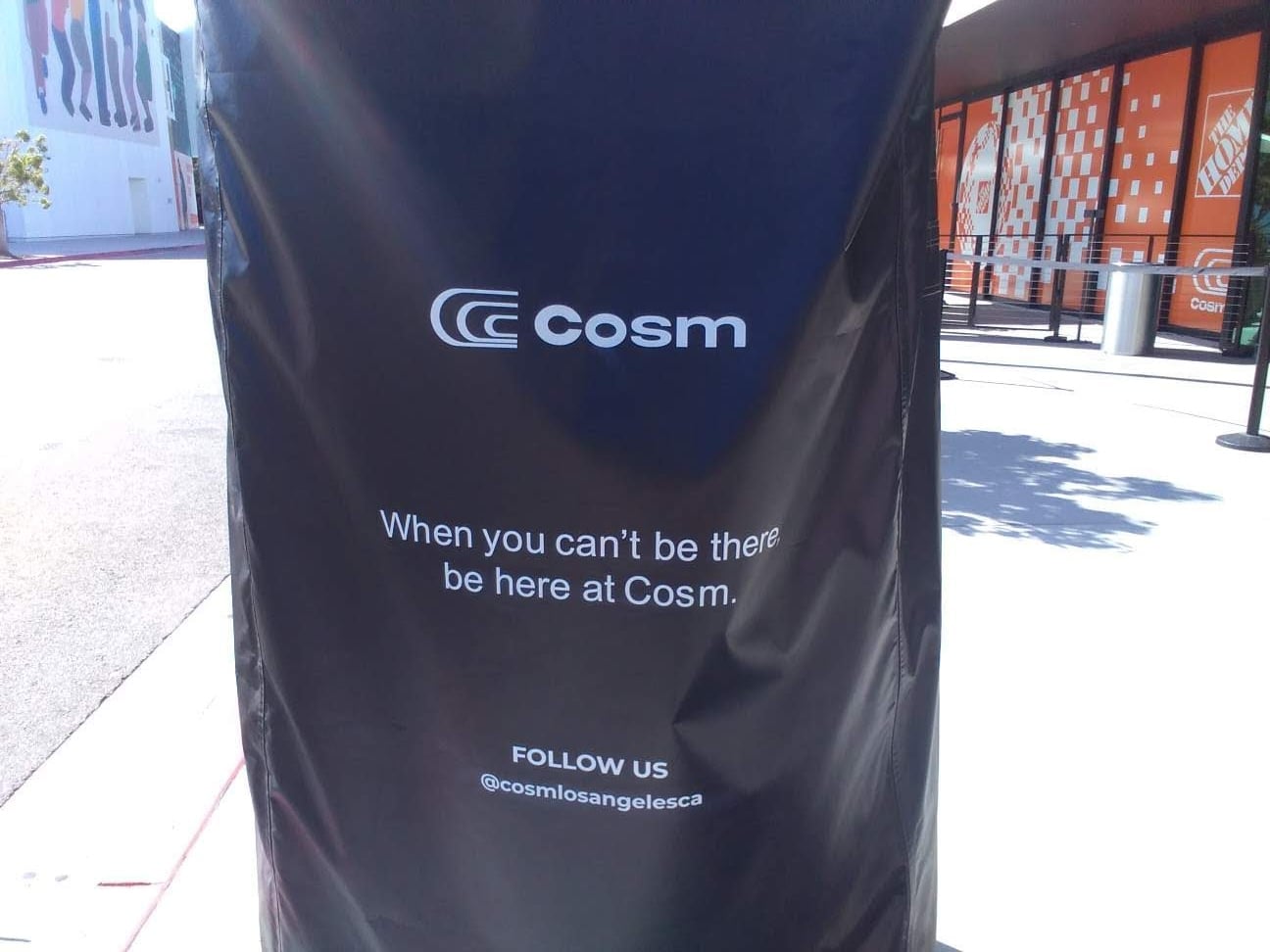
I’m writing this in first person because I watched the whole thing, and I want you to picture what it’s like to be inside a living ad for spectacle. You may have seen the headlines: a UFC card on the White House south lawn, timed for President Trump’s 80th birthday, a production so elaborate reporters counted 494 porta potties. I went to Cosm Los Angeles because Monster Energy—one of the event’s main sponsors—offered me a seat, and because Cosm’s slogan is "When you can't be there, be here at Cosm," which raises the exact question I had: what happens when you choose not to be there?
I was parked in a Monster-branded box that nudged into the dome image. Arrival felt like being admitted to a private sports bar in the sky.
The crowd skewed younger and male, but not uniformly political; only a few people seemed to care about the birthday angle. Joe Rogan sat ringside in a short-tie suit. Dana White walked the halls with Trump. Most of us were there for an excuse to be in a high-end viewing room, not a political rally.
Conversations drifted between betting apps (I checked Kalshi and noted that Polymarket was a sponsor), small talk about the special effects, and the ritualistic shouting that happens when a big fight is about to begin. You could smell the sponsorship: Monster logos, branded sparklers, and the Monster Girls handing out shirts were the evening’s constant reminders that this was as much an activation as it was a sporting event.
What happened at UFC Freedom 250?
UFC Freedom 250 staged several undercard knockouts and a main that ended in a Gaethje upset over Topuria. There was a presidential presence, an Air Force flyover, and frequent brand moments. For many viewers the event read as a spectacle rather than a political statement; for others it felt intentionally provocative. Local reactions ranged from muted applause to shouted support when American fighters won.
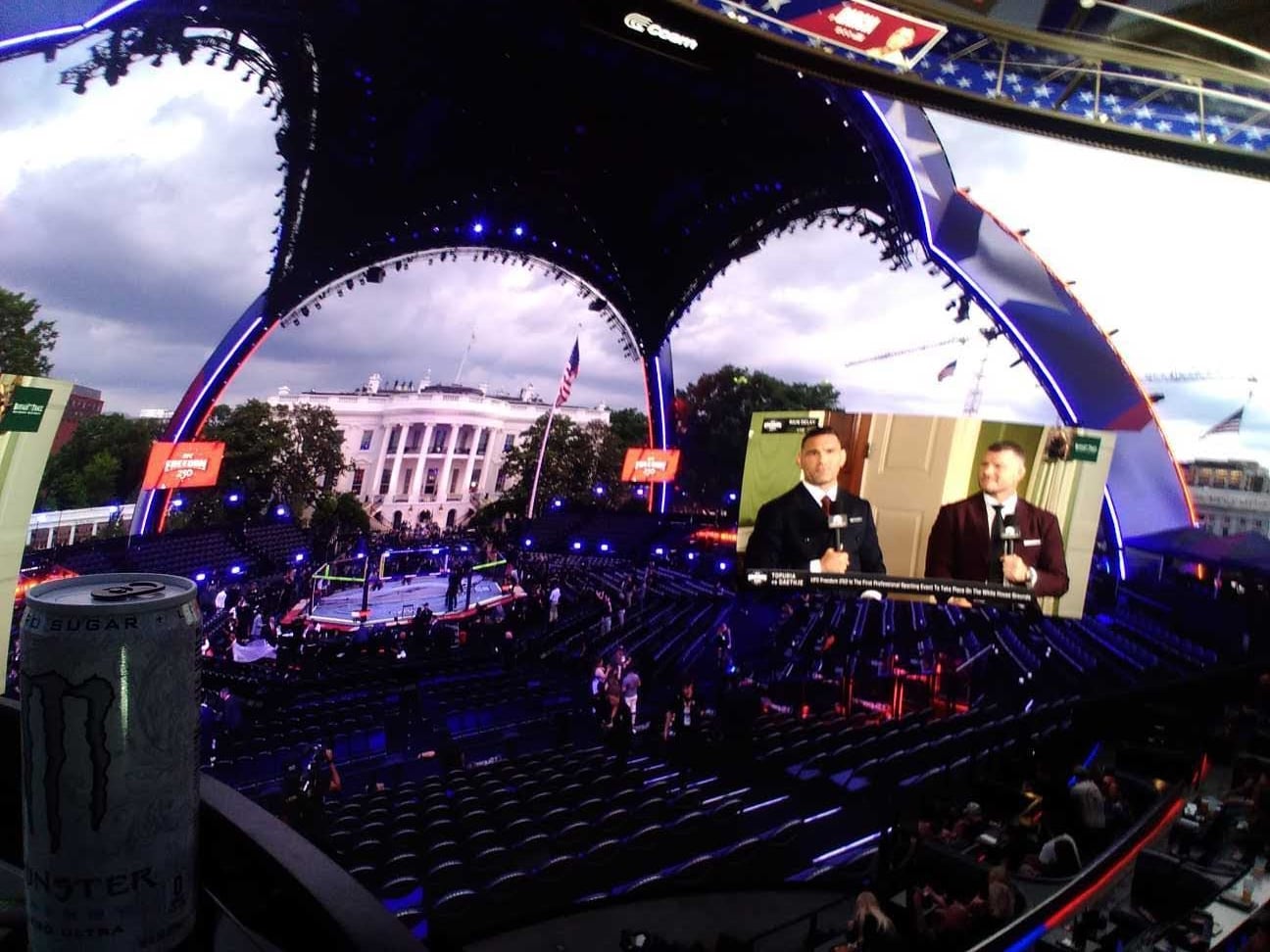
The dome image jittered in the wind and the ceiling was showing the Claw next to the White House. The theater’s technology created both immersion and a strange vertigo.
Cosm doesn’t use a projector; it runs a full LED dome described as an 87-foot, seamless display. The feed included multiple angles, and the ceiling showed a 3-D rendering of the Claw and DC landmarks while a smaller rectangle displayed the traditional broadcast. The result was occasionally disorienting: camera shakes translated into room-wide wobble and the curved surface introduced a fisheye distortion that, over hours, became fatiguing.
The dome was a spaceship folding the city into a single image—thrilling for a few minutes, draining by the fourth hour. The flyover sequence felt genuinely immersive; for a moment I forgot I wasn’t ringside in D.C. The tech works when spectacle is short; it struggles when detail and clarity matter for long periods.
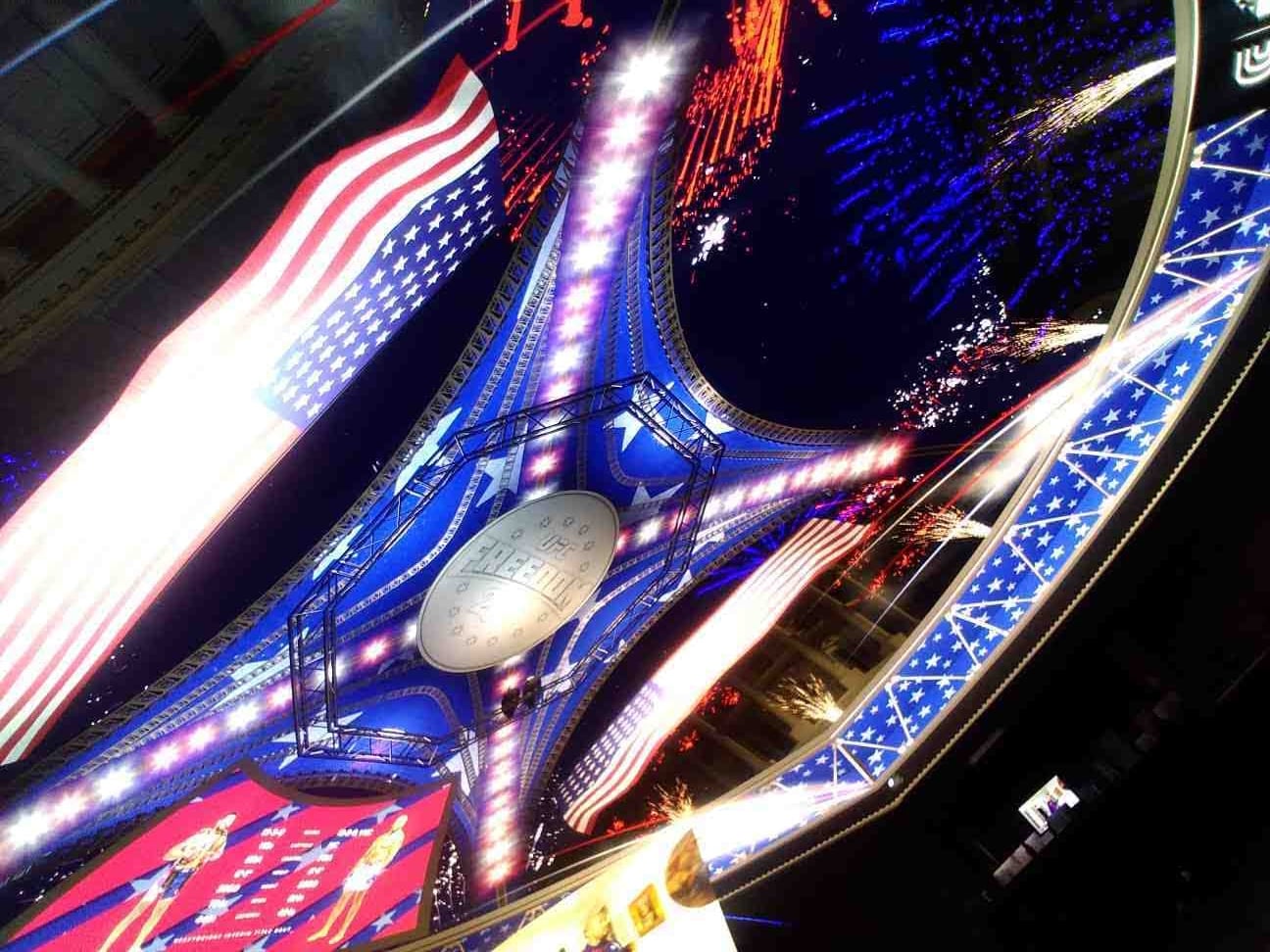
The ads stopped being interruptions and became the main event. The most effective creative took over the entire dome.
Monster’s ad moments were the clearest use of the venue: a giant CG can filled the ceiling and embers rained down on the main screen. For a few seconds the brand monopolized the format with absolute clarity—no fisheye bewilderment, no detail lost. The room reacted; people cheered at the spectacle of marketing itself.
The marketing was a carnival barker that could not be ignored. That felt intentional: the venue magnified sponsorships, and sponsors repaid the favor by using the dome in ways the live feed rarely did. Warner Bros. has already experimented with Cosm—there are shared reality Harry Potter showings—and Universal’s Diagon Alley walkthroughs are a practical reference point for what immersive storytelling can look like. When marketers embrace a platform, they tend to define how the audience experiences it.
The fights often read better on the smaller rectangles, and the room reacted to instant moments more than narratives. Individual punches mattered more than politics.
Lopes scored a clean knockout; Bo Nickal’s wrestling looked better in the TV boxes; Gaethje upset Topuria and shook hands with Trump ringside. Josh Hokit shouted support for Trump and then said something offensive about Michelle Obama; the crowd cheered and the tone of the evening shifted in a single sentence. That mix—sports, spectacle, and occasional ugliness—felt uncurated and raw.
Is the White House hosting sporting events?
The White House has hosted athletes and sporting ceremonies before, but this scale—complete with a truss system called the Claw, televised fights, and celebrity attendance—is unusual. The production blurred lines between administration events and entertainment branding. The UFC framed the night as a global card with American winners highlighted, not a campaign rally, but optics matter—and spectators interpret them.
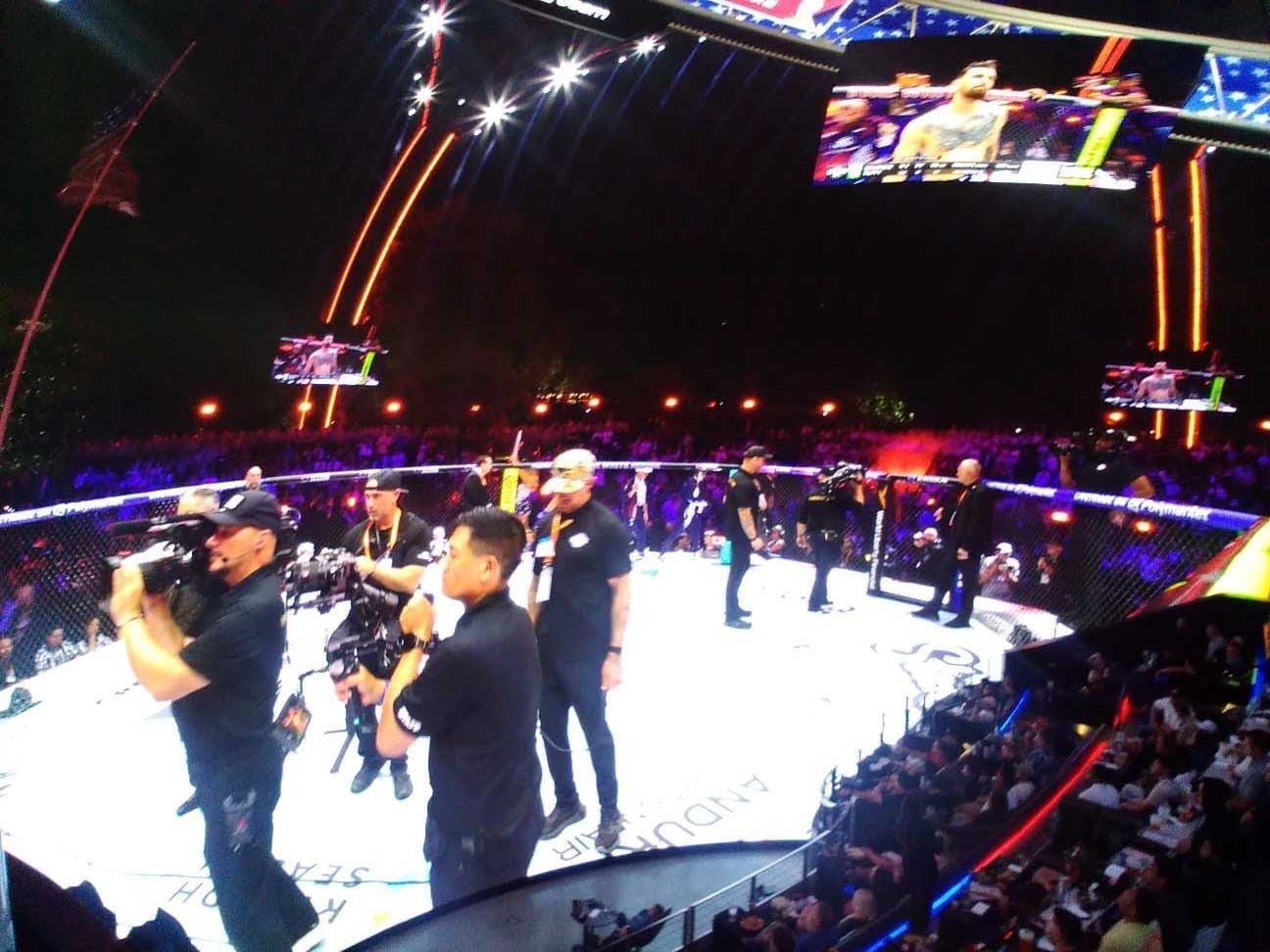
I left after five hours and walked past the Intuit Dome where Shakira was playing. The city had plenty of other plans for my attention.
After the final bell the room emptied quickly. The experience had been exhausting in a way sporting events rarely are; the dome magnified every spectacle and every awkward moment. Framing it as a sports bar helps: Cosm is essentially a very expensive, 8K barroom where you can watch a game and be sold to aggressively.
For reference on cost: Cosm tickets for a Dodgers game started at $92 (about €85), and the minimum at Dodger Stadium listed at $64 (about €59). If you want immersive atmosphere for a baseball game, Cosm will sell it to you; if you want clarity and steady camera work, the traditional TV feed might still be preferable.
How immersive is Cosm’s dome experience?
Immersion is real for short, curated moments—the flyover, a branded animation, or a cinematic entrance. For continuous sports coverage, the curved display, camera shake, and delay make traditional TV feeds more useful for understanding the fight. Cosm’s strength is experiential theater; its weakness is sustaining clarity for long-form broadcast sports.
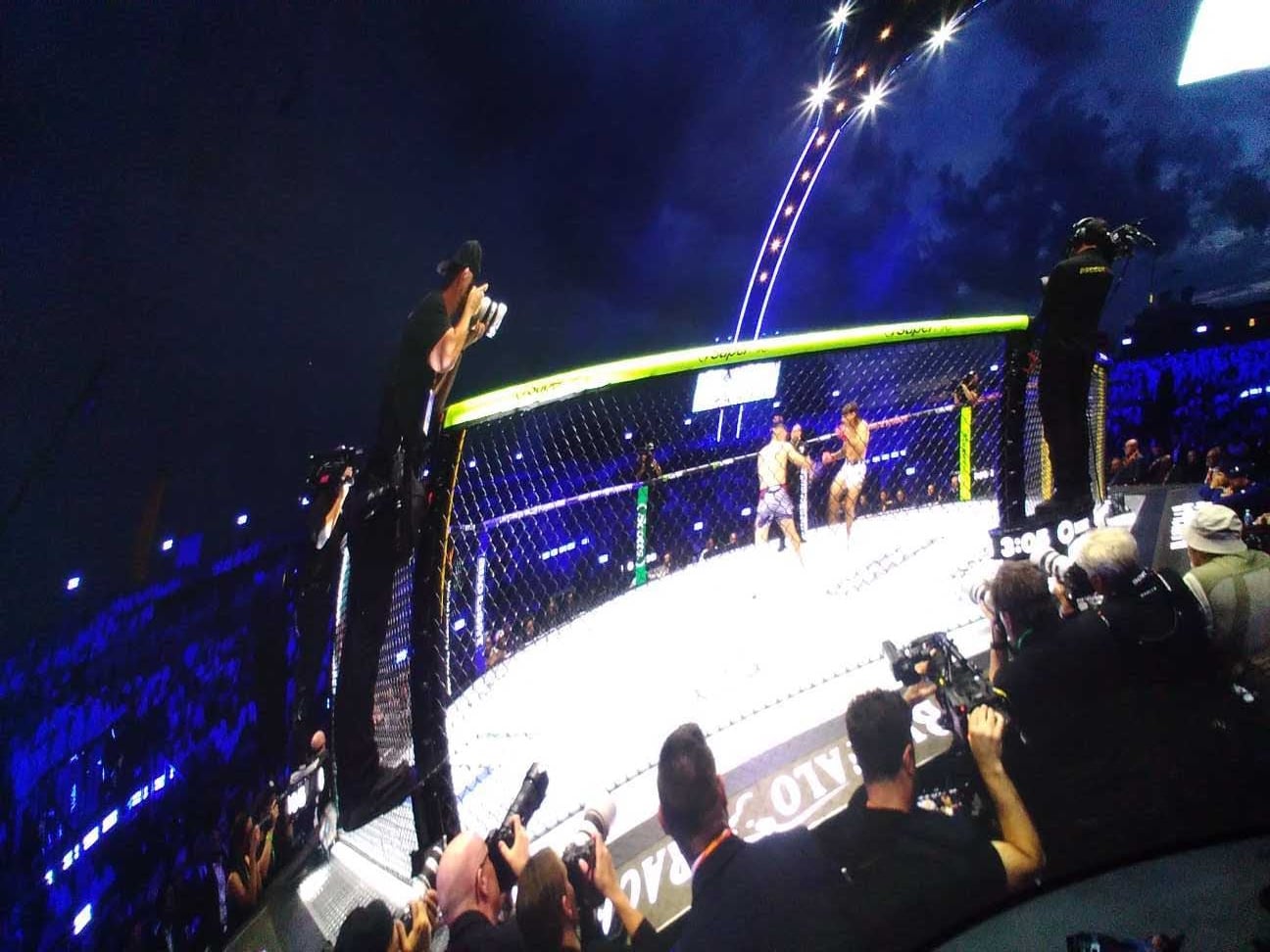
Watching UFC Freedom 250 at Cosm taught me that spectacle can be both magnifier and mask: it clarifies the things you want to feel and hides the things you should be paying attention to. You can be there without being there—but the question becomes who is doing the persuading, and are you noticing?