
I froze the first time the GTA loading screen filled my TV—my sister walked in and laughed at the bikini selfie. For a beat I realized a single illustration had already told me where I would spend the next 40 hours. You felt it too: that tiny image is often the lure, the promise, and the mood-sell all at once.
I’ve tracked these box-art mascots across two console generations and the marketing machine that surrounds them. Read this like a guided tour: you’ll get who they are, how Rockstar used them, and which ones actually show up inside the games.
On store shelves the art stops people mid-walk. List of GTA Cover Girls (2001-2026)
Rockstar started placing a single female figure on covers in 2001 with GTA III, and the habit stuck through every major release since. These women aren’t just models; they’re visual shorthand for a city’s attitude—glamour, menace, or satire—packed into one frame.
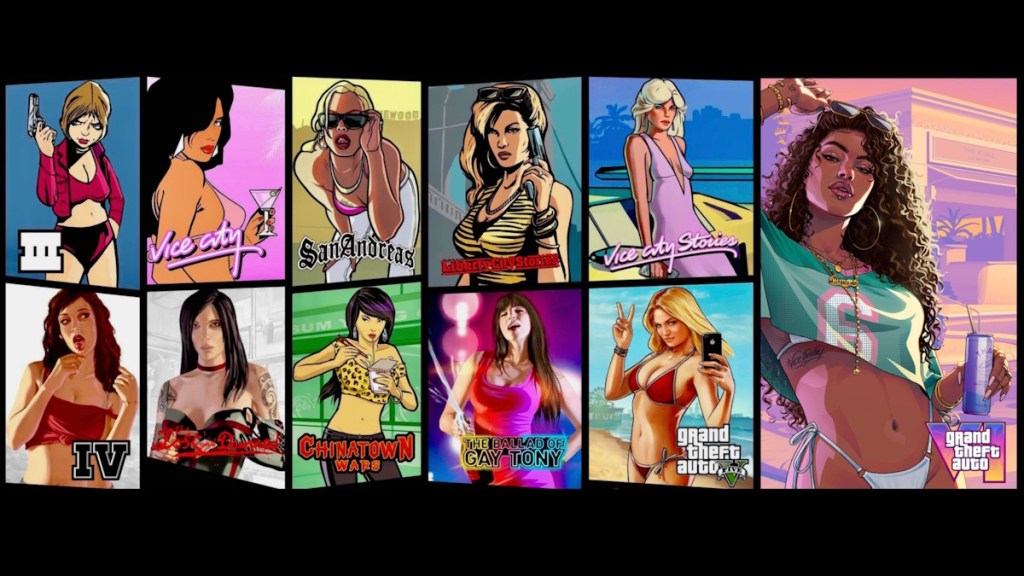
| Cover Girl | Game (Year) |
|---|---|
| Misty | GTA III (2001) |
| The Twins (one of them) | GTA: Vice City (2002) |
| Rochell’le | GTA: San Andreas (2004) |
| Maria Latore | GTA: Liberty City Stories (2005) |
| Unknown Woman and Mystique | GTA: Vice City Stories (2006) |
| Lola Del Rio | GTA IV (2008) |
| Joni | GTA: The Ballad of Gay Tony (2009) |
| Ashley Butler | GTA: The Lost and Damned (2009) |
| Ling Shan | GTA: Chinatown Wars (2009) |
| Blonde Selfie Girl | GTA V (2013) |
| GTA 6 Cover Girl | GTA VI (2026) |
You’ve held the box and guessed the city by its vibe. GTA Cover Girls from All Mainline Games
Each cover girl is shorthand for an era: 2000s grit, 1980s neon, 2010s selfie culture, and now a Vice City remix. I’ll walk you through who mattered, who lived inside the game, and who stayed a billboard ghost.
Who are the GTA cover girls?
They range from named NPCs like Misty to purely promotional models—some appear in the story, others exist only as atmosphere. Rockstar used them like a single-line pitch: the face equals the mood. You probably recognize a few without recalling their names; that’s by design.
Do the cover girls appear in the games?
Sometimes. Misty from GTA III shows up in missions; Rochell’le is a fictional celebrity with in-universe references; Lola Del Rio only exists in police records. The selfie girl from GTA V is a Shelby Welinder reference model—her likeness was used as artwork but she’s not a playable character. The line between in-world character and advertising prop blurs deliberately; Rockstar treats some as Easter eggs, others as cultural props embedded across games and tie-in pages like the Forgotten Legends promotional site and GTA Online callbacks.
Who is the GTA 6 cover girl?
The GTA VI artwork shows a modern woman with tattoos, a can labeled Thaw (a nod to White Claw), and “Vice Baby” ink—pure Vice City branding. Rockstar’s official GTA VI site and trailers hint at the map area (The Atoll Bar and Grill, beach adjacency) but the character remains a symbol rather than a named protagonist.
I can trace the through-line by playing the games and reading dev commentary. Misty – GTA 3
Misty was your literal introduction to Liberty City in 2001. She’s one of the rare covers that appears in-game as an escort character, tied to missions and the city’s seedier circuits.
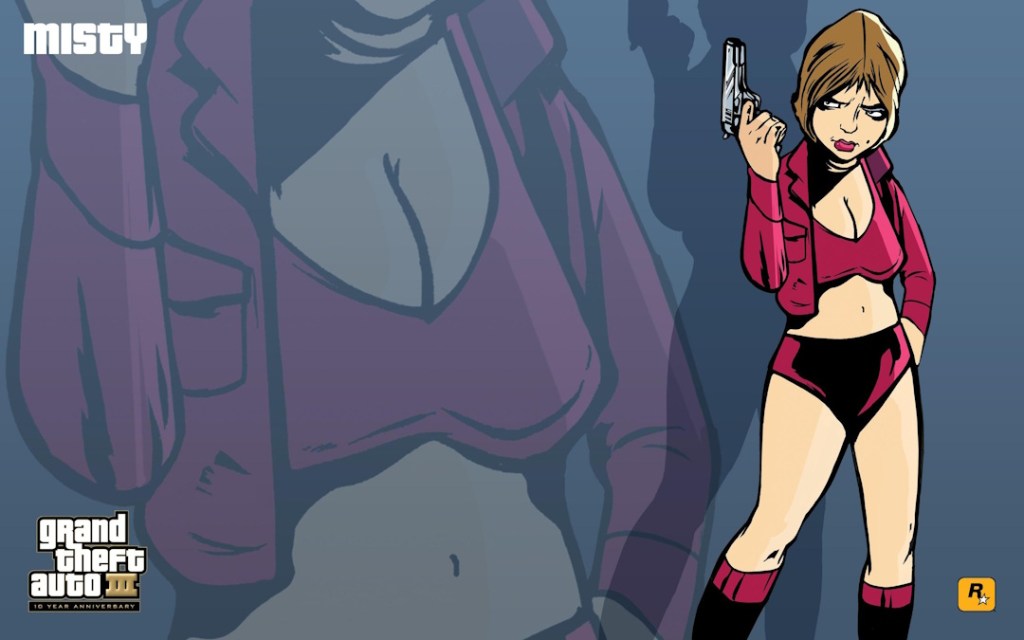
She helped make Liberty City feel populated rather than staged; Rockstar later echoed her legacy in GTA Online’s character creator family trees.
The arcade marquee neon still hums in cheap motels. The Twins – GTA Vice City
Those pink-bikini twins are the shorthand for Vice City’s 1980s fantasy—gloss, cash, and pastel danger. They appear in the manual and briefly in-game: one works the Malibu Club bar, the other dances at Pole Position.
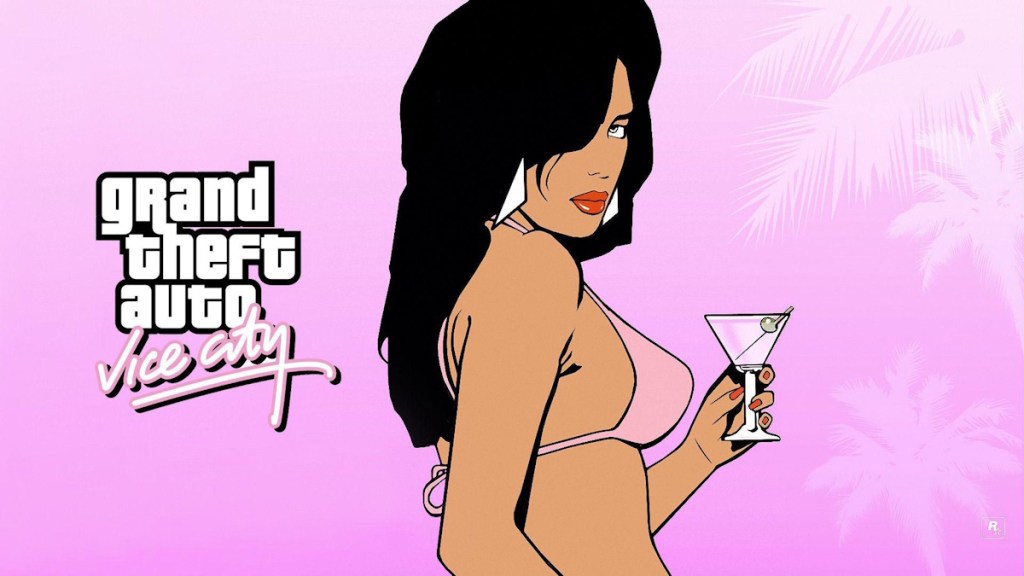
The twins are a lasting visual; you’ll find references to them in merchandise and fan art long after their small in-world role ended.
Radio gossip was the water cooler for game fans. Rochell’le – GTA San Andreas
Rochell’le is a fictional R&B/hip-hop artist whose career and breakup with rapper Madd Dogg were woven into San Andreas’ celebrity gossip. She exists inside Rockstar’s universe, including promotional websites that read like magazine archives.
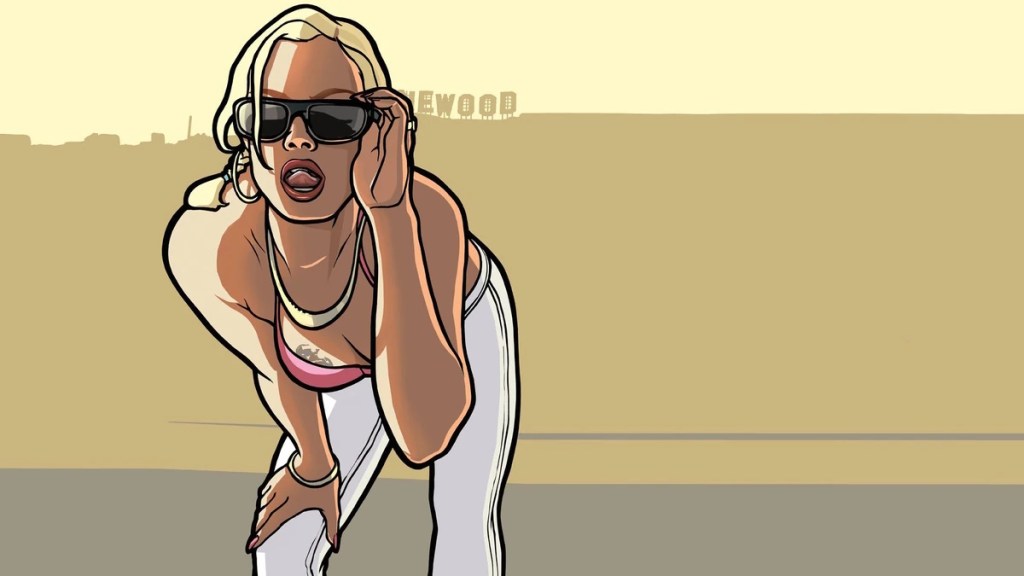
She appears via posters and CDs across later games, a small continuity beat that rewards players who follow the series’ mock-celebrity gossip networks.
Police files often outlast a nightclub’s guest list. Lola Del Rio – GTA 4
Lola is the “lollipop girl” from GTA IV’s marketing—she never turns up in cutscenes, but you can find her in the Liberty City Police Department database and other in-game records.
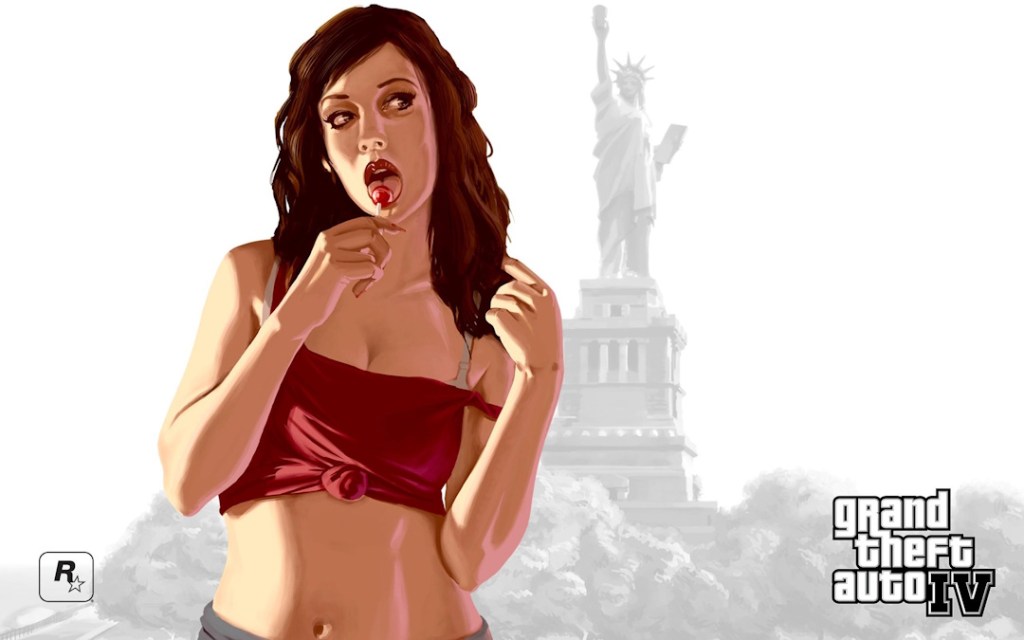
Her backstory gives the campaign image credibility; she reads like someone with a city history, even if she never speaks on-screen.
Social feeds were still new, but brand satire was ready. The Blonde Selfie Girl – GTA 5
The Vespucci Beach selfie girl captured 2013’s obsession with public persona and smartphones. Rockstar used Shelby Welinder as the reference model; the image became instantly memeable and even drew legal attention from Lindsay Lohan.
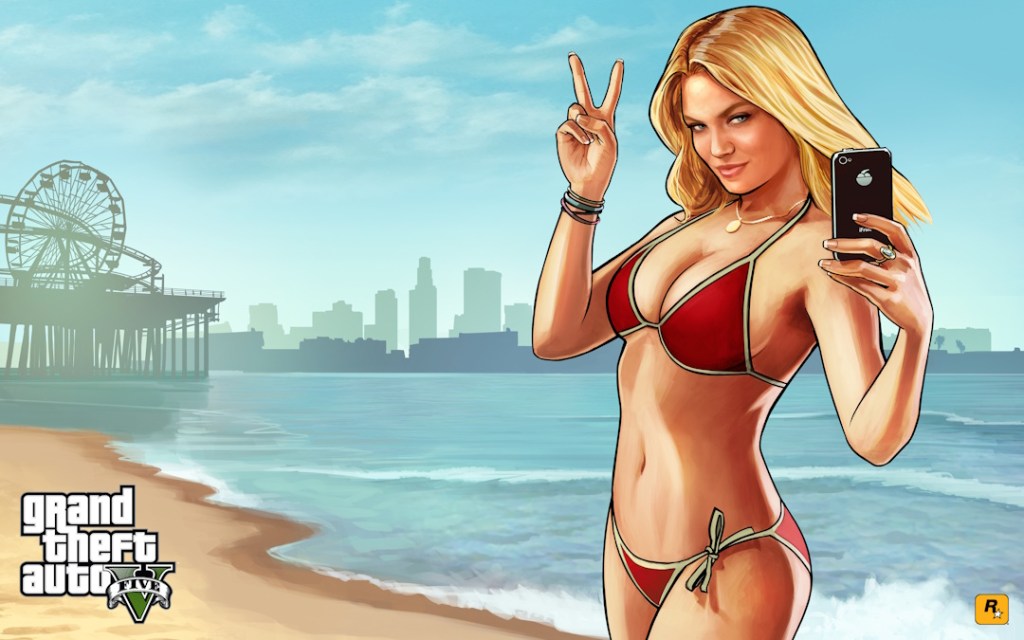
The cover was satire and sales pitch at once, and it helped that modern platforms—Instagram, Twitter/X, and game forums—could amplify the image worldwide.
The cocktail can, the ink, the shoulder shrug: modern marketing plays fast. GTA 6 Cover Girl
GTA VI’s cover gestures at a new Vice City: tattoos reading “Vice Baby” and “305,” a Thaw drink can (a play on White Claw), and The Atoll Bar and Grill signage in the background. Rockstar left the character unnamed, keeping her as a mood anchor for the city.
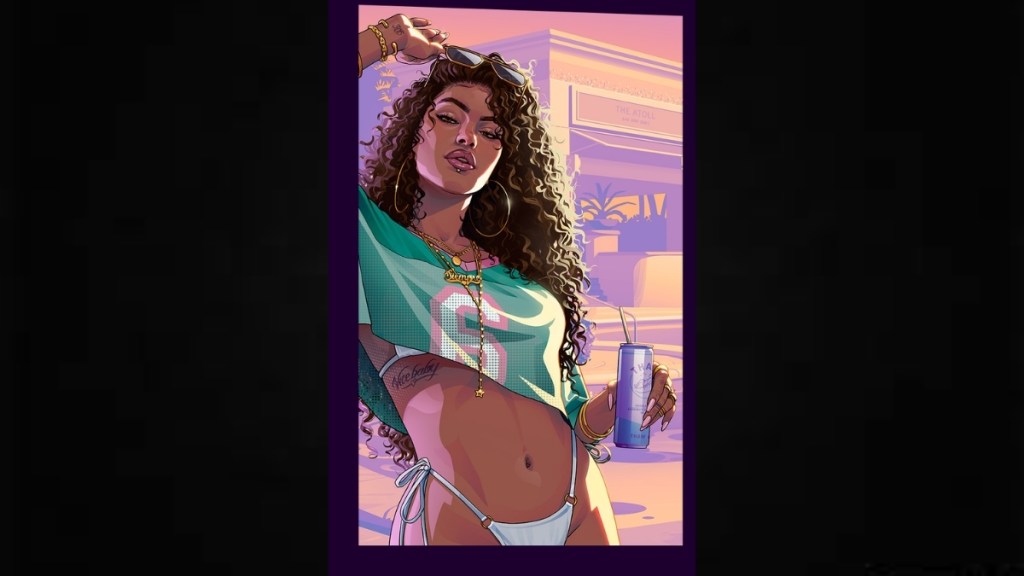
Her tattoos and the setting function like a neon postcard from a bad decision—simultaneously alluring and mildly threatening. For now she remains a symbol that helps set expectations for gameplay, tone, and marketing.
I wanted to leave you with a clearer filter when you see the next GTA box art or thumbnail: names matter, placement matters, and Rockstar uses covers like a compact dossier of cultural explosives—small assets meant to steer impressions before the first cutscene. Which cover girl changed how you thought about a GTA game and why?