
I was certain I wouldn’t miss a thing—until I walked past a “stain” and my squad erupted in chat. The player had painted themselves into the exact corner I had swept fifteen times. At that moment I paused and realized my eyes had been outplayed.
I’m writing this because Meccha Chameleon did two things to me: it made me question basic perception, and it made me feel like an artist while doing it. You’ll either be hunting with ruthless efficiency or crafting absurd tributes to chaos, and both paths sting the ego in delicious ways.
Every match starts with a ridiculous observation
In my first ten hours, someone hid as grass in plain sight and I walked past them more times than I’d like to admit. That single spectacle set the tone: every round becomes a contest over attention, audacity, and who can bend someone’s gaze the longest. Meccha Chameleon isn’t a casual hide-and-seek spin-off — it’s competitive performance art with a scoreboard.
Players score by forcing the hunter to stare without detecting the disguise. That mechanic flips the incentives. You don’t win by melting into shadows; you win by shouting with paint and hoping your scream reads as reality. I’ve seen people paint a mop into a masterpiece and others pretend to be a blemish on a wall. Both approaches work, but for different reasons: bold deception traps the hunter’s curiosity; subtle detail rewards patience.
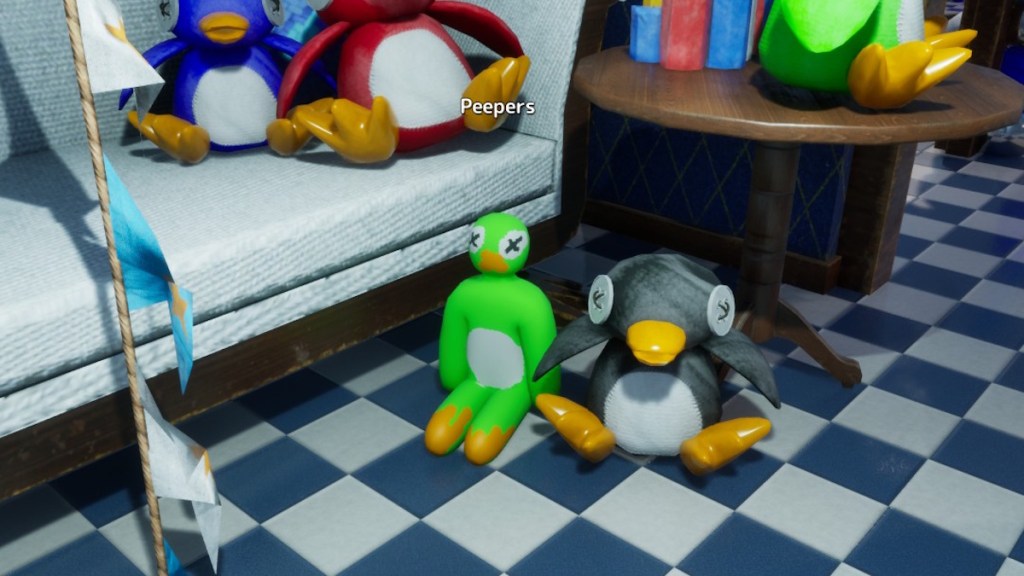
A single match taught me how attention becomes currency
During one round I painted a smear on a corridor and watched a hunter camp three steps away, mesmerized. That moment crystallized the game’s psychological core: points are literal attention meters. The more time a hunter spends staring at your placement without tagging you, the richer you get.
This creates an economy of spectacle. Twitch streamers and TikTok creators have seized on that economy; clips of audacious hides travel faster than patch notes. Steam Next Fest demos introduced many of us to Meccha Chameleon, and then creators amplified the weirdest plays into viral momentum. If you follow streamer strategies on Twitch or emulate clip-friendly setups, you’ll see how design encourages theatrical gambits over stealthy retreats.
What is Meccha Chameleon?
It’s a multiplayer hide-and-paint game where one team hunts and the other paints decoys. Matches reward the disguised for occupying the hunter’s gaze without being discovered. Think of it as a social experiment dressed in a paint toolbox, and yes—its mechanics are built to create shareable moments for platforms such as Twitch and TikTok.
I noticed the game rewards theatrical risk
In several matches a player recreated a famous painting on a wall and won the round purely from spectacle. That’s because Meccha Chameleon scores flair over mere concealment. The scoring metric favors players who bait the hunter into prolonged inspection.
There’s a social layer too: voice and text chats turn every missed detection into a roasted clip. I had more trash talk in a single match than in a week of other multiplayer rounds. Bad sensor work stings—your friends and strangers will remind you—so there’s a clear fear-of-loss element that keeps you sharpening your techniques.
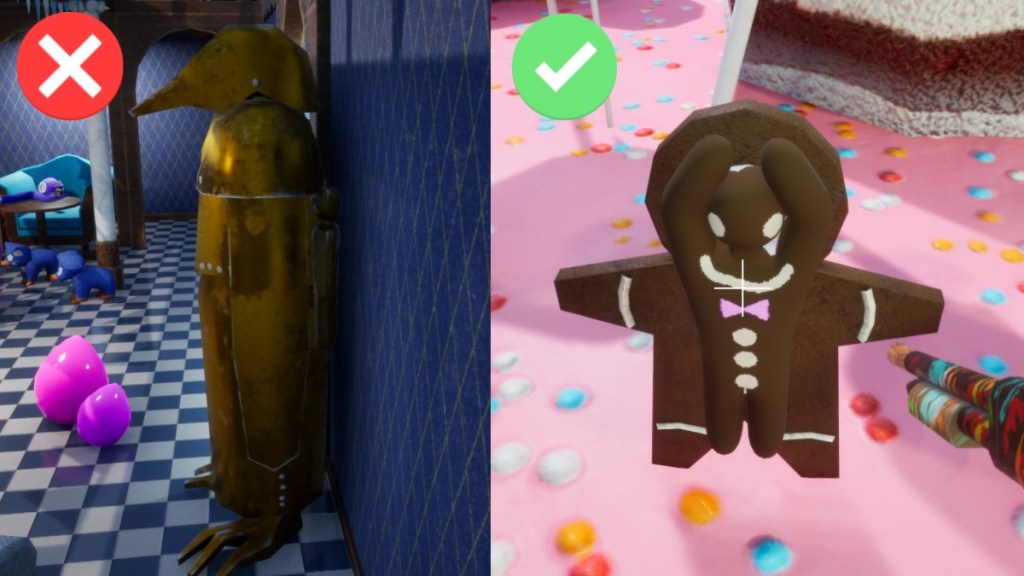
How do you hide effectively in Meccha Chameleon?
Watch what hunters do: if they scan walls and paintings more often than corners, mirror that attention. Use contrast, absurdity, or tiny details to lure glances. In practice I found that bold, obvious placements outperform timid corners—if you can get someone to stare, you earn points even when you get caught. Treat your canvas as a message board to hijack the hunter’s headspace.
A clear observation: it scratches the Among Us itch
When I compared matches to past nights with Among Us, the psychological play felt familiar but cleaner. In Among Us you needed social coordination; here, your painting becomes the argument.
Meccha Chameleon distills paranoia and showmanship. You don’t need fluent voice comms to win—your art does the heavy lifting—so it’s friendlier for solo players than traditional social deception games. Yet it still sings when you play with a crew: coordinated distractions, bait-and-switch painting, and staged reveals create some of the most satisfying matches I’ve had since those late-night Among Us sessions.
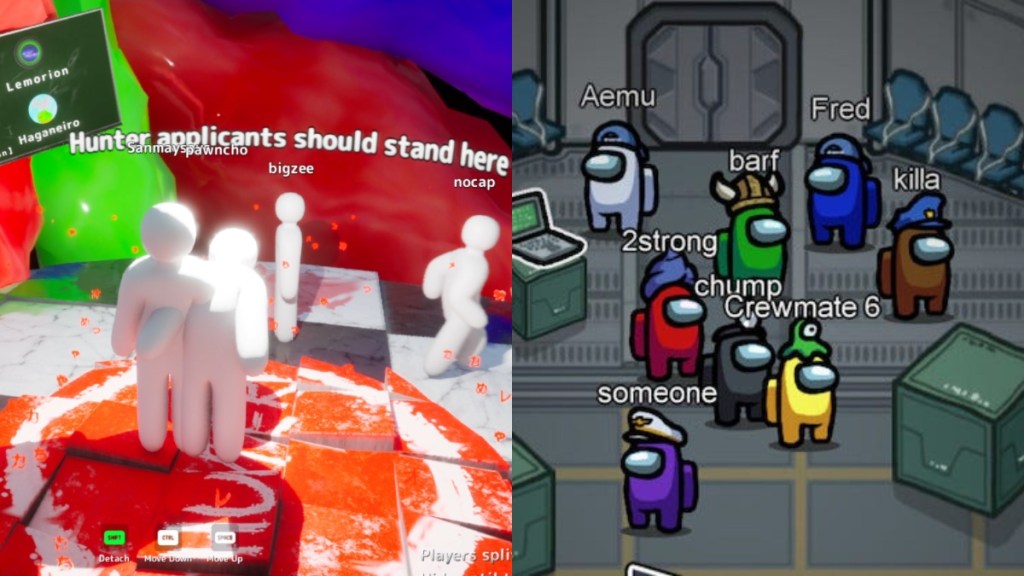
Can you play Meccha Chameleon with strangers?
Yes. Unlike some social deception titles where pick-up games implode because of vocal mismatch, Meccha Chameleon relies on visual cleverness, so strangers still produce tight matches. It also made it easier to clip-farm content without needing a coordinated crew; creator ecosystems on Twitch and TikTok amplified odd plays into overnight hits.
After a couple of wins I felt an odd, practical pride—more akin to having executed a flawless sketch under pressure than racking up kills in a shooter. Playing well rewards creativity, and that reward is social: clips, mentions, and the small thrill of making a hunter question their sight. The tension can feel like standing under a spotlight while everyone squints at your painting, and when it pays off the rush hits like a cold splash of water.
If you chase the satisfaction of clever deception and enjoy games that create instant shareable moments, Meccha Chameleon is worth a few rounds—are you ready to be the one who fools a streamer and floods their comments with disbelief?