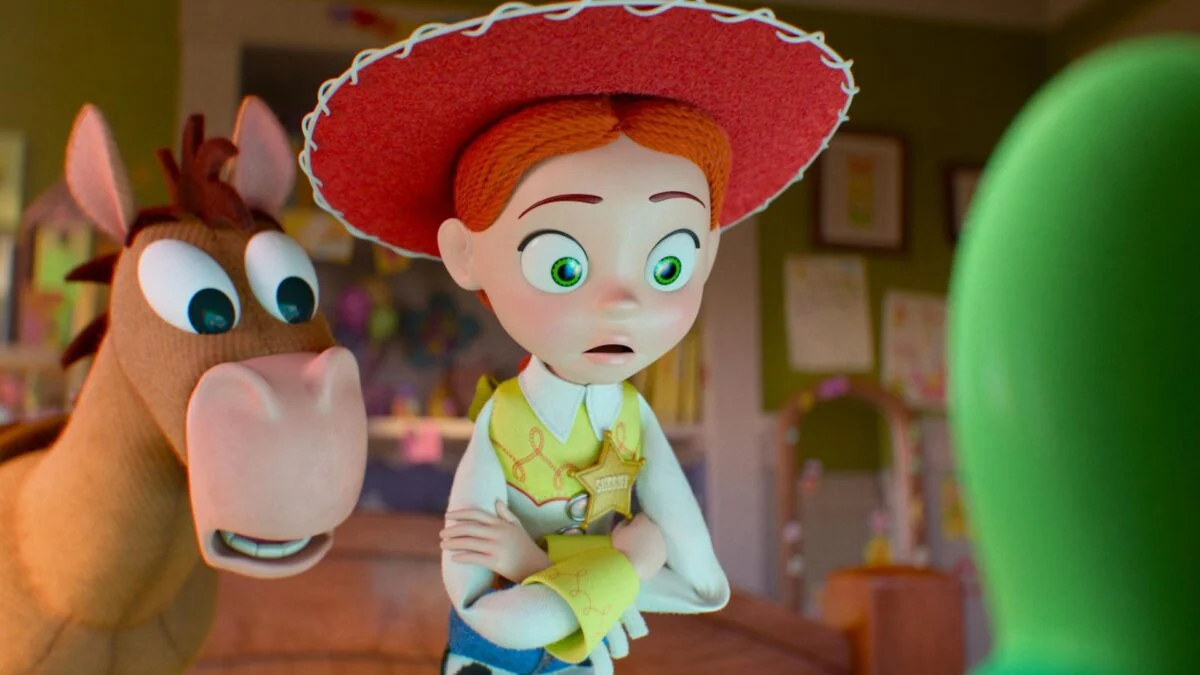
I sat through the second-act silence and felt my throat tighten — Pixar had pressed a hand against my chest. You knew, the instant the camera rested on Jessie, that the movie had a private score it was saving for her. I still find myself replaying a single beat that almost became something even stranger and more tender.

You can feel the room change when Toy Story leans hard into feeling — Jessie becomes the movie’s emotional center
I’m not surprised Jessie carries the weight here; Pixar teased her importance before release and then made good. The film positions her against new tech — the Lilipad toy — and gives her resistance, not for drama’s sake but to ask what happens to the toys who are meant to be constants. When Jessie and Bullseye are found and taken back to Emily’s old house, the stakes shift from a chase to an elegy.
Does Jessie reunite with Emily in Toy Story 5?
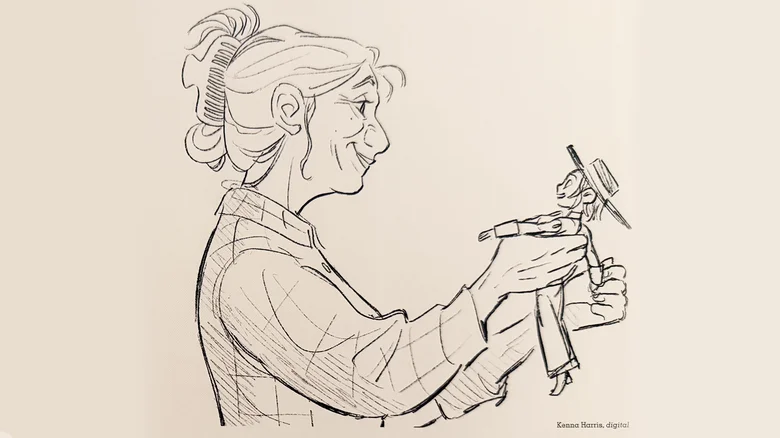
Short answer: not in the final cut. Early concept art and the Toy Story 5 art book, shared publicly by co-writer Kenna Harris and covered in outlets like Slashfilm and io9, show a version where Jessie meets an elderly Emily. That reunion would have been a full-circle moment — Emily bringing Jessie to her granddaughter — but the finished film chooses intimacy over spectacle: a discovery scene in the Mankoukian home that reframes Jessie’s fear of being discarded into a quieter, more complex legacy.
Kids shrink and grandparents swell at the sight of toys on a mantel — why Pixar considered a deeper reunion
I’ve read the art book notes and spoken with designers at screenings; the creative team treated Jessie and Emily as the film’s moral compass. Kenna Harris said that their bond lived at the heart of the script, and the early art reflects that: an older Emily, a granddaughter named for Jessie, a handing-off that would have been a nostalgia-loaded benediction. That choice would have leant the film a tidy emotional closure — a reunion that answers every abandonment fear — but the studio opted to let implication do some work.
Why is Jessie’s arc central to Toy Story 5?
Because her arc translates common fears into a single emotional question: did I matter? Pixar let Jessie’s discovery of a time capsule with photos of a grown Emily and her daughter answer that question without a cinematic handshake. The reveal reframes years of imagined betrayal into evidence of impact. It’s a storytelling trade: explicit reunion versus resonant proof. I prefer the proof — it leaves room for you to supply what you need to feel satisfied.
Fans sketch at kitchen tables and on tablets — the art book shows the scene that almost was
The Toy Story 5 art book is not a press release; it reads like a workshop ledger. It contains the concept pieces that show the abandoned reunion, and Kenna Harris explains how that thread would have paid off with Emily taking Jessie to her granddaughter for a “nostalgia-filled moment.” The art book functioned as a permission slip: it let creators and fans imagine a fuller reunion without the film being obligated to deliver it.
Will Pixar release Jessie-Emily reunion art or footage?
They already did in a way. The book and select concept images have circulated via platforms like Slashfilm, io9, and social feeds on X, Instagram, and Reddit. Fans will repurpose those frames into fan art and comics, and platforms such as DeviantArt and ArtStation will magnify the scene. Expect more from independent creators than from Disney’s promotional feed — those fan pieces are the civic afterlife of what the studio considered.
I think Pixar made an editorial choice: keep the core truth but resist the full cathartic reunion, trusting viewers to fill in the blanks. The concept art, in that light, acted as a quiet suture, sewing Jessie’s past to Emily’s present. If you wanted a plain reunion, fan artists and social platforms will gladly stitch one together — but what does it mean when art tempts you with a more complete answer and then withholds it?