I froze as the whistle split the map, the ceiling paint job I’d spent five frantic minutes on suddenly feeling like a confession. You probably know that small stomach-drop — the moment a Hunter’s shotgun flash grazes the edge of your hiding spot. I’ve played enough matches to know how fragile a lead can be.
Whether you prefer to Picasso your way to victory or to hunt with surgical patience, these are the strategies that separate nervous survivors from repeat winners.
Meccha Chameleon beginner’s guide: Painter tips
Observation: I watched a Painter hide on a chandelier and survive three rounds because they chose placement over bravado.
You’re the artist and the actor at once. When you paint, your goal is to become forgettable—but convincingly so. I’ll show you small choices that compound into long lives.
How do I hide better in Meccha Chameleon?
The obvious play is black paint in a dark corner. That works once—then Hunters start checking shadows first. Instead, blend with busy backgrounds or objects that have subtle depth and texture. High, central positions are safer than corners; players check edges like clockwork.
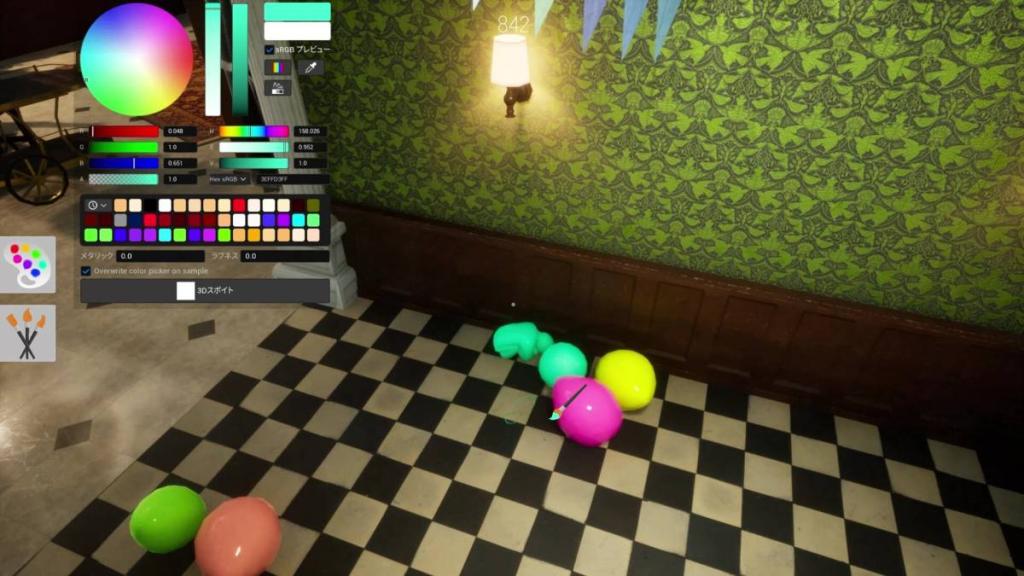
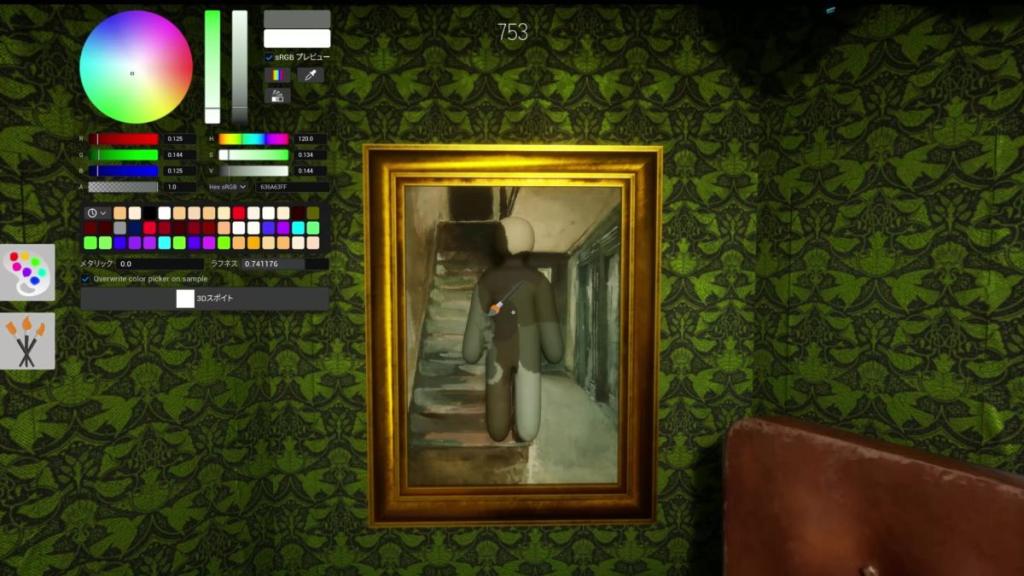
When you match a wallpaper or crate, tweak the paint’s Roughness to match the surface. Shiny metals betray you; matte walls reward patience. If you’re hiding on a painted frame or mural, increase Roughness and kill your shadow with V so you read as flat from the front.
Remember the pose game: lie flat on planar surfaces, stand on curved posts, curl when squeezing into small props like balloons or vegetable clumps. Sitting and leaning are the riskiest postures for detection.
One trick I use: rotate the camera while painting so your strokes match the object’s edges. Lock rotate with right-click once you’re aligned; expand the brush to cover more ground if the whistle is about to blow.
Roughness, shadows, and poses
Match texture, not just color. The Eyedropper can lie on custom maps; nudge the shade after sampling to get closer. Favor hiding spots that are textured rather than finely detailed—those little details betray you from odd angles.
Also, treat the paint menu like a quick-change closet. Don’t waste time fiddling with tiny strokes if Hunters are about to spawn—bigger, rougher layers often read as part of the environment.
Use the environment
Observation: On maps with cluttered workbenches, Hunters sometimes fire wildly and waste time—and that’s your lifeline.
Hide where there are many objects and hiding choices. Your goal is to create doubt for the Hunter: make them spend shots and time on nearby props. If the map gives you distractions, use them. Be unpredictable. The single most common mistake I see is doing the obvious thing.
Move when the whistle blows
Moving after the whistle is a high-risk, high-reward gamble. It wins games when your original spot was compromised or on Normal mode, but it kills ornate paint jobs. If you decide to relocate, do it quietly and only if no compromised Painter is about to tip your hand.
Meccha Chameleon beginner’s guide: Hunter tips
Observation: I once watched a Hunter win without firing because they held angles and let Painters reveal themselves.
You’re the pressure. As a Hunter, patience usually beats twitch reflexes. Move like you’re sweeping a room for secrets: slow, deliberate, and methodical.
What is the best strategy for Hunters in Meccha Chameleon?
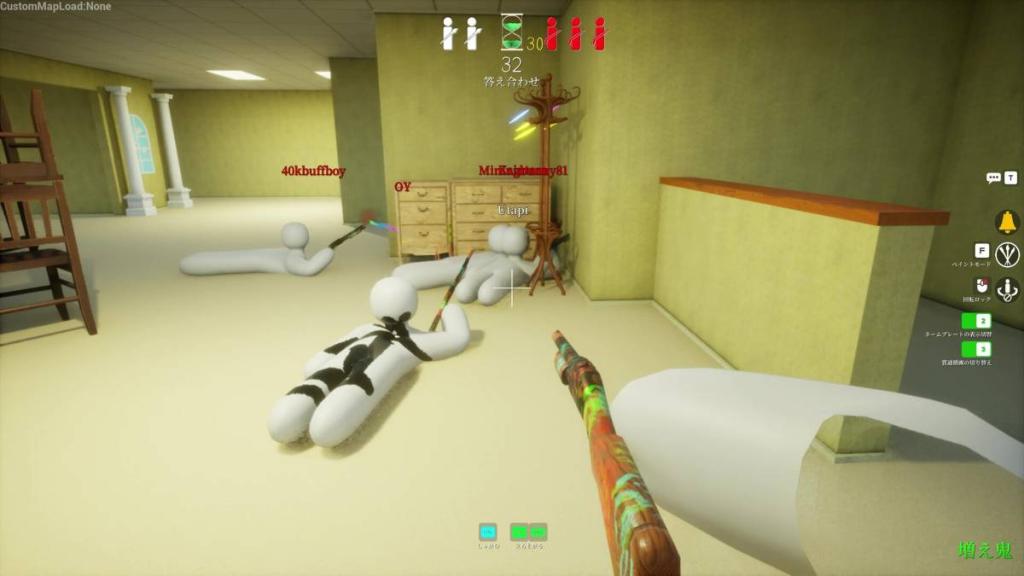
Start at the perimeter and work toward the center. Stand away from teammates when the whistle is about to blow so you can triangulate the source of noise. Freeze often—tiny pauses reveal misaligned textures and shapes that sprinting won’t.
Hold angles against walls and edges; anything sticking out from a flat plane will pop if you line your view with the surface’s edge. Check under furniture, behind curtains, and the underside of structures. One steady scan can expose a complex paint job more reliably than frantic spraying.
Hold angles
Use the environment to funnel Painters into your sights. Corner off likely exits and force Painters to risk a move. If you control where they have to peek, you control the match’s tempo.
Firearm turned flashlight
Observation: I’ve seen the shotgun muzzle flash out a hidden Painter more often than a thermal mod.
Treat the shotgun’s muzzle as a probing light—the flash reveals shapes tucked in shadows. It’s like a flashlight slicing through velvet night; it will look trigger-happy, but it’s effective for clearing dark nooks without changing your gamma or relying on third-party tools.
Coordinate with teammates on Discord or voice chat to cover multiple angles. If you play on Steam, check community guides and map packs on the Workshop to learn common hiding lanes and props.
Meccha Chameleon controls summary
Observation: New players often die because they forgot a single keybinding that would have saved them.
Bind the essentials before you play. Rebinding Eyedropper, Pose wheel, and the paint shortcuts can make the difference between a quick paint job and a convincing disguise. If you stream or record, OBS and Twitch integrations are useful for clip highlights and learning from mistakes.
| Function | Key (rebind in menu) |
|---|---|
| Move | W A S D |
| Look | Mouse |
| Crouch | Ctrl |
| Move up on walls | Space (hold) |
| Move down on walls | Ctrl (hold) |
| Exit wall climb | Shift |
| Pose wheel | R |
| Paint menu | F |
| Eyedropper | Space |
| Execute (painting or shooting) | Left click |
| Rotate camera (painting) | Mouse wheel + move mouse |
| Adjust brush size (painting) | Right-click + move mouse |
| Turn off shadows (painting) | V |
| Zoom (painting) | Alt + right-click + move mouse |
| Lock rotate position | Right-click |
| Taunt | 1 |
| Display nameplate | 2 |
| X-ray rendering (painting) | 3 |
| Free cam (Painter) | 5 |
| Voice chat | V |
| Text chat | T |
| Settings | Esc |
So which risky move will you try first: an impossible paint job that forces the Hunters to think twice, or a surgical sweep that forces Painters to flinch?