
I watched an Amble coast past a hotel pool and felt the oddly familiar gravity of an Apple-era product. At the same moment, headlines showed Jony Ive sketching Ferraris while Waymo quietly bought the test track where Apple once ran its car. Two former Apple designers are answering the same question about mobility in very different ways.
I’ve been following these moves because you can learn more from small vehicles than from press releases. You remember the language: minimal seams, cool metals, restraint. Now imagine that language scaled down to a four-wheeled buggy meant for a ten-minute trip to the cafe.
On a hotel lawn, small buggies wait under umbrellas.
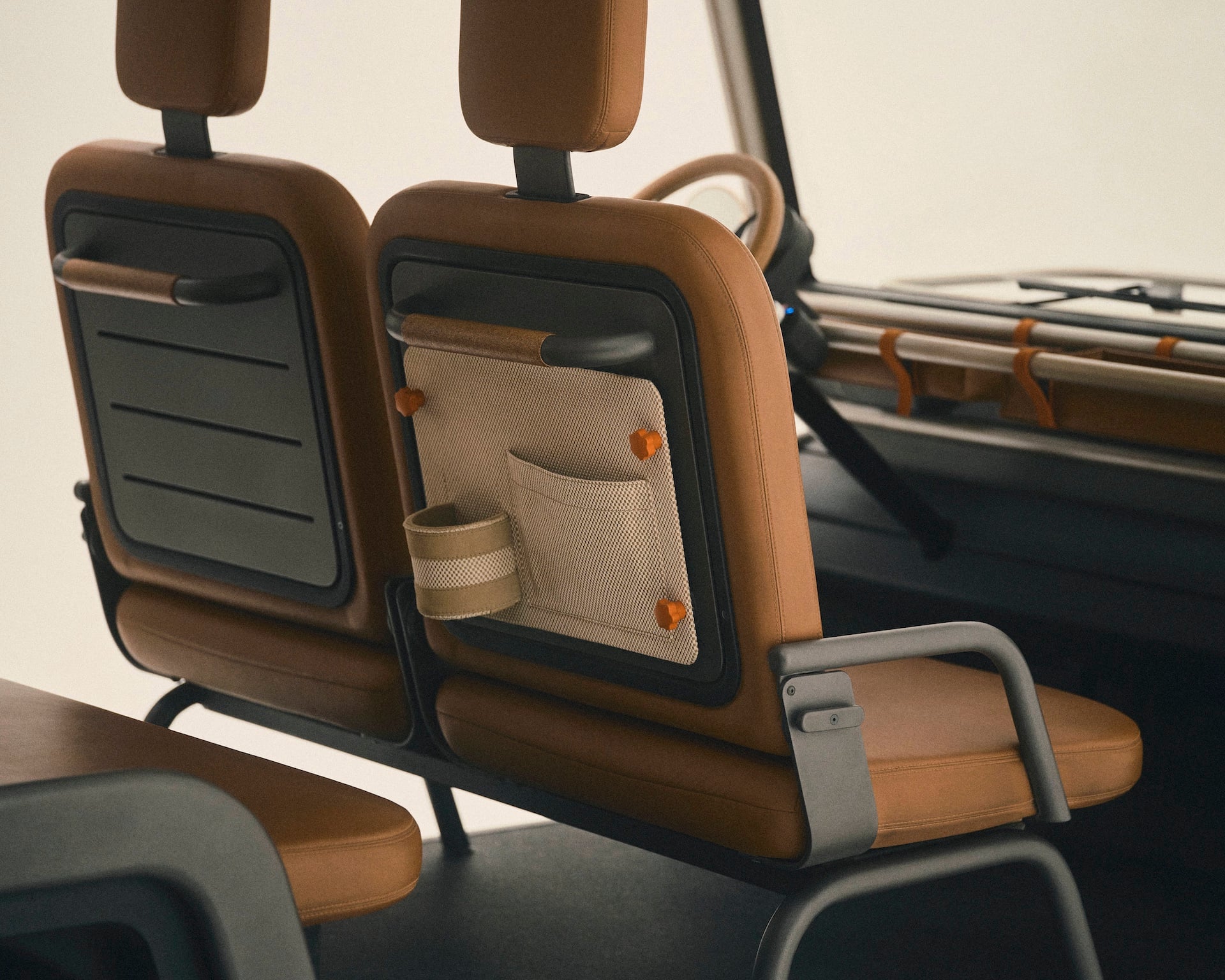
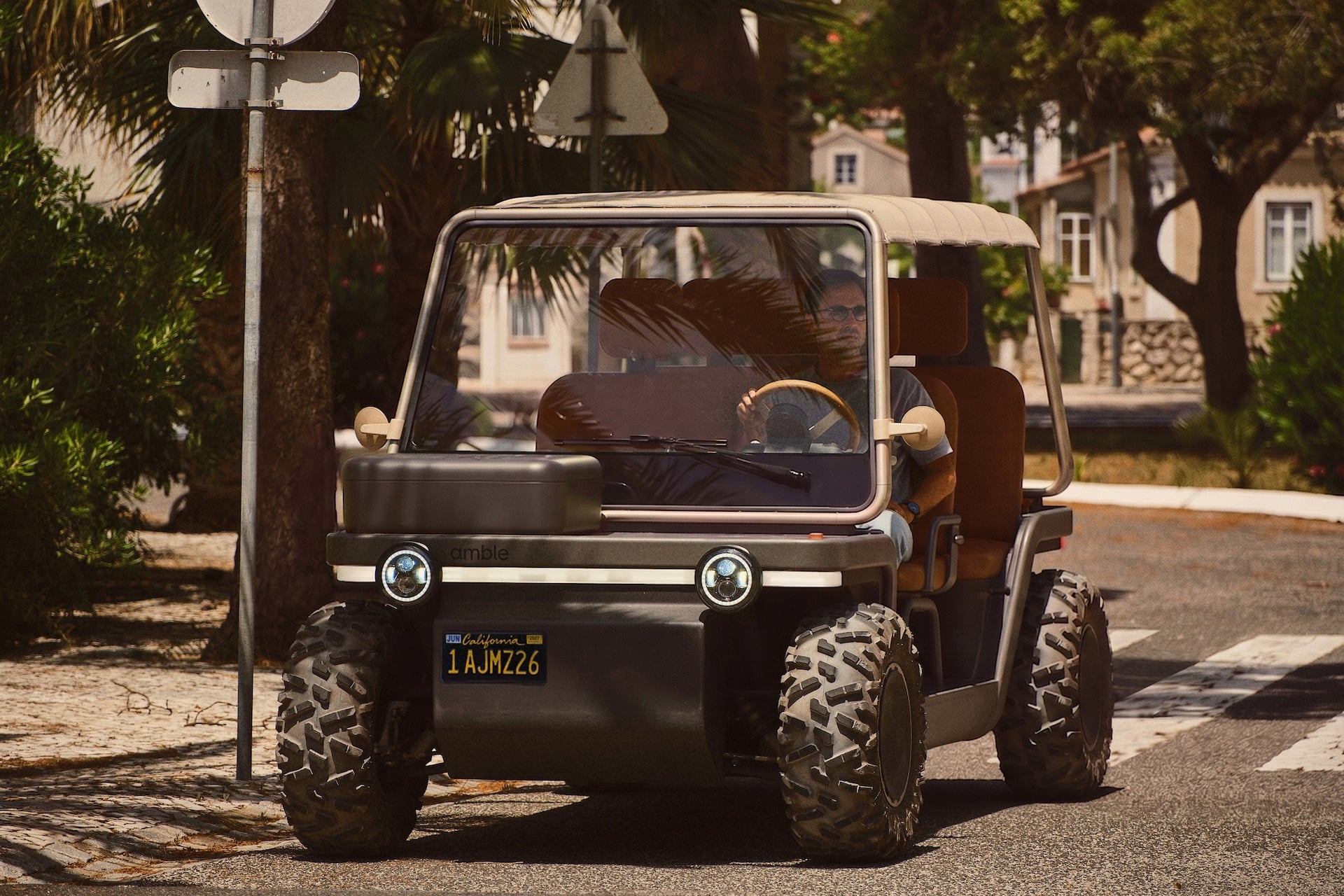
Julian Hoenig and his company Amble started with a simple complaint: golf carts were ugly, uncomfortable, and fragile. The fix he sketched looks familiar—the rounded aluminum frame, tablet-shaped windshield, organic cork on the steering wheel—an aesthetic that reads like a pared-back Apple product.
Amble One is a minimalist, street-legal electric buggy with a top speed of about 40 miles per hour, a roughly 60-mile range, and an open, doorless design that emphasizes being outside rather than shut in. Hoenig told Bloomberg the idea began with his friend and co-founder José António Uva, a Portuguese hotelier who needed better vehicles for guests.
At a Ferrari unveiling, studio lights picked out a glossy silhouette.
Jony Ive and LoveFrom went a different direction: Ferrari’s first electric model, the Luce, carries the weight of luxury and expectation. The car was revealed to mixed reactions, and Ferrari’s marketing head left shortly after the launch—an awkward moment for a brand built on romance and roar.
It’s a reminder that translating a design language from phones and watches to high-performance cars forces different compromises. Ive is working at the high end of desirability; Hoenig, by contrast, is designing for short trips and repeated use.
What is Amble One?
Amble One is a low-speed, street-legal electric buggy described as a new category of lightweight EV for short-range trips—think coastal walks, village errands, campus runs, and private estates. It uses weather-resistant materials (marine-grade canvas, organic cork) and a minimal interior meant to keep you present.
At a hotel manager’s desk, a single purchase order changes a fleet.
Bloomberg reported early customers were hotels ordering in bulk—about forty vehicles per order on average. That math matters: Amble says its 2027 delivery slots are spoken for by hospitality clients.
The pricing is straightforward: Amble One starts around $25,000 (≈ €23,000) before taxes and fees. Bloomberg also notes an average early order totaled roughly $1,000,000 (≈ €920,000). The company has opened orders for individual buyers in the U.S. and Europe, with deliveries expected to begin in 2028.
How much does the Amble One cost?
The base price is about $25,000 (≈ €23,000). Expect local taxes and registration fees on top of that. Amble is positioning the vehicle as a premium second car or hospitality fleet asset rather than a mass-market commuter EV.
Is the Amble One street legal?
Yes—Amble markets the One as street-legal in the U.S. and Europe within the parameters of low-speed vehicle rules and local regulations. A future variant aimed at more urban drivers will add removable doors and a hardtop roof for broader regulatory fit.
On a coastal path, a short trip stops feeling like half a day.
If you drive with kids or manage a campus, you’ll see the appeal: small, quiet, efficient trips without the weight of a full-size car. Amble imagines this as a family’s second vehicle for school runs, grocery stops, and nearby errands—Hoenig told Bloomberg he plans to take his kid to school in one.
Apple’s shelved car project is a ghost in the design room, a reminder of what big ambitions leave behind; Hoenig is taking a different bet: smaller circles, repeated use, and hospitality scale. The two metaphors point to the same fact—design thinking can migrate, shrink, or glitter depending on who writes the brief.
I’ll keep watching because this is where design choices meet everyday behavior: will you trade a heavy car for a lightweight, intentional vehicle that turns a chore into a short, pleasant moment, or does the romance of Ferrari-sized ambition still set the standard for desirability?