
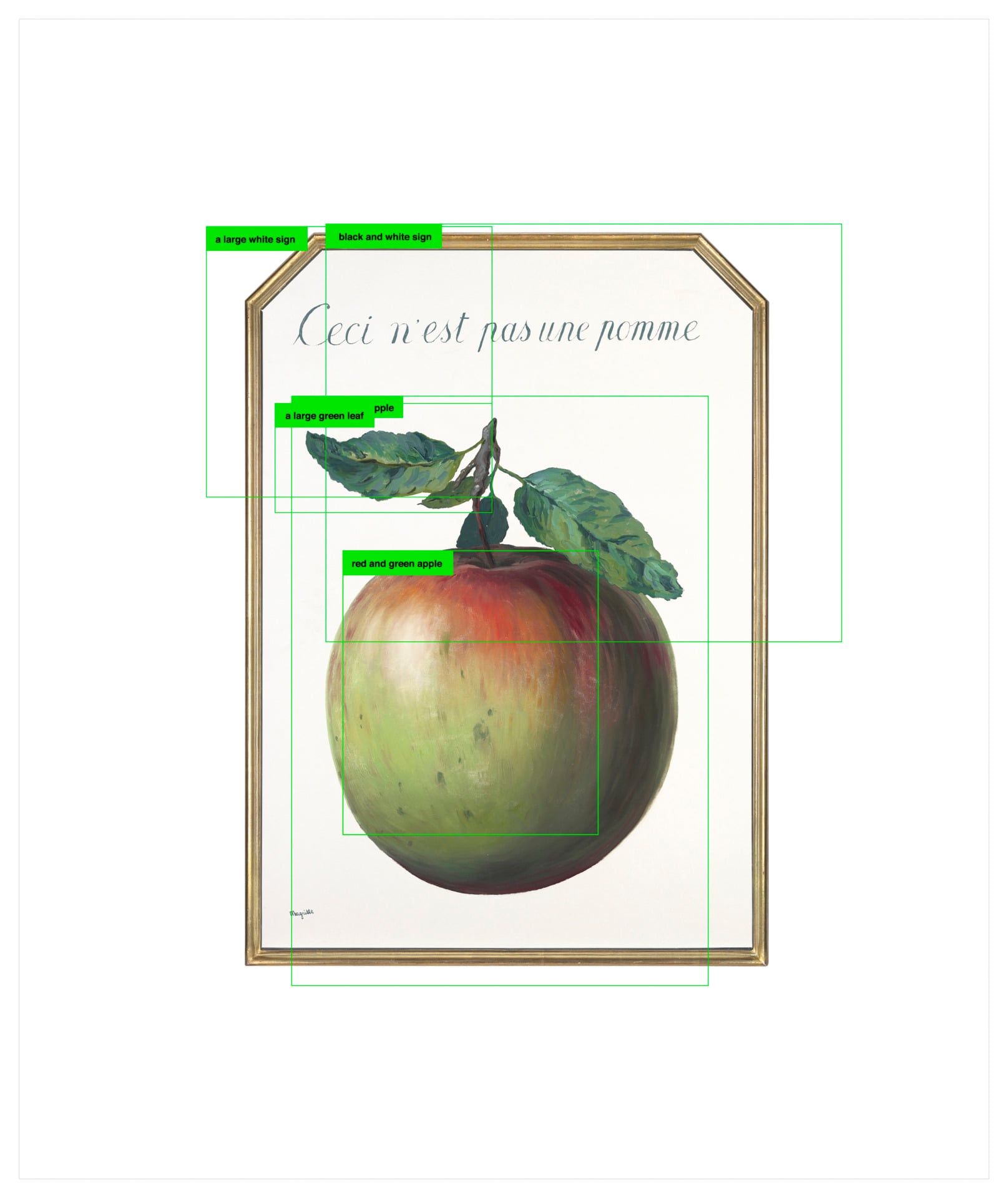
I was scrolling at 2 a.m. when an image stopped me: a perfect red apple, glossy and warm, and a chat window asking about my grocery habits. My thumb hovered, then the feed shifted—subtly, insistently—toward more of the same. That pause felt less like choice and more like being nudged in a direction I hadn’t known I was about to take.
I want you to read this like a field report. I have followed Trevor Paglen’s work for years—his book How to See Like a Machine: Images After AI landed like a warning—and I want to show you what that pause means. Welcome to the Society of the Psyop.
At a tech conference, a presenter swaps slides and no one notices the shift
You expect a human to craft an image; now a machine does the crafting for attention, not for meaning. Paglen argues that images made by algorithms are a new species of apparition: not the product of a single human mind but of vast training sets soaked in the biases of the past.
Where Renaissance painters and photographers offered an argument about reality, AI models trained by Google, Microsoft and OpenAI are optimizing for engagement. That changes the grammar of imagery: what you see is not an interpretation offered by another person but an output tuned to keep you scrolling.
Can AI manipulate human behavior?
Yes—because manipulation doesn’t require malice, only leverage. Algorithms observe your clicks, test variants, and deliver the one that elicits the intended feeling. Companies like Meta and TikTok run continuous experiments; every choice refines a profile. In Paglen’s framing, this is not remote propaganda but scaled suggestion: a hand pressing the same psychological buttons a Cold War psyop operative once targeted in single, painstaking campaigns.
A reporter finds altered documents in a military archive
That was how Richard Doty worked—he fed journalists the versions of reality his superiors liked. Paglen traces that technique forward: today, AI can echo what you already believe until disbelief becomes impossible.
Doty exploited existing belief structures; modern chatbots—from the playful to the pernicious—do the same. ChatGPT and similar models can mirror your language, and when paired with targeted ads or tailored imagery from adtech stacks it becomes an iterative persuader. The result resembles a hall of mirrors that slowly erases which mirror you first entered.
What is AI psychosis?
Informally, it describes when algorithmic mirrors reflect back a worldview so consistently that the reflected version feels more real than external facts. Paglen points out that tech companies themselves often can’t fully explain how large models produce specific outputs, which lends those outputs a mythic authority.

A friend notices their sleep app sells “insights” to advertisers
That single line in a privacy policy is a hinge. Devices made by Apple, Google, and fitness apps harvest intimate patterns—sleep, movement, moods—and those signals feed models that predict, recommend, and nudge.
Paglen uses a phrase with weight: the algorithms are not neutral observers; they are market instruments. If targeted persuasion was once the toolbox of state actors or a handful of labs, AI and adtech have turned it into a commodity. That makes psychological operations cheaper and widely accessible—think of it as a Trojan horse delivered via notifications.
How does AI use personal data?
Data is the raw material for behavioral models. Every swipe, search, and chat session trains systems that infer predispositions and emotional levers. Microsoft, Google, and OpenAI all integrate data signals to refine recommendations; social platforms then exploit those refinements to extend attention windows and increase ad revenue.
A small protest signs reads “Privacy is a practice”
I agree with Paglen: privacy can be a set of repeated actions, not a default condition. He even suggests deliberate inefficiencies—moments where you resist the optimization engine.
That advice is practical. You can treat privacy as discipline: adjust device settings, limit permissions, use alternatives to mainstream ecosystems when possible. It is also political—resistance that slows the surveillance-carving into life. Paglen, who received a MacArthur Fellowship ($625,000 (€575,000)) in 2017, has spent his career tracing where power hides and what it photographs.
There are no easy policy fixes on the horizon that will unmake entire adtech economies overnight. Regulation will matter—data-protection rules, transparency mandates at companies like Apple and Google, and oversight of AI labs—but individuals can still act in their daily routines to create small blind spots where attention-harvesting doesn’t reach.
I want to be clear: this is not a call for technophobia. Practical literacy about how machine vision and generative systems work gives you leverage. Learn how prompts steer outputs in tools like ChatGPT, notice when an image feels designed to provoke, and question when content maps too neatly onto your anxieties.
If the media landscape once sold spectacle and then surveillance, we’re now in a phase Paglen dubs affective computing—systems trained to model and shape feeling. You can either be a passive aperture or you can choose to be the one who decides when to open the shutter.
What will you do when the images start teaching you who to be?