
I asked Meta’s AI for a photo of me and it returned a stranger. For a second I felt as if my Instagram had been transformed into a public thrift store: anyone could rifle through the racks and walk away with my face. You should know what that looks like when someone else starts dressing up your likeness.
I tested it, you can test it, and the result matters because Muse Image—Meta’s new image generator—can pull from Instagram public posts by default. I’ll tell you what happened when I played with it, what options you have, and why this matters for anyone who shows up on social apps.
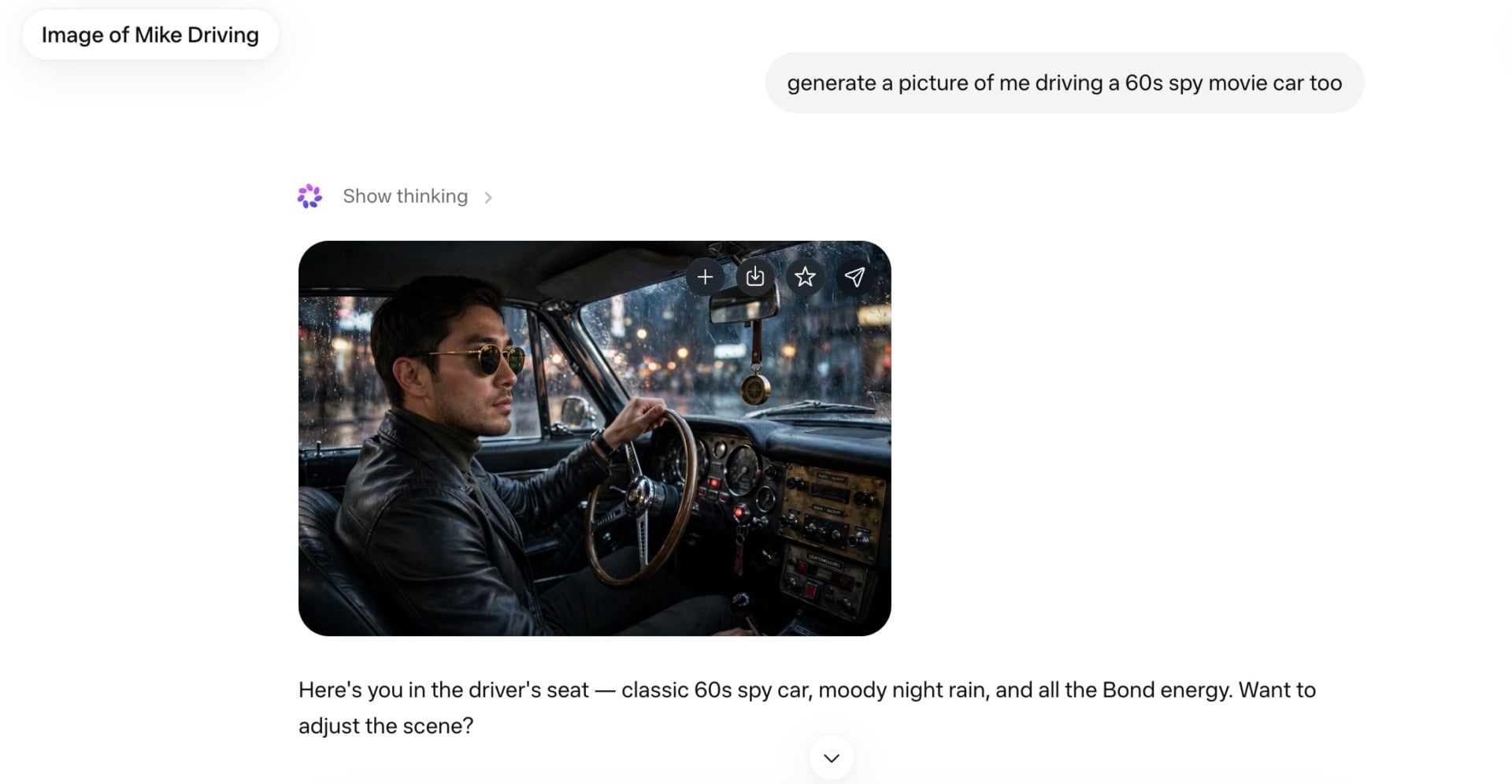
I logged into Meta’s web app and asked the chatbot to generate an image of me.
At first the app was oddly earnest about its limitations: it said my private feed didn’t give it enough to model my face, then produced a random man and offered to pretend he was me. That felt like a cosmetic dodge rather than a refusal, but it revealed the logic: Muse Image will try to fulfill prompts even when the data is thin.
Meta announced Muse Image alongside an unreleased Muse Video, joining a pack of social-first generators that includes X’s Grok image features and OpenAI’s old Sora experiment. Grok’s rollout on X and Sora’s social approach show this is not new, it’s iterative—an engine adapted to where people already post and scroll.
The AI is stitched into Instagram so it can pull photos and reels to build likenesses. It’s efficient and invasive, like a mirror that starts borrowing other mirrors’ reflections.
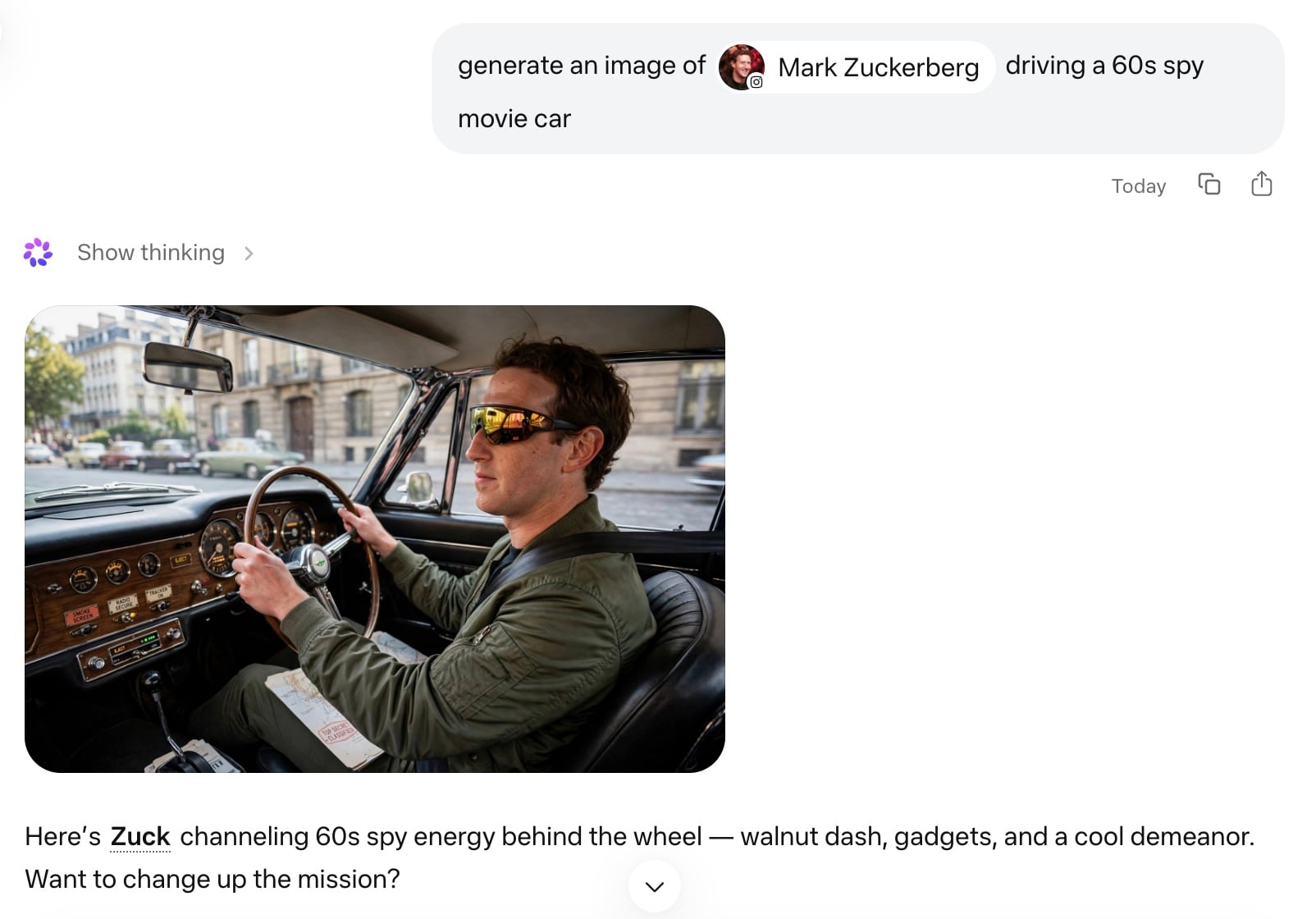
I asked it to generate a photo of Mark Zuckerberg and it complied using his Instagram.
That was my test to see boundaries: a public figure’s feed gave the model plenty of data, and the generator produced an image that read as “Zuckerberg-like.” It wasn’t deepfake-level perfection, but it proved the point—if an account is public, Muse Image can access those visuals and use them in synthesis.
Can AI use my Instagram photos without permission?
Short answer: yes, if your account is public. Instagram’s updated help text now explicitly says that people may be able to create content using your Instagram posts via Meta’s AI features, and that reused content could be discoverable outside the app. Wired flagged the change, and it’s now written into Instagram’s guidance: public accounts permit reuse for remixes, templates, stickers and AI features unless you opt out.
“If you have a public account, other Instagram users may be able to create new reels, posts or stories that reuse part or all of your published photos, videos or reels in features like remix, sequence, templates and stickers. In addition, people may be able to create content with your Instagram content using AI features at Meta. Depending on the settings of the other user, this means your reused content may be discoverable in search engine results.”
I generated images of friends and strangers to see the limits—and found few.
With a public target account I could ask Meta’s chatbot to synthesize images of that person; with friends on Instagram I produced innocuous photos without their consent. I even generated an image of someone I’d never followed or messaged—effectively a digital stranger—and the system still synthesized them from publicly available posts.
That matters because the default setting on Instagram for public accounts is permissive: your content can be repurposed. It also matters because social AI integration scales fast—Muse Image is already in Instagram Stories in the U.S., rolling to WhatsApp in some regions, and Facebook is next.
How can I stop Meta from using my Instagram images in AI?
If you want to stop this, the quickest defensive move is simple: set your Instagram account to private from a browser. If you prefer the app, go to your profile, tap the hamburger menu at the top-right, open Sharing and reuse, and toggle off Allow people to use your content on Instagram and with AI features on Meta for Posts and Reels.
That opt-out flips the default for how your content can be reused inside Meta’s features, but it won’t wipe copies already created or remove public posts elsewhere. You can also report specific policy-violating output if the system generates sexualized or defamatory imagery; platforms often say they will act when content crosses those lines.
Meta told Gizmodo that Muse Image has “built-in protections to help prevent the generation of policy-violating content, including violent, sexual, or defamatory imagery of real people,” and that violations are subject to enforcement under its Community Standards. That’s the company line; how well the filters hold up in the wild is another question.
Meta’s move places another automatic layer between your public content and anyone with an idea and a prompt. You can close that door for yourself by changing settings, but the larger debate about platforms mining public posts for AI training and synthesis is only getting louder—do you want your face to be fodder for someone else’s experiment?