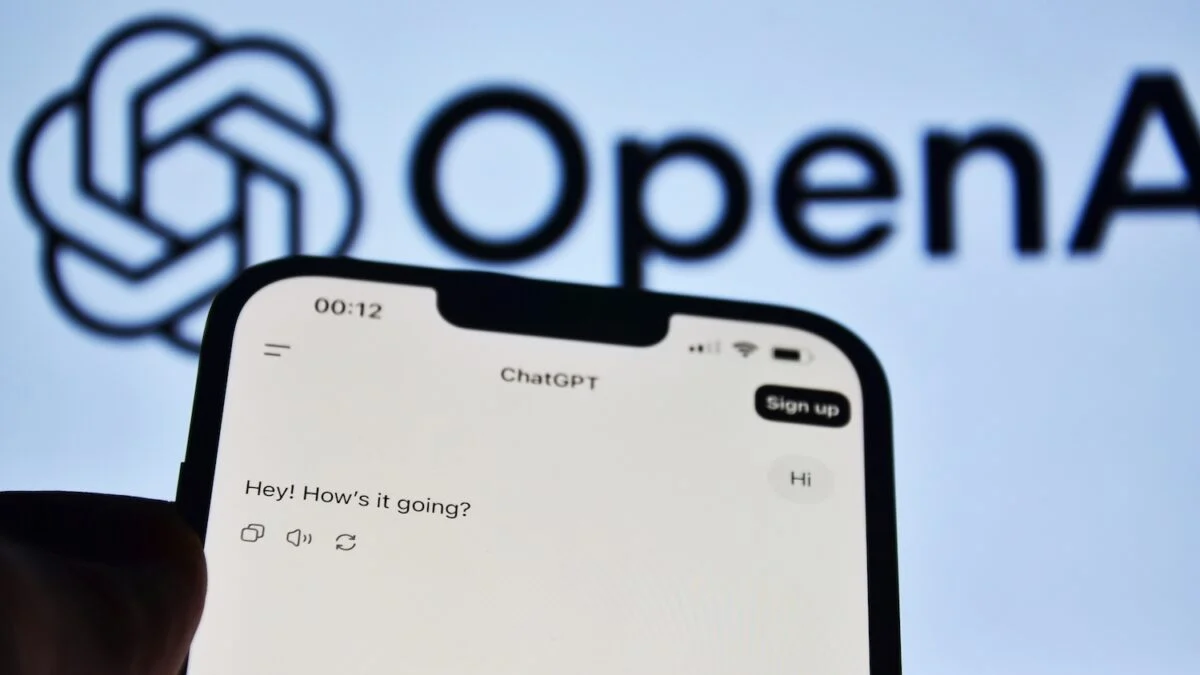
I was listening to a recorded demo when the voice laughed—soft, human, perfectly timed—and I felt my guard tilt. You notice the little sounds first: the breath, the quick “Mmhmm,” the pause that knows when to be quiet. I realized then that the future OpenAI pitched isn’t just louder; it’s listening in a new language.
I’ll tell you what matters here and why you should care. I’ve watched demos, read the blog posts, and listened to the company’s researchers onstage. What OpenAI calls GPT-Live-1 is designed to make conversation feel personal, and you’re invited to decide whether that’s comforting or unnerving.
In a livestreamed demo, an engineer switched languages mid-sentence.
OpenAI’s researchers let GPT-Live-1 translate in real time while reproducing small human ticks—soft laughter, intake of breath—so the model feels like a real conversational partner. It adds vocal texture the way a broadcaster adds cadence to a monologue, and it can stay quiet until you want it to speak, inserting short acknowledgments like “Right” so you know it’s tracking the thread.
Technically, GPT-Live-1 routes harder reasoning to GPT-5.5, aiming to be useful for casual talk and complex queries alike. It also pairs live web search and instant translation so you can ask follow-ups without losing flow. If you’ve used ChatGPT, Apple Siri, or Alexa, imagine one of those assistants with a smoother delivery and a clearer sense of when to listen.
That smoother delivery matters because human conversation is full of micro-rituals. When a voice assistant respects those rituals, you start treating it like a collaborator, not a search box—like a radio dial settling on a clear station.
How does GPT-Live-1 differ from ChatGPT?
ChatGPT is optimized for typed back-and-forths; GPT-Live-1 is audio-first. The difference is sensory more than intellectual: Live-1 simulates breathing, laughter, and short confirmations, while deferring heavy lifting to GPT-5.5. That split aims to let you keep talking without waiting for long computations, and gives the interaction a continuous feel instead of a series of requests.
At a small kitchen table, three elderly women tried the assistant for knitting and transit updates.
OpenAI’s marketing chose older users in a clip posted to X, and that choice reveals what the company wants the voice to be: companionable and practical. The scenes weren’t flashy; they were intimate. A voice that can remind you of plumbing hours or suggest a yarn pattern becomes an emotional utility as much as a tool.
That imagery matters because it signals how OpenAI hopes you’ll slot Live-1 into daily life. The model isn’t merely a feature for early adopters or developers; it’s being positioned toward mainstream habits—quick help, small talk, routine comfort.
And because the model sounds more like a person, it nudges you toward new expectations about privacy, consent, and dignity. That nudge is also a business play: people who prefer spoken interfaces may adopt a tool faster than they adopt a keyboard-bound assistant.
At developer forums and on X, people compare old voice scandals to new promises.
Remember the outcry when a virtual assistant sounded uncannily like Scarlett Johansson? OpenAI is explicit that GPT-Live-1 will not imitate real people’s voices, and it will intercede if the conversation turns dangerously toward self-harm or violence. The safeguards include surfacing health resources and, when needed, ending an interaction.
Those are necessary steps, but they’re not guarantees. Safety in voice tech depends on detection thresholds, cultural context, and how the system handles ambiguity. Companies like OpenAI, Apple, and Amazon have wrestled with similar trade-offs when building Siri and Alexa: convenience versus control.
Will GPT-Live-1 imitate real people?
No—OpenAI says the model won’t mimic the voices of actual people. That’s a response to earlier controversies. Still, policy is only as strong as enforcement, and you should watch for how voice consent gets implemented across apps and integrations.
In boardrooms and comment threads, you hear AGI whispered like a promise.
OpenAI called GPT-Live-1 “one step closer to a truly accessible AGI,” and that phrasing has weight: it frames voice as a milestone on a larger trajectory. But AGI is ambiguous; it’s being used as both technical shorthand and marketing cadence. When people hear AGI, they imagine systems that can reason across domains like a person—an enticing idea and a heavy claim.
My take is simple: adding human-like voice increases perceived intelligence faster than it increases actual reasoning. You’re more likely to trust a voice that sounds right, even when the underlying model is delegating tougher work to another engine.
Can voice models become AGI?
Voice alone won’t make something an AGI. The ability to converse naturally is a user-facing trait, not a full measure of general intelligence. For now, voice smooths interaction and masks limits; it doesn’t magically grant cross-domain mastery. Still, it changes expectations—and that’s powerful.
So what do you do with this new habit of being heard? Test it. Ask it hard questions. Compare its answers against tools you already trust—search engines, ChatGPT, translation services, or human experts. Watch how OpenAI’s safeguards actually behave when conversations get messy.
If a machine can sound like a friend, you’ll start treating it like one. What happens when the friend is always listening and sometimes judges what it hears?