
There was a sound — like a tire bursting — and oxygen masks slid down from the ceiling. For a breathless second I felt the cabin hang between panic and order. A man’s head and shoulders were outside the fuselage as other passengers hauled him back inside.
Thankfully, the passenger was wearing his seatbelt.
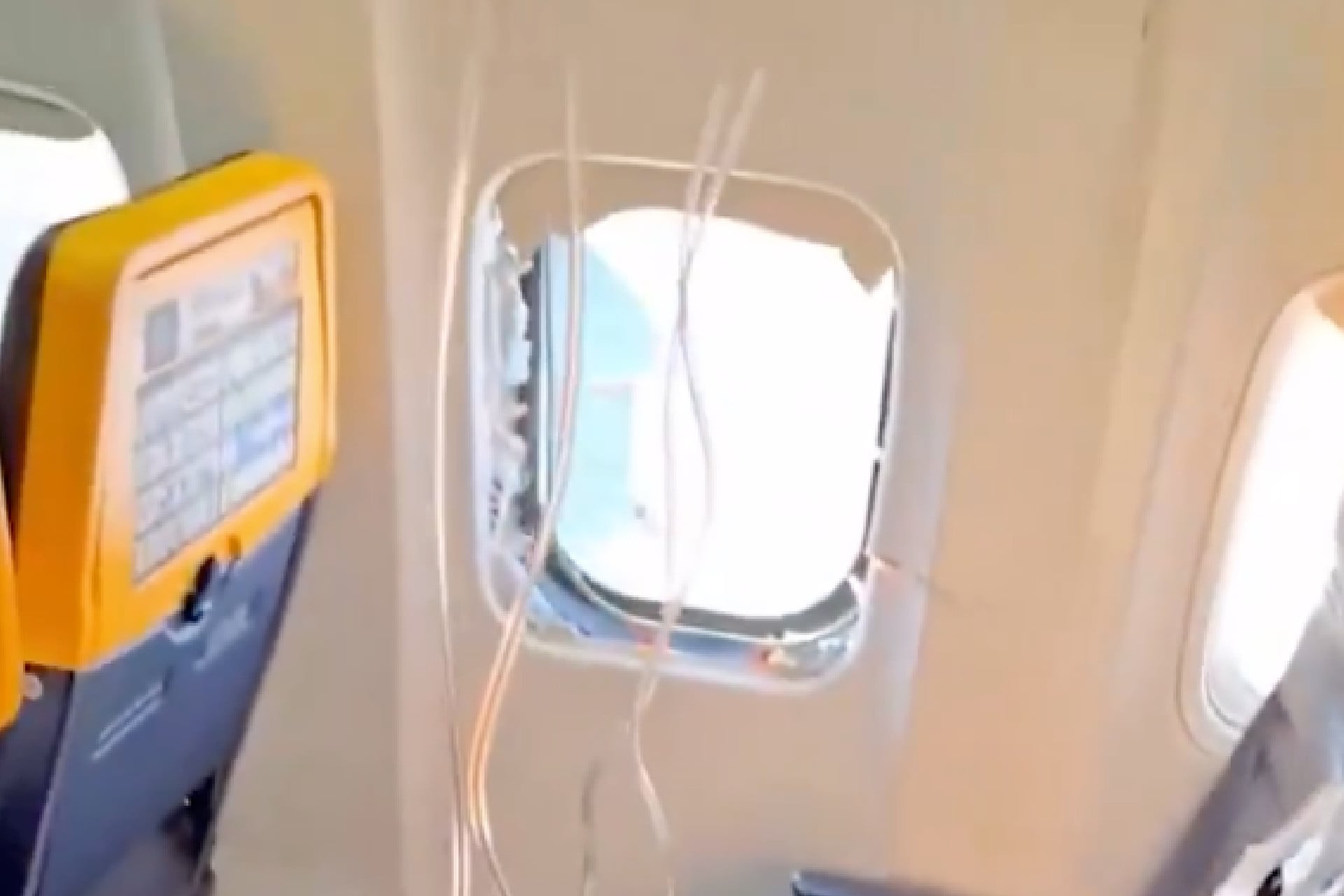
A loud noise and masks dropping — what happened on FR1879?
Passengers said the flight from Thessaloniki to Memmingen was ripped open by a sudden bang, then decompression and alarms. I read reports from RTE, France24 and aviation outlets that place the event over North Macedonia and name the flight as Ryanair FR1879, operated by Malta Air for Ryanair.
The sequence is familiar: a sharp noise, oxygen masks deploying, a broken window and one passenger partially outside the fuselage. The man — reported as a 61-year-old tourist from Serbia — was restrained by his seatbelt, treated for friction burns and flown to hospital in reportedly good condition. The aircraft returned to Thessaloniki; passengers were later moved to a replacement plane that reached Memmingen.
Ryanair told RTE the window detached and the aircraft landed normally. Boeing has not publicly confirmed contact with the airline, and details about whether debris from an engine caused the damage remain unverified.
How did the window detach on Ryanair flight FR1879?
I won’t pretend to have the final answer — that’s what investigators are for — but the claim circulating on social media and in early reports is that debris separated from an engine and struck the fuselage. Aviation outlets are comparing this to the 2018 Southwest Airlines Flight 1380 incident, where debris from an engine failure fractured a window and led to the tragic death of passenger Jennifer Riordan.
Regulators such as the Irish aviation authority, EASA and, depending on jurisdiction, the NTSB or national investigators, typically open probes in moments like this. They will examine maintenance records, engine and airframe components, and cockpit voice and flight data recorders. Until they publish findings, public statements from airlines and eyewitness video are helpful but incomplete.
A passenger’s head outside the plane — how did he survive?
A fellow traveler described seeing a man’s head and shoulders outside the broken window while people screamed. That single image explains why seatbelts matter.
You should know that a lap belt likely stopped a worst-case outcome. When partial ejections happen, restraint and quick action by nearby passengers and crew are the difference between life and death. In this case, passengers pulled the man back inside and the plane returned to the airport; he was hospitalized with friction burns but reported in good condition.
Was the passenger wearing his seatbelt?
Yes — and that likely prevented a fatal outcome. I’ll say this plainly: being belted during sudden decompression or turbulence is not optional if you want to minimize harm.
Images online show a broken window — what does that tell investigators?
Videos and photos posted to X and shared by outlets like Gizmodo and Live and Let’s Fly show oxygen masks deployed and a window panel damaged. Those visuals become primary clues.
Investigators will assess the broken pane, the window assembly, and any trace evidence of impact. On a Boeing 737-800, windows are multi-layered; a failure can occur from direct impact, structural fatigue, or foreign-object damage. If engine debris is involved, parts and metallurgy tests will aim to trace the fragment back to a specific component or maintenance event.
Could engine debris break a passenger window?
Yes — it has happened before. The Southwest 1380 case proved that engine failures can generate shrapnel capable of breaching the fuselage and windows. If a fan blade or cowl fragment strikes the fuselage at speed, the results can be catastrophic. That history is why Boeing, engine manufacturers like CFM and regulators study fan-blade inspections, vibration monitoring and cowl integrity so closely.
An airline statement and ongoing silence — who answers next?
Ryanair said the aircraft landed normally and passengers returned to the terminal; a replacement plane completed the journey. Boeing and Malta Air have not provided detailed public updates as investigations start.
I follow aviation reporting daily, so I watch comments from RTE, France24, Live and Let’s Fly, and official bulletins from Ryanair and safety agencies. Expect a formal investigation report in the weeks or months ahead; until then, video, passenger testimony and maintenance logs are the best clues we have. The cabin for a few minutes felt like a pressure cooker — ordered systems fighting a sudden breach — and that is what keeps regulators and manufacturers up at night.
What should passengers take away? Fasten your seatbelt whenever you’re seated, pay attention to crew instructions, and trust that investigators will piece together how this near-tragedy unfolded — but whose answers will satisfy affected travelers and the flying public?