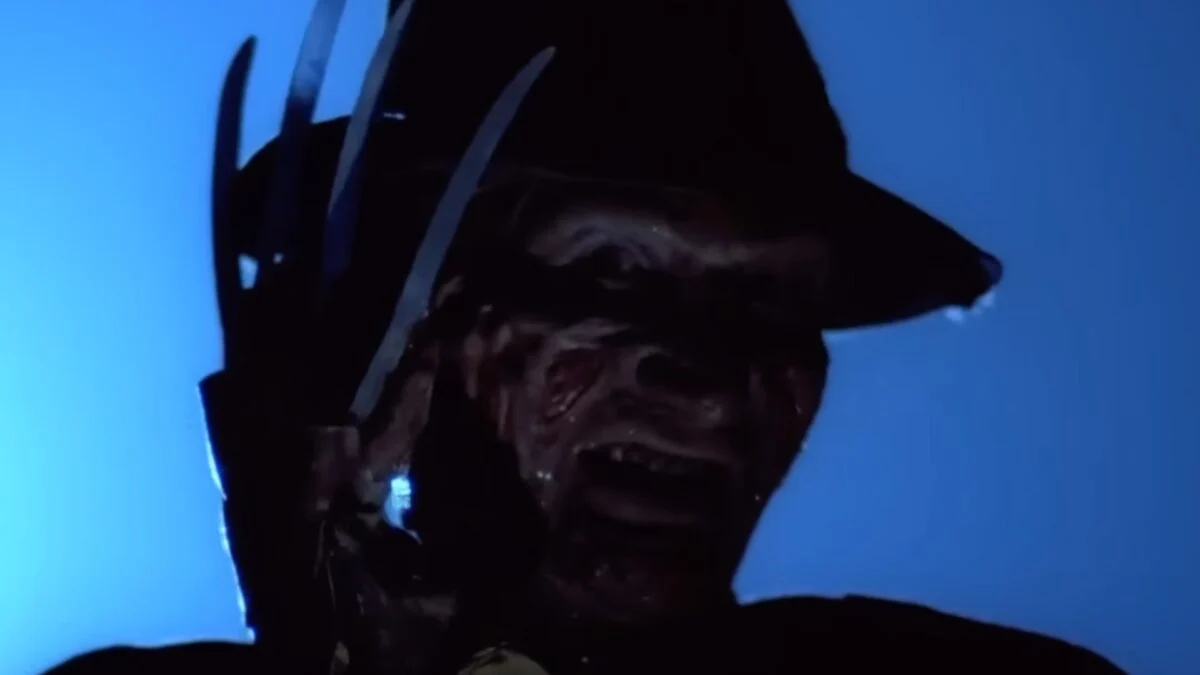
I woke to a thread blowing up with grainy stills: a clawed glove, a sweater smeared with time. You felt that small, sharp tug—an old fright slipping back under the door. Freddy’s silhouette is a rusted key that opens the lock on childhood fear.
You see the name on a press release and pause — Paramount Primal has made a move
I read the announcement the moment it dropped. Paramount has licensed the original A Nightmare on Elm Street screenplay from the estate of Wes Craven and put a new film into “priority development” under its freshly minted Paramount Primal label.
That matters because this isn’t a casual reboot. The studio is handing its horror label to J.D. Lifshitz and Raphael Margules, who will executive produce. Iya Labunka and Jonathan Craven from Wes Craven’s estate are directly involved. Those are authority cues that change the odds for fans and the marketplace.
On your feed: a familiar face is the first question people type
Social posts ask the same thing over and over. The public wants to know if the actor who made Freddy a cultural scar will return.
Will Robert Englund return as Freddy Krueger?
You and I both remember Robert Englund’s clawed grin and the way he turned nursery rhymes into torture. The press release is silent on casting. Englund is 79 and still working—he popped up in Stranger Things—and his name carries weight. Jackie Earle Haley filled the role in the 2010 remake, but many fans felt that version never matched the original’s sinew.
If I were advising the production, I’d push for Englund in some capacity: a cameo, a story thread, or a producer credit. That single choice would anchor this film to legacy fans while letting new creators take creative risks.
The industry smell test: who’s running the room matters
Trade sites and investors always read the credits first. You look for signals—who’s producing, who’s writing, who’s directing.
Paramount Primal is led by J.D. Lifshitz and Raphael Margules, names tied to modern horror production. Their statement praised Wes Craven and promised to “welcome Freddy home.” Jonathan Craven and Iya Labunka framed the move as a way to bring Wes’s world to a new generation. No writers or director are attached yet, which means the creative slate is still wide open.
Your speculative mind asks about tone, not just headlines
Fans aren’t only asking who will play Freddy; they want to know if this will feel like the 1984 film, the postmodern sequels, or the 2010 remake.
The release specifically says the new film will be “set in the world of A Nightmare on Elm Street, based on the original screenplay.” That wording leans toward respect for Craven’s tone and story DNA rather than a wholesale reinvention. At the same time, the franchise has survived because writers and directors have kept twisting the rules. This announcement is a shot of lightning to the franchise’s veins.
You’ve also got questions that matter to the market and press
Here’s what I’m watching next: casting announcements, director attachment, and whether the estate’s involvement translates into true creative oversight or merely a licensing handshake. I’m tracking Paramount’s release calendar and the Primal label’s slate on Deadline and Variety, and I expect trade momentum to build quickly.
What is Paramount Primal?
Paramount Primal is the studio’s genre label for horror and suspense-driven projects. The imprint is meant to centralize marketing, production, and distribution for titles that live between mainstream tentpoles and indie fright fare. If you follow the label’s early choices, you can map how the studio intends to position Freddy for theaters and streaming—think theatrical rollouts, festival premieres, and potential deals with platforms like Netflix or Paramount+.
When will the new Nightmare arrive?
No release window has been announced. When I watch timelines on similar franchise relaunches—studio announcement, packaging, casting, director, production—expect at least 18–24 months from priority development to release if everything moves fast.
You should care about tone and legacy because they sell tickets
I’ve covered horror for years; tone sells to both critics and midnight crowds. Wes Craven’s original combined moral fables, suburban dread, and dream logic. Keeping those elements intact while giving modern filmmakers freedom is the balancing act here.
Paramount’s public statements are promising, but promises are cheap. The estate’s involvement increases the chance of a faithful approach, yet history shows name protection doesn’t guarantee creative excellence.
The business levers: who benefits and where the money flows
Investors watch rights deals like this closely. Franchises reopen revenue channels—merch, streaming, reissues, and licensing. You can think of a franchise revival as a forest that reignites in patches rather than a single bonfire.
For fans, the emotional payoff is simpler: a chance to see Freddy’s mythology expanded. For Paramount and Primal, success would mean renewed franchise value across theatrical, home video, and streaming windows.
I’ll be watching the credits page the same way you will—each name will be a promise or a warning. Will they bring the man who made nightmares communal back into the picture, or will they try to write him out of the myth once more?