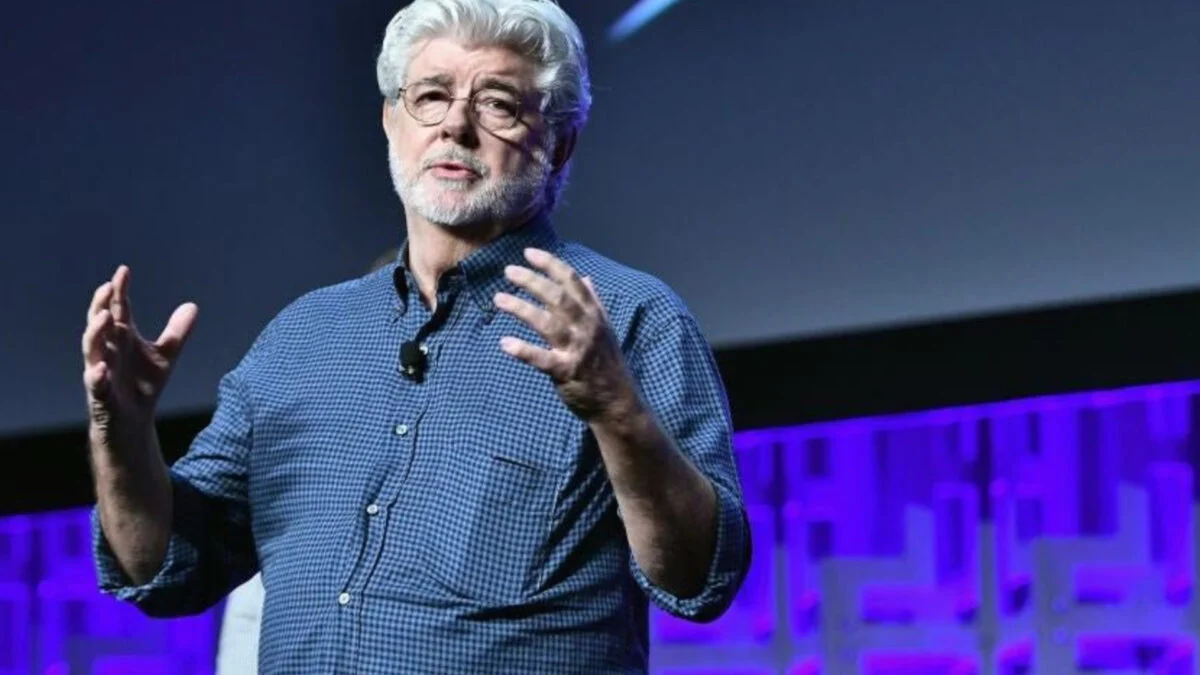
The projector stalled; a room full of fans held its breath. I watched an effects artist rub his temples and say, “We can build that—if we had the right code.” You feel that split: a brilliant idea on one side and the machine that must do the work on the other.
I’m going to be blunt with you: George Lucas has always placed his bets on tools. If you’ve followed ILM, Lucasfilm, or the man who sold his company to Disney for $4.05 billion (€3.77 billion), you know he doesn’t romanticize limitation—he engineers around it. That posture explains his public patience with artificial intelligence: it’s not a hobby, it’s a production problem waiting for solutions.
At Industrial Light & Magic the servers ran overnight
I remember touring an ILM floor where racks of machines hummed like a second sunrise. Lucas built an infrastructure so directors could ask for shots that hadn’t technically existed yet. He didn’t plead with the world to slow down; he changed the tools so the world could catch up.
That history matters because it reframes his AI comments. When he says AI “makes it easier to make movies,” he isn’t romanticizing automation—he’s describing the logical endpoint of a long pattern: artists demanding new machines and then building them. Lucas’s career is like a telescope that rewrites the sky. He trusts engineering to expand what stories can look like, which is why he frames AI as progress rather than panic.
In a quiet promotion interview at the Lucas Museum
He spoke plainly about risk and responsibility: AI can show you where a fake came from, he said, and humans alone can’t do that reliably. He also warned that creators must be accountable—if you misuse technology, you should face consequences.
Is George Lucas pro-AI?
Short answer: yes. But not uncritically. He separates tool from user. To him, AI is another phase of filmmaking infrastructure—an answer to a logistical need more than a cultural declaration. That stance echoes how ILM pushed pixels into the mainstream: not because pixels were glamorous, but because they solved shooting problems.
What did George Lucas say about AI risks?
Lucas compared fear of AI to early complaints about cars versus horse-and-buggy. His point was practical: every major tech shift brings new problems, but banning progress isn’t the same as managing it. He also suggested that AI can help identify fabrications—an OpenAI- or Adobe-style tool to flag manipulated media, for example—while still leaving moral choices to people.
At test screenings, the room told stories the filmmaker didn’t want
Lucas has always distrusted unfettered focus groups; he’s said audiences don’t always know what they want, and studios often mishear those signals. That comment is less about contempt and more about trust: he believes in skilled authors, not crowdsourced scripts.
If you run a production today you have new choices: use generative tools to prototype VFX faster, or let fan sentiment steer a franchise like a weather vane. Platforms from Netflix to YouTube changed how audiences speak; AI now changes how creators reply. AI is like a new lens that can either sharpen truth or blur authorship.
How might AI change filmmaking?
Expect speed and experimentation. Directors can iterate previsualization with tools that echo ILM’s early pipelines; VFX houses like Weta and ILM will integrate machine learning to cut render time and cost. Adobe and OpenAI offerings will let editors and concept artists generate iterations in minutes that once took weeks. But that same speed forces a governance conversation: who gets credit, who owns a character, and who answers for deepfakes?
On a studio lot someone will ask who’s responsible
That question is the hinge of Lucas’s view. He told reporters that humans must be responsible for what they say and do; AI shouldn’t be an alibi for illegal behavior. I agree with the posture, though I suspect enforcement will be messy.
If you’re making a film, the choice isn’t binary: fight AI or yield to it. You decide how it’s used, and institutions decide what rules they’ll enforce. Names you trust—Lucasfilm, ILM, Weta—will set practices that others copy. Regulators and platforms such as OpenAI and Adobe will shape default behaviors, and corporations like Disney and Netflix will decide which creative economies thrive.
Want more io9 news? Check out when to expect the latest Marvel, Star Wars, and Star Trek releases, what’s next for the DC Universe on film and TV, and everything you need to know about the future of Doctor Who.
I’ll leave you with this: Lucas has always bet on tools because tools let storytellers do what they imagined. The question isn’t whether AI will change film—it already has—but whether the people in power will treat the change with the discipline he insists on. Are you ready to trust those people?