
I stood in a storage tent outside Abu Dhabi, watching grips fold sand-colored tarps around a hulking practical prop. The crew moved like surgeons; someone handed me a small, ragged piece and said it came from the worm. You’re already picturing it on your shelf, aren’t you?
I’ve read the press release and handled the images so you don’t have to chase every bullet point. Here’s what matters: Movies & TV has an exclusive first look at two editions of The Art and Soul of Dune: Part Three by Stefanie Broos and Tanya Lapointe, and one of those editions literally includes a fragment from the screen-used sandworm. I’ll walk you through the cover, the collector’s box, the signed card, the replica Navigator, and whether that worm shard is worth the price tag.
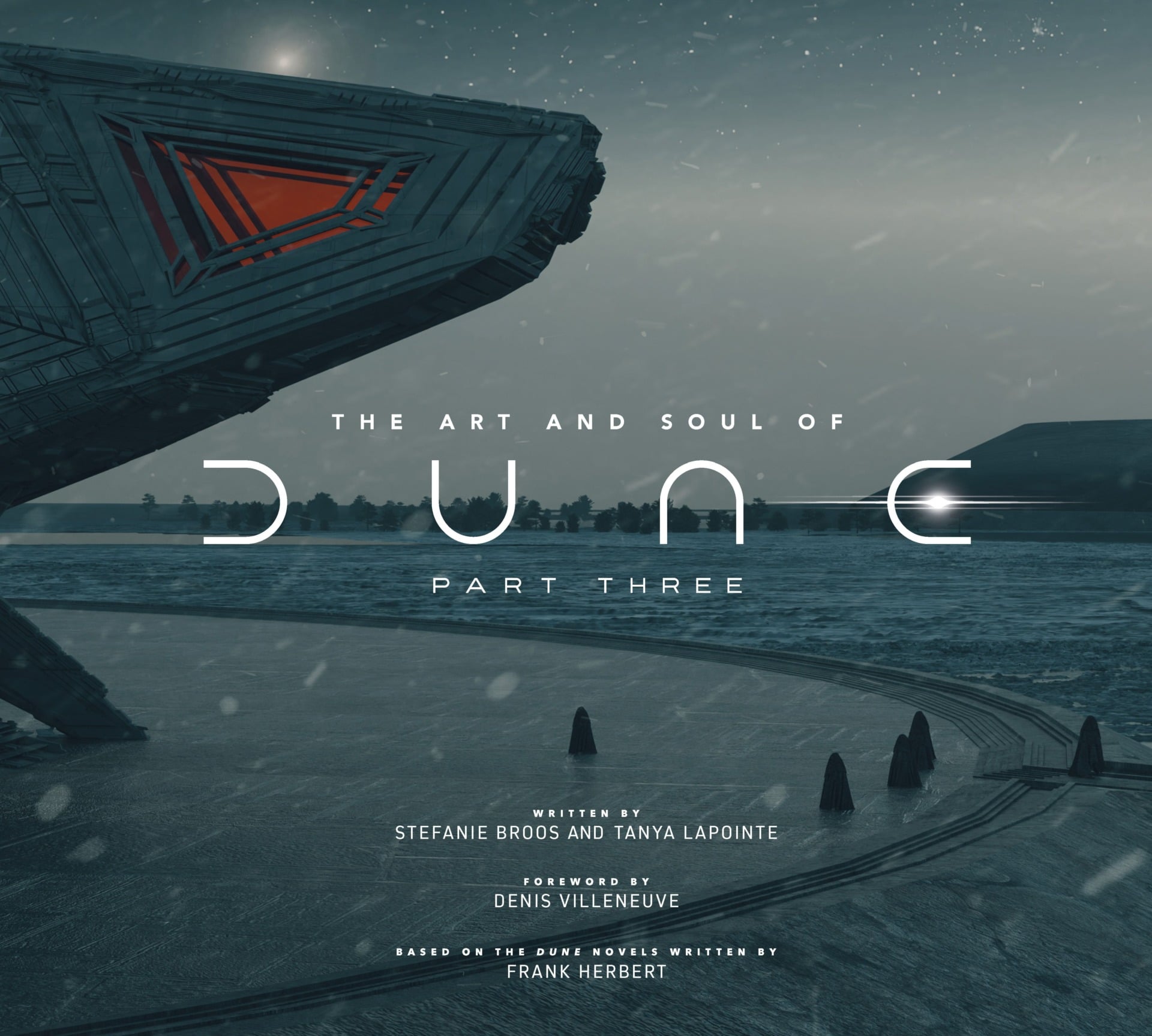
At my desk, the cover file opened like the first page of a new myth
The official cover drops a colder, more ceremonial tone than Denis Villeneuve’s desert cinematography in the first two films. Stefanie Broos and Tanya Lapointe compiled 240 pages of behind-the-scenes photography and concept art; the limited-edition dust-jacket mirrors the film’s sacred markings beneath Paul Atreides’s eye. Legendary Publishing—correcting earlier chatter that misnamed the imprint—handles the book.
Outside the tent, production workers labeled and boxed the props
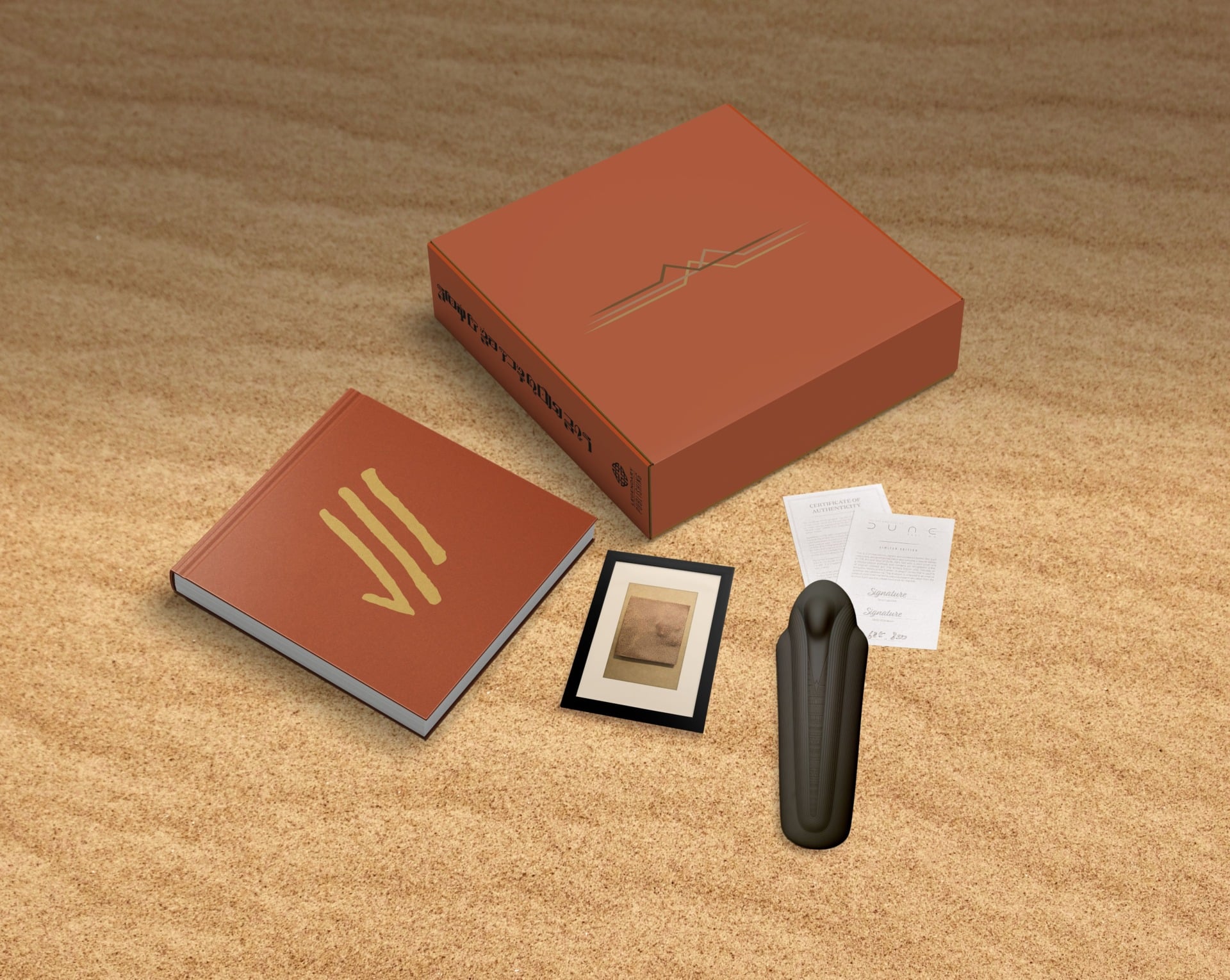
The Legacy Edition is where the press release goes theatrical. The set ships in a deluxe collector’s box marked with a three-dune commemorative sigil reproduced with permission from the filmmakers. Inside: an exclusive limited-edition cover, a signature card signed by director-screenwriter-producer Denis Villeneuve and writer-producer Tanya Lapointe, and a Spacing Guild Navigator replica produced from the same files used to create the original 10-foot prop.
On set, someone cut away a section of the worm before the prop was crated
That fragment is real. The press release describes it as an “authentic screen-used worm prop”—a preserved slice from the full-scale sandworm built in Abu Dhabi. The company says less than one percent of the massive practical prop was saved after production; what’s in the box is a piece of that fraction. If that sounds like a fossilized trophy, that’s because it functions the same way for collectors: provenance plus rarity equals demand.
Does the legacy edition include a real sandworm piece?
Yes. The Legacy Edition includes a genuine fragment from the sandworm set used during filming in Abu Dhabi, alongside the other items: a signature card from Villeneuve and Lapointe, a Spacing Guild Navigator replica, and the exclusive book cover.
A merch table had price tags stapled to plain cardboard
Now the numbers. The Legacy Edition retails for $400 (€370). That’s a meaningful sum—less than the $800 (€740) thumper bundle that accompanied Dune: Part Two, but still premium. The standard hardcover is $65 (€60), a reasonable bridge for readers who want the photography and concept art without the fossilized trophy or replica statue.
How much does the Dune Part Three art book cost?
Regular edition: $65 (€60). Legacy Edition (with worm fragment, replica Navigator, and signatures): $400 (€370). Release dates are listed below.
When is the book released?
The trade edition is scheduled for December 22; the Legacy Edition ships January 12, 2027. Simon & Schuster and Legendary Publishing pages list pre-order options for both; Legendary is the imprint behind the special set.
At collectors’ forums, people trade photos and provenance like currency
Why this matters to you: authenticity and scarcity drive collector markets. The Legacy Edition packages film production artifacts with filmmaking context—Broos and Lapointe’s access to cast and crew, rare on-set photography, and concept art—so it reads as both archive and trophy. If you care about cinematic craft or Frank Herbert’s universe, the book is a visual archive; if you chase investment-grade props, the worm shard is the signal item.
Fans will debate whether a fragment from a practical prop outclasses a high-quality replica. The Navigator statue and the filmmakers’ signatures add cultural weight; the parasite of desire that fuels collectibles is simple: provenance, rarity, and connection to an auteur like Villeneuve.
I’ll leave you with this: do you buy the story and the artifact, or do you collect the story only—what would you place on your shelf as proof of taste?