
I was stopped at an intersection when a cyclist next to me tapped a tiny screen on their handlebars and a live rear view filled the glass. You could feel the tension in the lane—cars threading past, a blind spot that suddenly had an answer. I realized Volkswagen wants you to feel that same small, mechanical confidence on every ride.
I’m calling it out because this isn’t a bicycle rebadged with a logo: the German automaker licensed its name to two new e-bikes made by n+, the performance-focused company that has worked with Mercedes-AMG’s Formula 1 team. These Volkswagen-branded models package automotive safety tech—radar, cameras, a handlebar display, and optional smart wearables—into a commuter-sized machine.
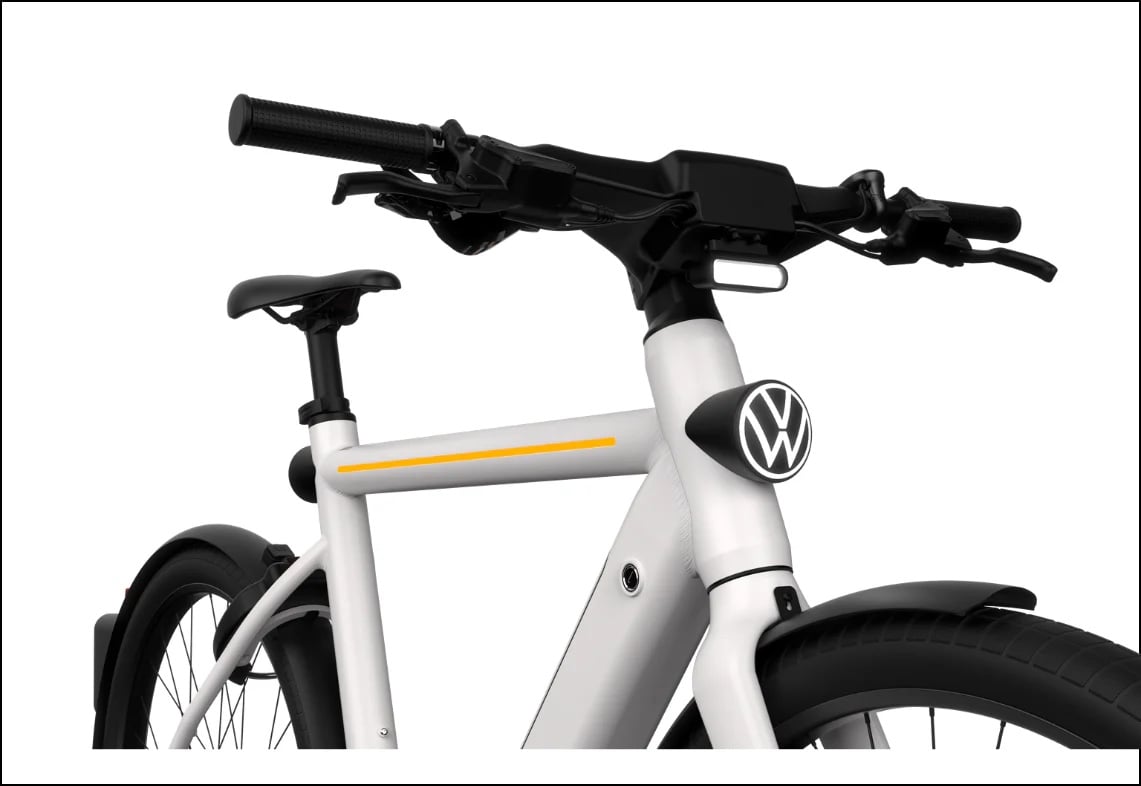
I watched a rider glance down at a slim screen between the bars and keep going.
The headline feature is the Smart View system: a rear-facing camera streams to a handlebar display while radar watches for fast-closing vehicles. It’s designed to provide blind-spot alerts and a continuous rear view so you don’t have to twist your head into traffic. This system borrows the safety-first thinking Volkswagen promotes in its cars and squeezes it into a bicycle platform.
Smart View pairs with the bike’s LED strip embedded in the top tube: steady daylight visibility, red for braking, amber for turns. The bike treats signaling the same way a passenger car does, and that changes how other road users react to you.
How do smart e-bike glasses work?
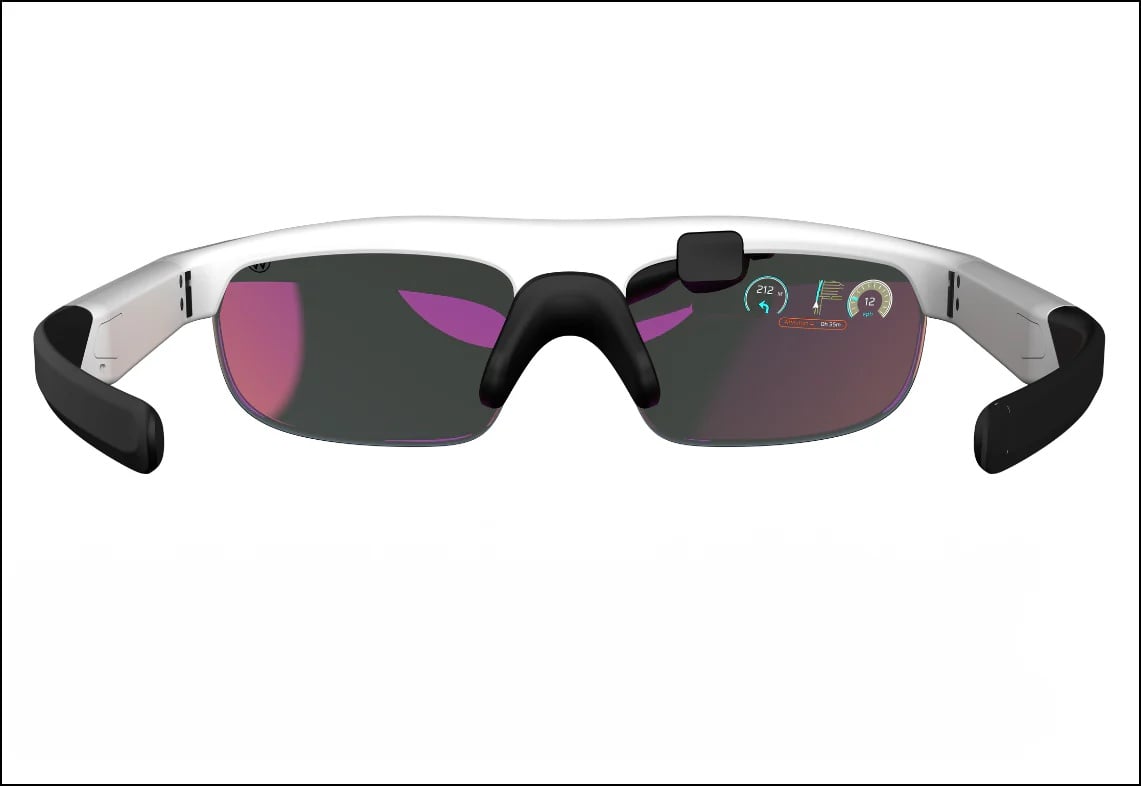
The optional smart glasses project navigation, blind-spot warnings, and ride info into your field of view via a heads-up display. They pair over Bluetooth with the bike’s systems and a companion app on your phone, relaying data from the camera, radar, and GPS. Think of the glasses as a live feed from the bike’s sensors and your phone, presented where you already look—straight ahead.
On a wet morning I watched LEDs flash as a rider braked and another driver slowed.
There are two wearable options: a connected helmet and the HUD glasses. The helmet syncs to the bike and flashes the same brake and turn signals; its built-in accelerometer can detect a crash and automatically message emergency contacts. The helmet is a lighthouse on two wheels, designed to be seen and to call for help if you can’t.
Price guide: the helmet is $399 (€370).
Are smart helmets worth it?
If your priority is risk reduction, the helmet’s visibility and automatic crash alert are pragmatic additions. They add cost and a small layer of complexity—Bluetooth pairing, firmware updates—but they also close the gap between being seen and being helped. For riders in heavy traffic or urban delivery roles, that trade-off often lands in favor of buying in.
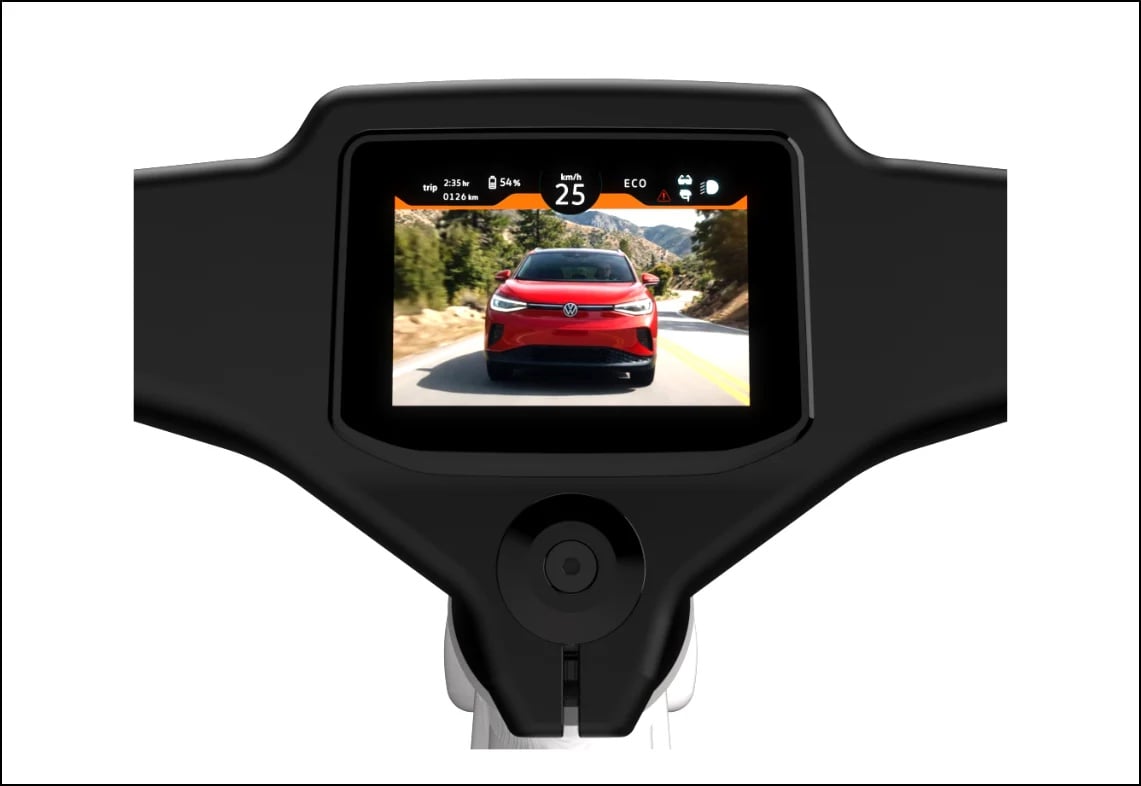
I opened the spec sheet on my laptop and compared ranges, weights, and prices.
There are two models: a Sport for agility and a Crossover built for comfort with a rear cargo tray. Both provide pedal assistance up to 25 km/h (15.5 mph) and an estimated maximum range of 160 km (99 miles). Real-world range will change with terrain, wind, tire pressure, and rider mass; battery extenders are offered for both bikes.
Prices start at $3,999 (€3,720) for the Sport and $4,349 (€4,045) for the Crossover. Optional smart glasses are $499 (€460).
Peter Jost, CEO of Volkswagen Accessories, Lifestyle & Licenses, framed the move as an adaptation of automotive tech to two wheels. Working with n+—whose motorsport pedigree includes Mercedes-AMG F1—gives the project engineering credibility, but you should weigh whether the added electronics match your riding style.
How far can Volkswagen e-bikes go?
The headline estimate is up to 160 km (99 miles) on a charge, but expect lower numbers in hilly terrain or with heavy cargo. Use a battery extender if your commute regularly approaches the upper limit.
I’ve ridden with similar HUDs and safety systems; they change decision-making on the road and shift attention in subtle ways. You buy one of these bikes for visibility, integrated alerts, and a sense that your commute borrowed a few safety rules from the car world—but you also pay for complexity, software, and accessories.
If you want a commuter that borrows automotive safety thinking and pairs with wearables, Volkswagen’s smart e-bikes are a credible option—if you can justify the price premium and the extra gizmos. Would you rather spend on visibility and connected safety, or keep a simpler bike and spend that money on route training and protective gear?