
I remember one late-game play: the clock bleeding out, a teammate cutting hard, and the defender’s hand a half-second from stealing the pass. I chose the lob, and the arena erupted; miss it and the replay would be a teachable moment. You feel the difference immediately—you either create a highlight or hand the ball back to the other team.
I’m going to walk you through both the Lob and the Self Lob in Practical Basketball—when to risk the pass, how to time the catch, and the simple inputs that separate smart players from highlight chasers. I’ve taught these moves in scrims, on Steam servers, and in casual matches where teams mimic NBA spacing; use what fits your setup and controller (PlayStation or Xbox pad works the same once you lock the timing).
How to Perform a Lob in Practical Basketball
Observation: In half-court sets you often face a defender parked in the passing lane while a teammate slices toward the rim.
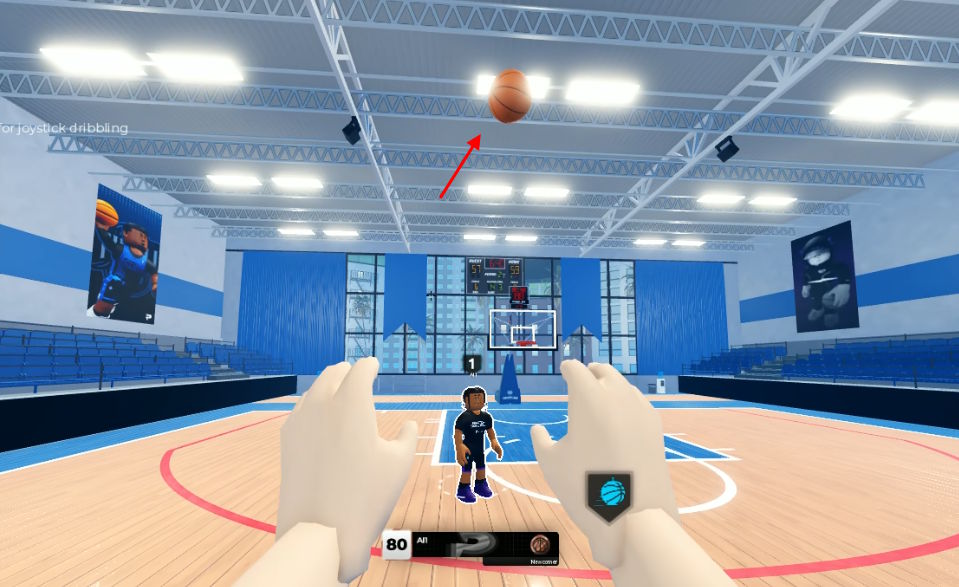
The Lob is your answer when a straight pass is asking to be cut off. Hold T and press R to send a high-arching pass over defenders and into a teammate’s hands. The ball follows a lofted trajectory, making it harder to intercept than a standard pass. Use the Lob when a cutter is moving toward the basket or when a defender is square between you and your teammate.
- Button Input: Hold T + Press R
- Use: Throw a high pass over defenders to a teammate
Timing is everything. If your teammate is standing still or crowded by help defenders, the Lob becomes a turnover. Think of the pass like threading a needle across traffic—precision and timing beat spectacle. Practice hitting the pass a step before the cutter arrives so the catch is automatic and the finish is immediate.
When should you use a Lob instead of a normal pass in Practical Basketball?
Use the Lob when a defender blocks the direct lane or when your teammate is cutting to the rim with momentum. On fast breaks and delayed cuts, a Lob turns good spacing into a near-automatic score. Against a waiting rim protector, however, keep it simple—force-feed only if the receiver has separation.
How to Perform a Self Lob in Practical Basketball
Observation: On a break or with an open lane, you can become your own passer and finisher by using the backboard as an ally.
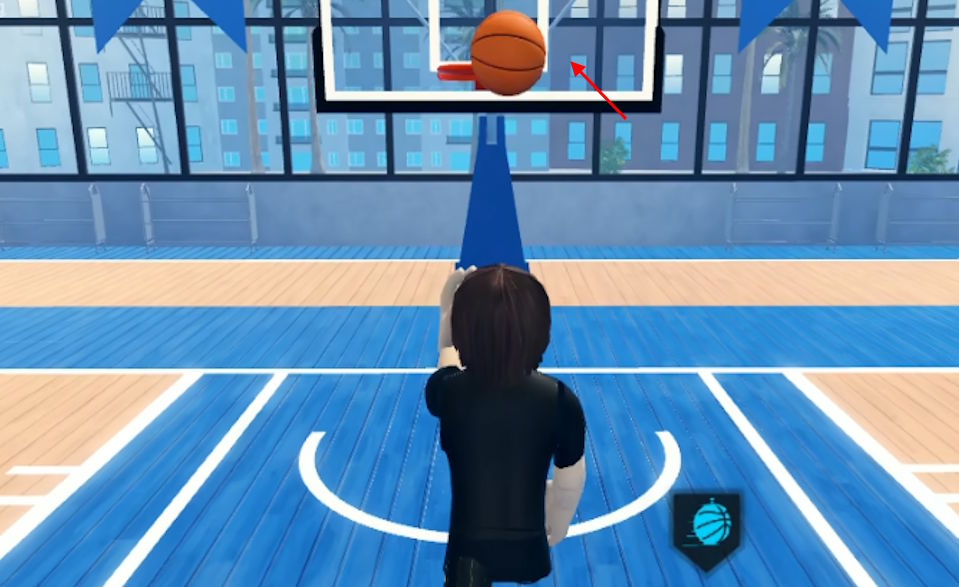
The Self Lob lets you throw to the backboard, chase the rebound, then finish at the rim yourself. Start by sprinting toward the basket with a clear lane, press Shift + F to bank the ball off the glass, and keep moving. Don’t stop after the throw—keep your momentum, track the bounce, then catch and convert. If you attempt this in heavy traffic or without speed, defenders will steal the ball or block the shot.
- Button Input: Shift + F
- Use: Throw the ball off the backboard to yourself while sprinting toward the basket
Executed correctly, the Self Lob sets up a high-percentage layup or dunk; done poorly, it’s a textbook turnover. Visualize the backboard as a teammate and your timing as the pass—you need to be under the rebound the instant it drops. This move is where momentum becomes your friend: continue your sprint and attack the space under the rim.
How to do a Self Lob in Practical Basketball?
Sprint toward the basket and press Shift + F to bank the ball off the backboard. Chase the arc, catch, then press E for a layup or Space for a dunk if you have the space and momentum. Practice on empty courts (on Steam or a private lobby) to lock the timing before using it in ranked play.
How to Finish a Self Lob (and Where it Wins Games)
Observation: In open lanes the Self Lob often ends as either a soft layup or a thunderous dunk depending on your momentum.
After you catch your Self Lob, you have two reliable outcomes. Press E for a Self Lob Layup when defenders are closing in or you lack the drive to dunk. Press Space for a Self Lob Dunk when you have a runway and speed. The Self Lob Dunk is a momentum play; when the lane is open it’s a crowd-pleaser and a high-percentage finish.
| Finish Type | Button Input | Best Use |
|---|---|---|
| Self Lob Layup | E | Safer finish when defenders are nearby or you cannot dunk consistently. |
| Self Lob Dunk | Space | Best for open lanes and momentum to convert the catch into a powerful dunk. |
Best Situations to Use Each Move
Observation: Not every court or opponent profile rewards high-risk plays; reading space and defenders matters more than flash.
Use the standard Lob when a cutter has separation and you need to bypass a defender’s reach. Use Self Lobs when you have a clear lane and enough speed to chase your banked pass. Here are reliable scenarios:
- Fast breaks with no defender between you and the basket.
- Wide open lanes where you can keep sprinting after throwing the ball.
- Practice courts and private lobbies (Steam or local friends) to build the muscle memory.
Practice both on empty courts and during low-stakes matches. Mixing these plays into your offense will make you harder to guard and give teammates easier looks, especially against teams that overhelp or play aggressive on-ball defense. I’ve seen players elevate their effective field goal percentage by simply knowing when to loft and when to bank—small decisions, big payoff.
Which of these plays are you running in ranked matches—are you the passer or the finisher?