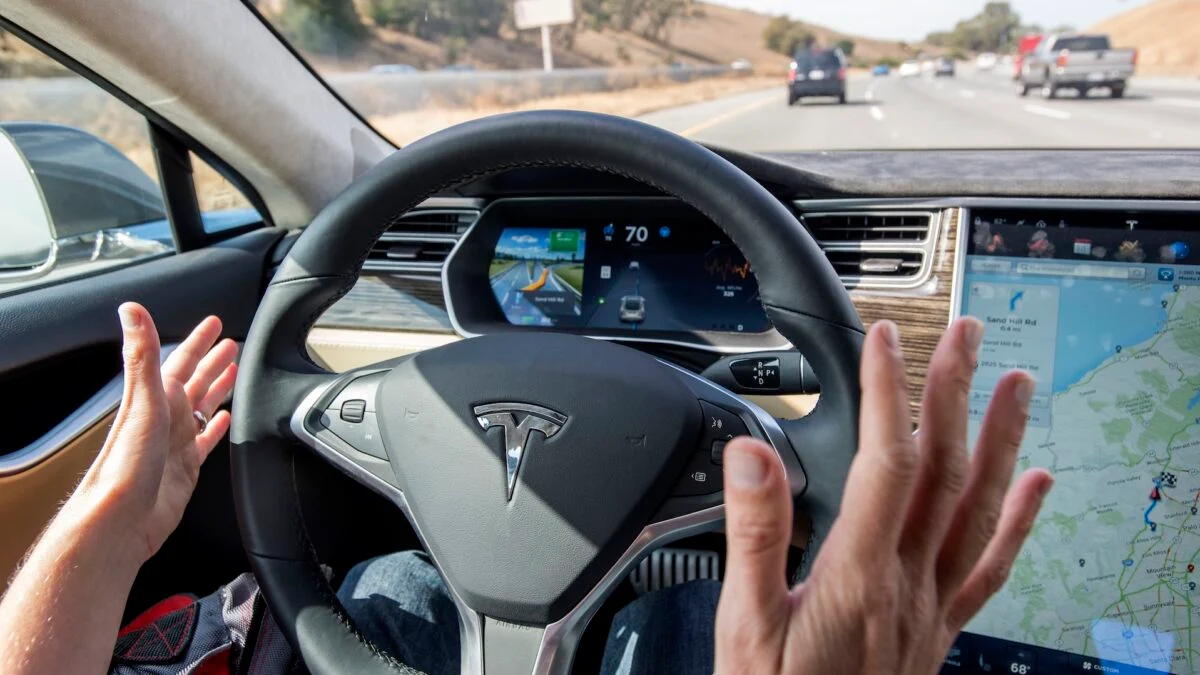
I watched the body-cam clip and felt the moment snap into focus. You see a man in a parked Tesla, hands folded, telling a cop, “I wasn’t driving.” I remember thinking: the car was quiet, the defense was loud, and the cop didn’t buy it.
I’m telling you this so you don’t make the same mistake. You and I both know technology is seductive, but responsibility doesn’t ride in the passenger seat.
He sat in his Tesla and told the cop “I wasn’t driving”.
The scene unfolded in Parker, Colorado, and CBS News posted the body-cam footage that made the rounds. The driver had been stopped for speeding, then sat there offering what I can only call the oldest dodge in the book: blame the car. The officer, with a few short questions, ended the argument and walked away.
This is less a legal mystery than a social experiment about plausibility. Saying “the car did it” is like a stage actor forgetting his lines — dramatic, but not persuasive.
Can I blame Autopilot for a traffic ticket?
Short answer: no. Tesla’s own legal language is explicit: Full Self-Driving (Supervised) requires active driver supervision and “does not make the vehicle autonomous.” If your cruise-control-ish feature was on, the law still treats you as the driver. That speeding ticket you hoped to dodge? Typical fines can be around $150 (€140), and that’s before points on your license or higher penalties for serious violations.
Tesla’s website labels the system “Full Self-Driving (Supervised)”.
Tesla’s disclaimer is not marketing copy you can parrot in court — it’s a legal admission. The company warns users that they are always responsible for the safe operation of the vehicle. I read that line and I hear the company protect itself, but also inform you: supervision is required.
Elon Musk may tweet about autonomy, and Tesla will sell you the software, but regulators and courts still place responsibility on the human behind the wheel. The autopilot brand and the legal reality are different tracks that only sometimes run together.
Is Full Self-Driving actually autonomous?
No. Regulators like the NHTSA have investigated Tesla’s Autopilot and FSD features precisely because the name blurs capabilities. You might see flashy demos or FSD Beta videos online, but the system is a driver-assist tool, not an autonomous chauffeur. Tools matter — dashcams, body cams, and Tesla logs often decide who is accountable after an incident.
The law treats drivers, not the car, as responsible.
When something goes wrong, investigators ask: who had control? The short legal answer is you. Insurance claims, citations, and criminal charges hinge on that reality. A minor speeding ticket is one thing; reckless driving or harm to others can turn a $150 (€140) citation into fines and liabilities in the thousands — think $5,000 (€4,650) or more — and civil suits change lives.
I want you to be aware: technology can feel like a safety blanket, but sometimes it’s a placebo. A lighthouse with its light switched off still stands on the shore, but ships won’t see it.
If Tesla’s marketing and a driver’s excuse can diverge so dramatically in plain sight, should lawmakers, manufacturers, or drivers carry the burden of clarity — and who will actually enforce it?