I watched a thread of messages between a 16-year-old and a chatbot spool into something that felt more like a diary than a search box. At 2:14 a.m., the kid typed, “Do you miss me?” and the bot answered with an oddly warm, human cadence. I want to tell you why that single ping pushed OpenAI into a new safety test.
A teen refreshes ChatGPT at midnight. A safer homework helper.
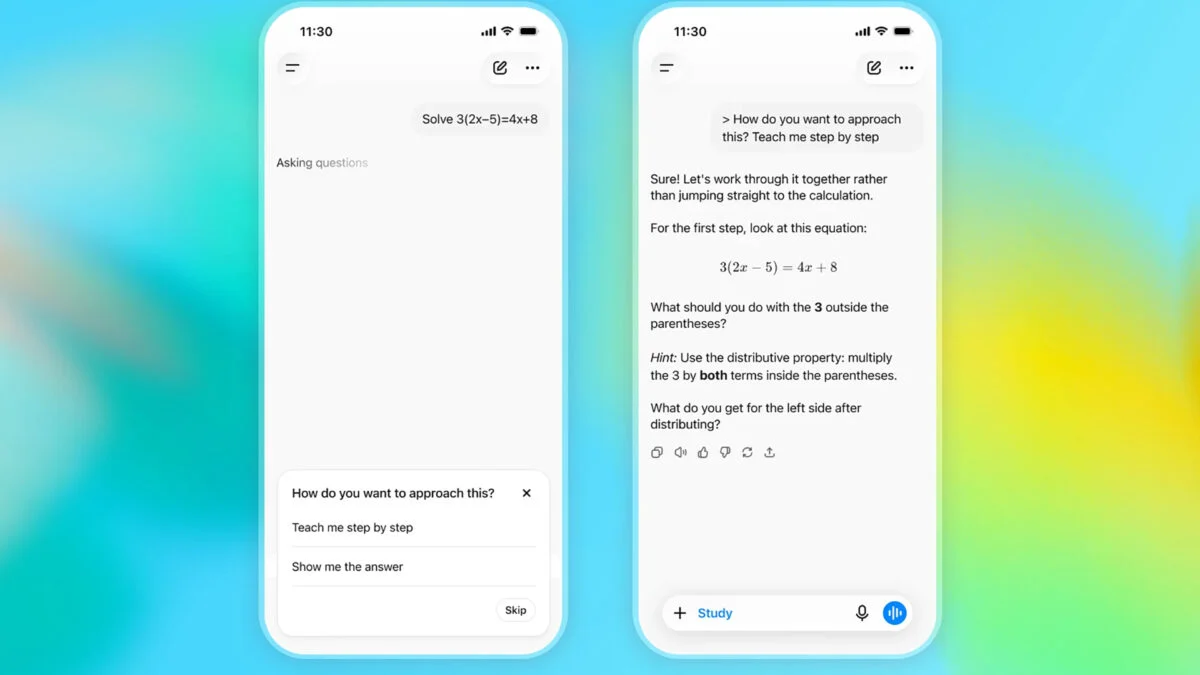
You’ve seen the late-night cram session: a student past curfew hunting for quick answers. OpenAI’s new ChatGPT for Teens introduces a “responsible homework reminder” that detects assignment-seeking queries and routes the user into Study Mode for guided, step-by-step help instead of a blunt answer.
I like that approach because it treats short-term convenience as a temptation to be managed, not a feature to be amplified. The system watches signals—time of day, pattern of prompts, self-declared age—and nudges the interaction away from shortcuts and toward learning.
That nudge is intentionally small; the company wants teens to stay engaged. The tweak is designed to feel more like a dimmer switch than a locked door.
A teenager confides in a bot and feels comforted. Less of a friend, more of a tutor.
I have seen kids assign feelings to code; parents have told me stories where a screen replaced an actual conversation. OpenAI has tightened its model spec so that ChatGPT avoids romantic language and refuses to present itself as conscious or sentient.
OpenAI will also withhold content in high-risk areas—self-harm, eating disorders, sexual material—and flag attempts to bypass age checks. The change follows public pressure from tragic cases, including a lawsuit tied to the 2023 death of Adam Raine, and the broader legal battles that now envelop tech platforms.
Meta, which runs Facebook and Instagram, is fighting multi-state suits brought by attorneys general in Colorado, California, New Jersey, and Kentucky; those states are seeking damages up to $200 billion (€184 billion). That kind of exposure sharpens incentives for companies to pare back anything that could be mistaken for intimacy or emotional agency.
OpenAI still permits surface personalization—accent colors and voice variations—to keep the tool approachable without blurring the line into companionship. The goal is safety that feels natural, like a seatbelt you barely notice until you need it.
Parents check phones at breakfast. The enforcement problem stays real.
You can ask a teen’s friend for their age, and they’ll lie; the internet makes the same easy for AI sign-ups. OpenAI admits enforcement has been imperfect—its baseline minimum age is 13—but it plans automated checks that flag suspicious behavior when users try to mask their age.
Those signals include time stamps, conversation patterns, and cross-referencing in-account data. I’ll note: heuristics are never perfect, and motivated users will test boundaries. That’s why the product combines detection with behavioral design changes rather than relying purely on verification walls.
What is ChatGPT for Teens?
It’s an age-specific mode that turns on for users who self-identify as 13–17. It reroutes homework requests to Study Mode, withholders in high-risk topics, and model rules that ban romantic or sentient claims. It’s still ChatGPT—but with guardrails designed for developmental context and school settings.
How does ChatGPT prevent emotional bonding?
Two tactics: the model spec explicitly prohibits romantic phrasing, and the chatbot avoids language that suggests feelings or consciousness. Design choices—limited customization, study-first flows, and withheld content—reduce the cues that encourage emotional attachment.
Will ChatGPT for Teens limit creativity?
The mode preserves creative tools (story prompts, voice variations, project help) while narrowing paths that can create false intimacy. OpenAI says you’ll still be able to customize colors and voices so the experience doesn’t feel sterile, but the company has gated the elements that most readily mimic friendship.
There’s a larger story here about how platforms balance engagement and harm. I’ve followed these debates across BBC reports, court filings, and company blog posts; you should scrutinize the trade-offs and ask whether safety is being built into the product or simply bolted on after headlines. Who decides how much intimacy an algorithm can offer, and should companies have the final say?
The Trillion-Dollar Trial Against Meta Is Too Big to Succeed
If you’re a parent, educator, or policy maker, I recommend watching how these safeguards perform in real conversations—because the next headline could be about a system that tried to help and crossed a line; do you trust the companies to draw that line for your child?