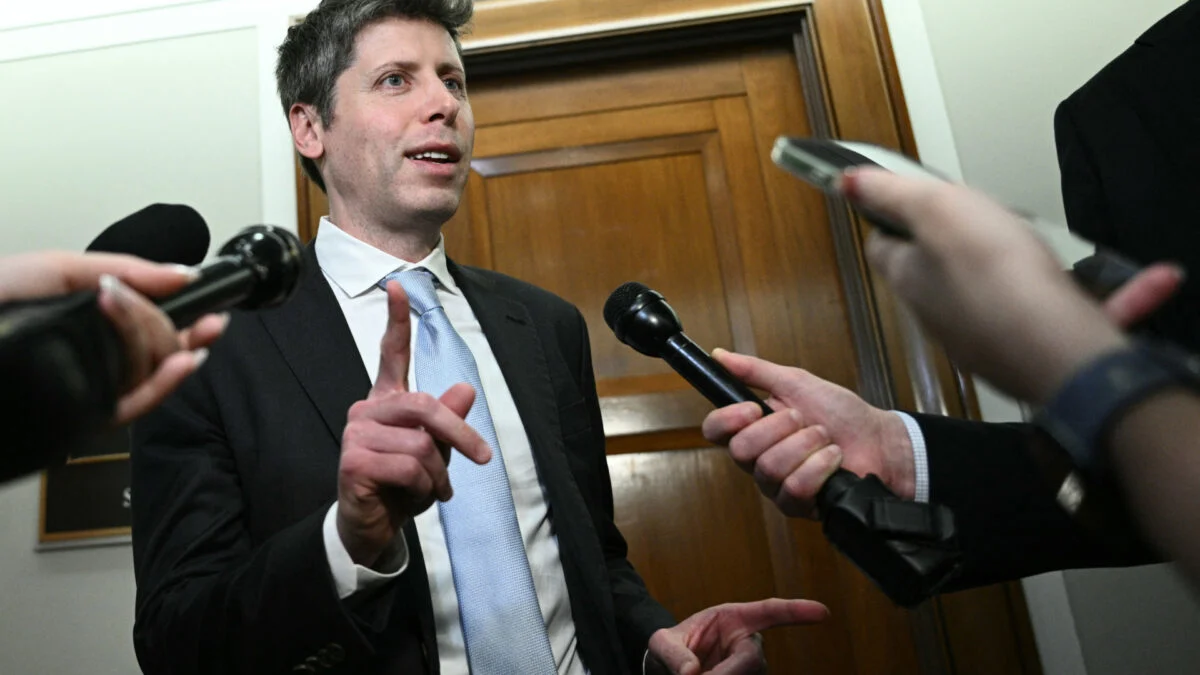
He sat back, thumb tapping his phone, the quarterly slides still open on his laptop. For a moment the room felt quieter than it should: a leader telling investors his company had slowed felt like an admission of something more. I remember thinking how strange it is when momentum becomes the story.
I’ve followed Sam Altman’s run-ups and hairpin turns; you’ve probably tracked the headlines. Let’s walk through what the numbers, the leaks, and the market whispers mean for OpenAI’s path to profit and for the broader AI race.
At an investor briefing, someone quietly pointed to the growth chart and asked a blunt question.
The Wall Street Journal reported—citing anonymous sources—that OpenAI told investors revenue rose just $6.7 billion (€6.2 billion) in the quarter ending June, up from $5.7 billion (€5.3 billion) the prior quarter. That’s an 18% sequential increase, a pace some shareholders found underwhelming when compared with Anthropic’s reported numbers.
I don’t sugarcoat figures: for a company preparing markets for an IPO, sequential growth is a heartbeat investors watch. You should notice that OpenAI also claims growth picked up after the public launch of GPT-5.6 and after steep price cuts on Luna and Terra (Terra by 80%). Those moves look like they were meant to widen adoption quickly, not to chase short-term margin glory.
Is OpenAI profitable?
Short answer: not publicly confirmed. OpenAI has told investors and reporters different things at different times. Bloomberg suggested an annual run rate near $40 billion (€37 billion) for this year, which, if accurate, implies massive scale; that doesn’t automatically equal near-term net profit once R&D, infrastructure, and safety work are tallied. I’d ask where you draw the line between cash flow and headline revenue when an IPO is on the table.
On a trading desk, someone laughed nervously when Anthropic’s numbers appeared.
Anthropic’s reported surge—roughly $65 billion (€60 billion) annualized and speculative ranges up to $100–$120 billion (€93–€112 billion)—has reset expectations. Anthropic’s momentum has made some investors ask whether OpenAI is losing market share or simply pacing itself. Anthropic is in final IPO preparations, according to multiple reports; OpenAI’s public offering is widely expected to be delayed into next year.
Anthropic’s ascent feels like a rocket firing past a rival, which changes the narrative at every cap table. If you’re an investor, that matters: market psychology often moves faster than underlying economics.
How does OpenAI’s revenue compare to Anthropic?
Numbers vary by source, but the story is simple: Anthropic’s recent growth rates look dramatically higher on paper. OpenAI’s quarter-to-quarter lift was modest in comparison; Anthropic’s quarterly reports and rumored annualized totals paint a steeper curve. I watch these figures less for drama and more for what they signal about pricing power, enterprise penetration, and the durability of customer relationships with Microsoft, Google, or direct enterprise deals.
On a safety review call, someone at the table said, “Slow down.”
Sam Altman reportedly told Time that slowing development to focus on safety was worthwhile: “Getting AI safety right,” he said, “is more important than any company’s momentum.” I agree with the logic; safety work is expensive and can look like a drag on short-term profitability. You should also accept that telling investors you’re slowing model development can rattle expectations during an IPO build-up.
There’s a trade-off here. Short-term revenue pacing can protect the brand and reduce catastrophic risk, but it can also hand narrative control—and sometimes customers—to competitors who are sprinting harder. OpenAI, in that light, feels like a sprinter who missed the baton: still fast, but momentarily out of rhythm.
Will OpenAI delay its IPO?
Market chatter and coverage from The New York Times and the Financial Times has leaned toward a delay. Given the company’s mixed signals—public statements about safety, reported sequential revenue softness, and a rival rushing an IPO—postponing the offering would not be a surprise. If you’re watching this as a potential investor, timing now looks as much strategic as financial.
In a corridor outside a boardroom, an analyst scribbled three words: price war, adoption, safety.
Bloomberg and the Financial Times have offered competing narratives about total revenue potential. Price cuts on Terra and Luna suggest OpenAI is prioritizing usage growth; Anthropic’s reported numbers suggest aggressive monetization or different accounting assumptions. I want you to scan the signals: price moves, enterprise contracts (Microsoft and others), and the public safety messaging are the levers that will shape actual profitability.
Which of those levers you think matters most depends on your timeframe. If you’re short-term, price cuts and pricing elasticity matter; if you’re long-term, model safety and platform stickiness matter. Neither path is risk-free.
There are powerful players in this story—OpenAI, Anthropic, Microsoft, investors, and the press—and their incentives don’t always align. You should keep watching product releases like GPT-5.6, corporate contracts, and any IPO calendars for signals. But one thing is clear: when growth stalls and safety headlines rise, market psychology gets noisy fast—so which risk would you bet on now?