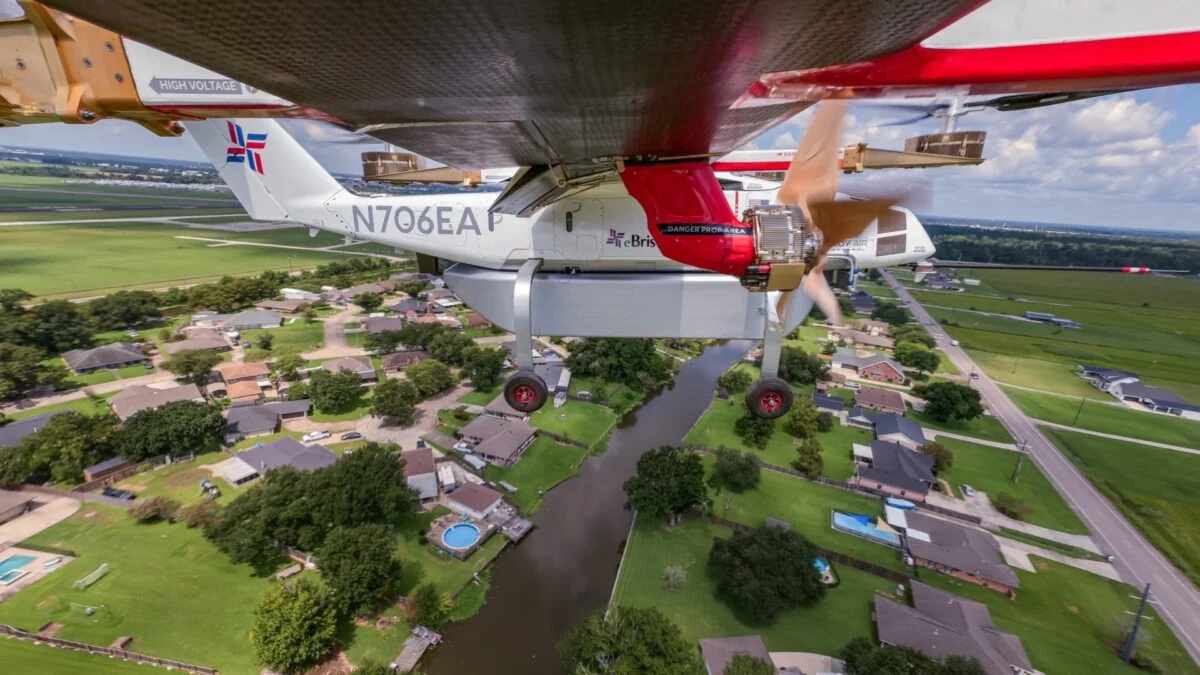
The Chaparral drifted over Houma at dawn — no pilot, no figure in a cockpit, only rotors and a cargo bay humming. People on porches paused, watching a plane behave like a freight drone on the highway of the sky. I remember that instant when ordinary airspace felt suddenly unsettled and worth following.
One week in late August saw uncrewed flights carrying toolboxes and medical supplies above a small Louisiana town.
I was tracking the details because this wasn’t a sightseeing flyover — it was a systems test under federal scrutiny. Elroy Air’s Chaparral completed a string of autonomous, uncrewed cargo flights under the Department of Transportation and Federal Aviation Administration’s eVTOL Integration Pilot Program (eIPP), operating with Air Traffic Control oversight out of one of the nation’s busiest rotorcraft airports.
Elroy’s CEO, Dr. Andrew Clare, framed the run as a step toward “moving heavy cargo autonomously, safely, and at scale.” The company confirmed the weeklong missions moved packages, food, spare parts, medical supplies, and water — real freight, not demos.
What is the Chaparral and what can it carry?
The Chaparral looks like a large drone with wings. It can haul more than 500 pounds and has a published range of up to 450 miles — specs aimed at replacing some truck runs and helicopter lifts for logistics companies and energy operators.
The DOT and FAA treated the flights as data collection, not just PR theater.
That was clear when FAA Administrator Bryan Bedford and Louisiana’s Department of Transportation and Development aligned on the tests: they wanted metrics, gaps, and procedure improvements, not headlines. The eIPP pairs state and local agencies with private developers to test electric vertical takeoff and landing aircraft and feed results back to regulators.
The FAA told Gizmodo the demonstrations will help identify operational gaps and refine integration into national airspace. Business Wire carried Elroy’s official release while outlets such as The Next Web flagged that commercial orders cited by Elroy — a pipeline of about $5 billion (€4.7B) — are based largely on non-binding letters of intent and memorandums of understanding.
Are uncrewed cargo flights allowed over U.S. airspace?
Yes, with limits. The eIPP creates a controlled, government-backed testing environment where companies can operate beyond standard waivers, but each flight requires coordination with the FAA and local authorities. These flights were permitted because they fit inside a monitored pilot program designed to collect operational data for future rulemaking.
On the ground, energy sites and defense planners were watching the Chaparral’s runs like they were trialing a new supply line.
Elroy says the aircraft could service hard-to-reach Gulf Coast energy sites and move tactical loads for defense and humanitarian missions. In August the U.S. Army awarded Elroy a $46 million (€43M) multi-year contract aimed at logistics and resupply work.
The company is also pursuing a public listing through a special purpose acquisition company and expects its first production aircraft later this year, a move that would scale manufacturing and customer delivery if the order pipeline materializes.
Small town scenes mask larger questions about trust, safety, and business models.
I coach teams and brief executives, and I’m blunt: the technical demo is only the beginning. Regulators want repeatable data; operators want reliable economics; communities want safety and noise limits. You should be skeptical of headline numbers — pilots and regulators are patient about claims until the logs back them up.
The Chaparral’s flights felt almost poetic — like a mechanical hummingbird with a cargo hold — but poetry won’t pay shareholders or calm an air traffic controller if procedures aren’t airtight.
Brands and platforms you should watch as this unfolds: Elroy Air, the FAA and DOT eIPP framework, Louisiana DOTD, defense contractors tied to Army logistics, and media outlets including Business Wire and The Next Web, which have already colored the narrative around contracts and commercial intent.
I’ll keep tracking flight logs, FAA briefings, and the SPAC timeline if you want hard benchmarks rather than press releases — but here’s the sharper question every operator and resident should ask: are we ready to hand critical supply chains and tactical resupply to pilotless aircraft flying over towns and infrastructure we both rely on?