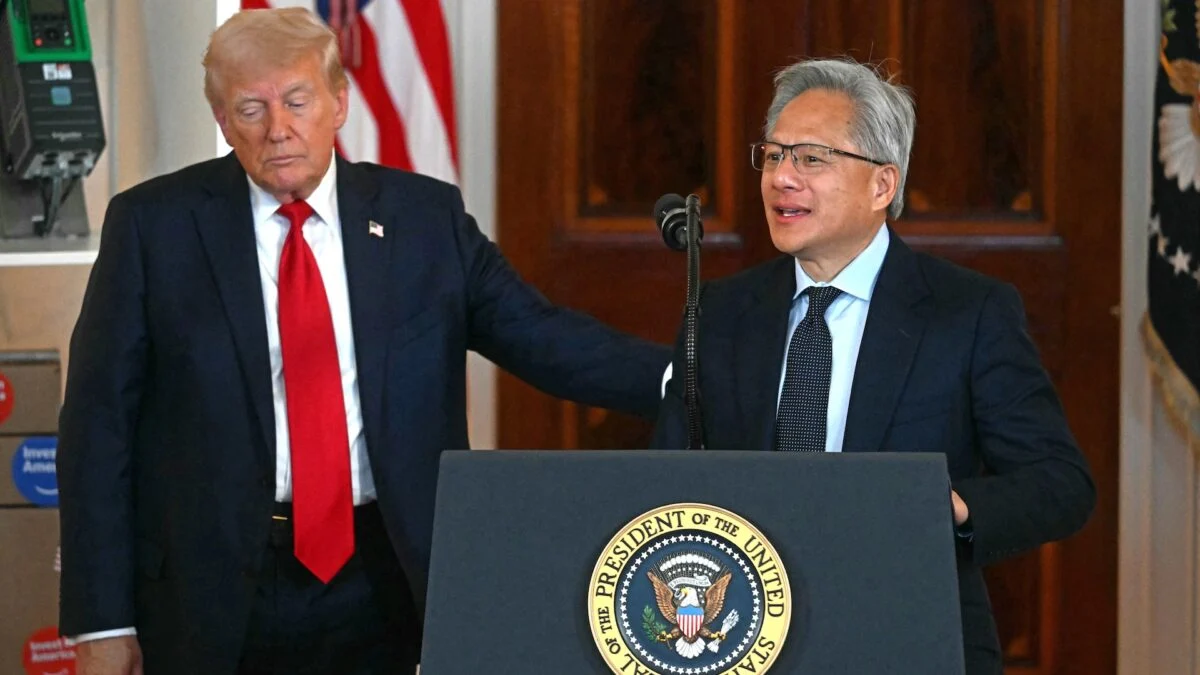
I watched two short scenes back-to-back and felt the same tightness you get when a room shifts its weight. Sam Altman slipped into a private meeting with Donald Trump at the midterms; hours later Jensen Huang was taking a call with the former president on stage. You can sense the trade: influence for reassurance, and the public left to read the terms.
At the Republican midterm convention, Sam Altman asked for a private backstage meeting with Trump.
I tracked the report from MS Now and the clip that circulated afterward. The meeting, per those accounts, was quiet and short, focused on the obvious: the accelerating power of AI and who gets to steer it. You should note the timing—Altman’s meeting came before he endorsed Anthropic CEO Dario Amodei’s blog calling for a controlled slowdown of development.
That endorsement looks less like a neutral safety plea and more like a strategic signal. I’ve seen companies frame restraint as virtue to shape policy that favors incumbents. If you follow the money and the incentives, a request for a pause can be both a public safety claim and a private cost-saving measure.
Did Sam Altman meet privately with Trump?
Yes—reports say Altman requested and took a private meeting backstage. What matters more is not the handshake but the ripple: his support for an AI pause landed immediately after, amplifying a narrative that benefits larger firms with deep server farms and expensive training budgets.
At the All-In Summit, Jensen Huang took a public call from Trump on stage.
I watched the All-In Podcast footage: Huang picking up, smiling, and letting Trump dismiss fears of a robot uprising. The moments read like a public relations rehearsal—reassurance for voters and a headline for investors. You remember Nvidia’s role: GPUs are the engine of generative AI, and sending a calming message to markets helps demand for more chips.
Nvidia’s strategy is straightforward. For the company, industry-wide moderation can tilt policy toward export controls and certification regimes that larger suppliers can absorb and smaller rivals cannot. I won’t hide my view: that’s a velvet handshake—safety language wrapped around market advantage.
Why are AI CEOs calling for a pause?
One reason is practical: training modern models costs enormous sums. Look at xAI’s filings; the company reportedly burned $6.4 billion (€6.0 billion) in training and infrastructure last year. A regulated slowdown or stricter safety standards would raise barriers for smaller players and give incumbents time to capitalize on current investments.
At Anthropic, Dario Amodei framed a pause as a safety-first move.
I read Amodei’s post and I read the responses. He pitched a controlled slowdown as a way to buy time for governance and guardrails, which sounds sane on the surface. You should, however, weigh the motives: Anthropic claims profitability on “adjusted operating income” that excludes training costs—a accounting choice that softens the appearance of burn.
It’s reasonable to be skeptical. The Conversation and other analysts point out that industry calls for pauses can be tactical: make the most aggressive legislative proposals look excessive and steer regulators toward milder requirements that favor established players.
At Altman’s OpenAI, an IPO was delayed citing safety.
I tracked Reuters and The New Stack coverage: OpenAI put its public offering on hold, citing safety risks. You can accept that at face value or see an alternate motive: OpenAI is a capital-hungry machine in a business where training counts as the single largest expense. Pausing development buys cash runway and reduces the pressure to scale training budgets immediately.
When companies speak of safety, you owe them scrutiny. Public trust and shareholder pressure pull in different directions; the line between the two is thin.
What would an AI pause mean for startups and competition?
An enforced pause or heavy export controls raise compliance costs that disproportionately hurt smaller teams and foreign competitors. Platforms like OpenAI, Anthropic, and Nvidia would face the same rules, but their scale lets them amortize expenses across larger revenue streams. For you as an investor or founder, that dynamic changes the competitive landscape fast.
At the political level, Trump used the moments to discredit alarm and claim victory.
I followed his Truth Social posts and on-stage rhetoric: he mocked the idea of robots marching into cities and blasted critics as leftist alarmists. That line plays well with voters who distrust technocratic warnings and prefer immediate economic reassurance. You can see the effect: calming rhetoric reduces the political appetite for sweeping restrictions.
That messaging also makes it easier for tech leaders to position themselves as partners rather than adversaries of power. For some firms, supporting a pause is public virtue signaling; for others, it’s a strategy to shape the regulatory ground.
At the market level, the incentives are obvious.
I watch earnings calls and chip shipments; Nvidia’s growth depends on massive GPU demand. If lawmakers erect barriers that favor compliance over agility, the big vendors become the standard-bearers. That positioning is not accidental—it’s a baited trap for competition and an accelerator for profits.
When you parse statements from CEOs, check the line items in reports and filings. “Adjusted” profitability and excluded training costs are common levers. The New Stack and Morningstar have flagged these accounting moves; you should treat public safety rhetoric with curiosity and skepticism.
At the public policy level, Congress and regulators are the next act.
I read Sanders’ and other lawmakers’ proposals—some call for bans or strict pauses, others for export controls and testing. You should expect a tug-of-war: grand legislative gestures will collide with industry lobbying and executive prerogatives. The endgame matters for who builds the tools and who profits.
If regulators pick heavy-handed rules, they could raise entry costs for newcomers and shift power to established firms. If they set lighter standards, the pace of advancement stays high and the risks remain distributed across a fast-moving field.
I’ve given you the moves and the motives. You’ll decide whether these private meetings and onstage calls are collaboration for safety or a choreography of advantage—so which do you think it is?