
I opened my feed and froze: Donald Trump and Natalie Harp, mid-kiss, sun cutting across a green Irish fairway. You scroll; the image reads like a secret caught on film. Then you zoom in and the scene flips.
I’m going to walk you through what I found and why the small detail that stopped me matters more than the viral headline. I checked the usual suspects — Claude, OpenAI’s ChatGPT, Microsoft Copilot, Google’s Gemini, and reporting from Gizmodo — and then I trained my attention where the machines missed it.
At a glance the image looks convincing — what AI detectors said about it
I ran this viral photo through several AI tools because that’s the new basic reporting. Claude flagged “signs that lean toward ‘real photo’,” pointing to the natural depth of field falloff and consistent shadowing. ChatGPT and Microsoft Copilot gave similar, cautious responses, and Gemini noted there was no SynthID watermark.
What does that tell you? It means modern detectors are being taught to praise photographic cues: depth, light direction, shadow behavior. Those are credible signals, but they are not infallible. This image was presented like a confession, but detectors acted like a jury given only partly read evidence.
Is the photo of Trump kissing Natalie Harp real?
You want a yes-or-no. From what I can see now, no, it almost certainly isn’t — but not because every detector said so. It’s because of a human-readable mistake: an anatomically impossible hand.
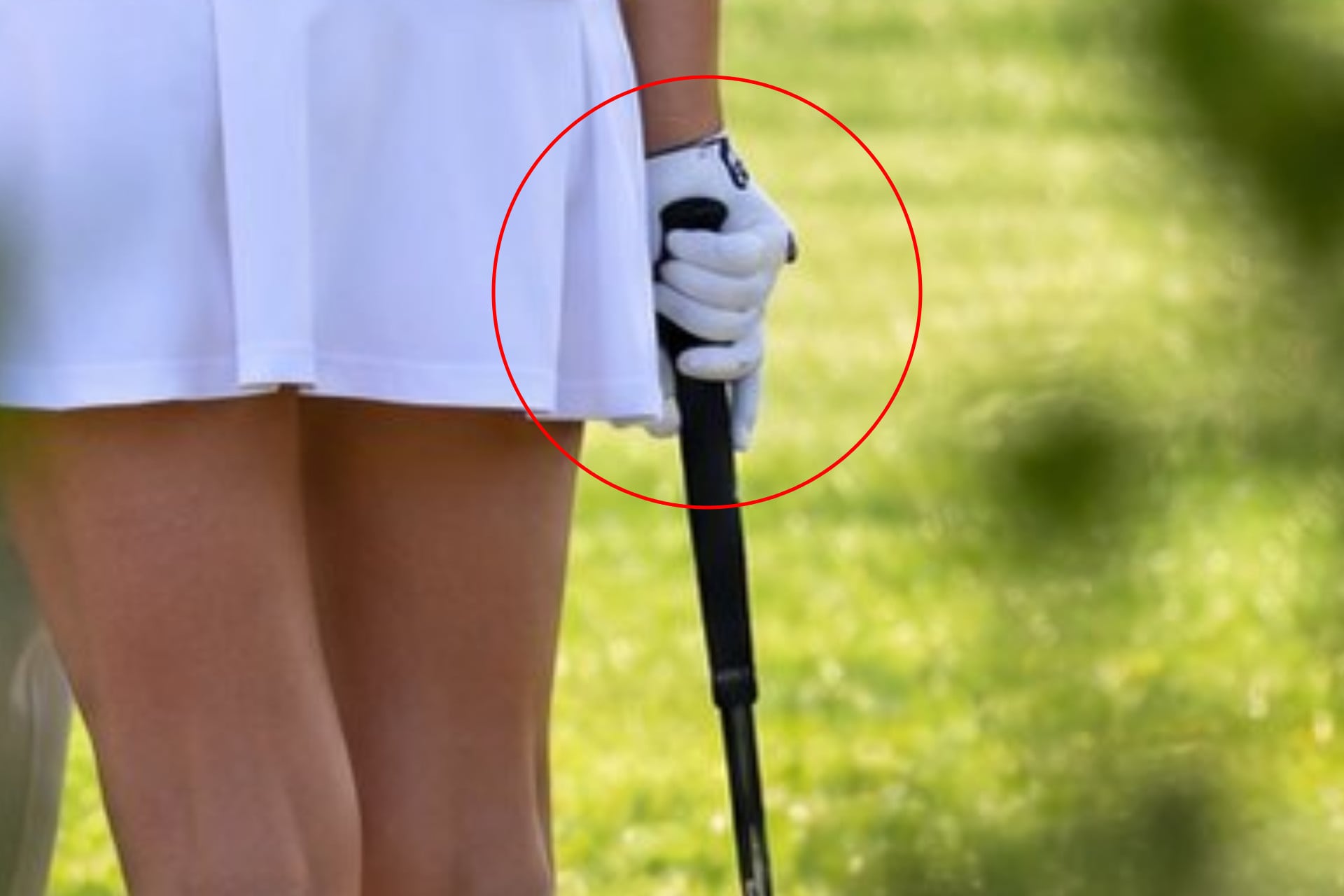
The hand gave it away — six fingers in plain sight
On my screen the extra finger pops up like a punctuation mark you can’t ignore. Natalie Harp’s hand shows what looks like six digits, a mistake AI models still make when asked to render hands.
That error is a classic AI fingerprint. The image generators have long struggled with hands — sometimes too many fingers, sometimes fused thumbs. It’s not artistic flourish; it’s a failure mode. If the scene were a theater, the hand would be the actor who trips over the curtain.
How do AI detectors decide if an image is fake?
Detectors weigh visual cues (lighting, bokeh, pixel patterns) and metadata, and some look for watermarks like Google’s SynthID. But they still miss creative or post-process manipulations: an upscaled low-res photo can inherit added artifacts that fool both people and machines.
Two versions were circulating — a blurry low-res and a sharper “proof”
On X (formerly Twitter) I saw both a soft, grainy copy and the clearer image with the extra finger. The blur version raised the question: was someone sharpening a low-res print and the sharpening introduced the extra digit?
It’s possible, but unlikely. Cameras don’t invent extra fingers when they record reality. More probable: someone shared a cleaner, edited AI creation; others then added blur to hide the telltale mistakes. That’s how a fake gets traction — like a rumor fed through a loudspeaker.
Can low-resolution images be upscaled to add details?
Yes. Upscaling with AI can amplify artifacts and create plausible-but-false detail. That’s why you sometimes see a bad edit suddenly read as “real” when it’s simply been sharpened by a generative tool.
In the wild: how politics and narrative amplify a single frame
At a campaign speech, Sen. Jon Ossoff mentioned that Trump often travels with Natalie Harp — the nickname “human printer” followed. The remark didn’t claim infidelity, but once the claim existed, parts of the media ecosystem ran with it. I watched how a single image became a weapon and a shield at the same time.
Politicians and audiences already primed to accept a story will do the heavy lifting for a fake. And men like Trump have a playbook: call real events “AI” to win what researchers call the Liar’s Dividend. If a genuine photograph of a scandal appears, expect denials and an attempt to recast it as synthetic.
What tools did people use to verify this image?
Reporters and hobbyists ran the image through Claude, OpenAI’s ChatGPT, Microsoft Copilot, and Google’s Gemini. Gizmodo did hands-on checks and published the close-up. Those are the platforms shaping public judgment right now.
I’ve shown you the signals and the methods. You know which platforms agreed and where the failure point was: the human-readable impossibility of an extra finger. The image dresses itself in photographic cues and gets a polite pass from some detectors, but a tiny anatomical error collapses the illusion.
The bigger question now is political: if visual proof of personal scandal ever surfaces for a public figure, will anyone trust it? You and I are learning to treat images like documents that need verification — not evidence accepted at face value. That makes the next viral photo as much a test of institutions as it is of pixels.
Do you believe a single image can still change a political moment, or has suspicion become the default lens through which we view every photograph?
Wait a minute!
Is that Donald Trump kissing Natalie Harp at his golf course in Ireland over the weekend? pic.twitter.com/BC1TBSWtB2
— Lucas Sanders (@LucasSa56947288) September 15, 2026