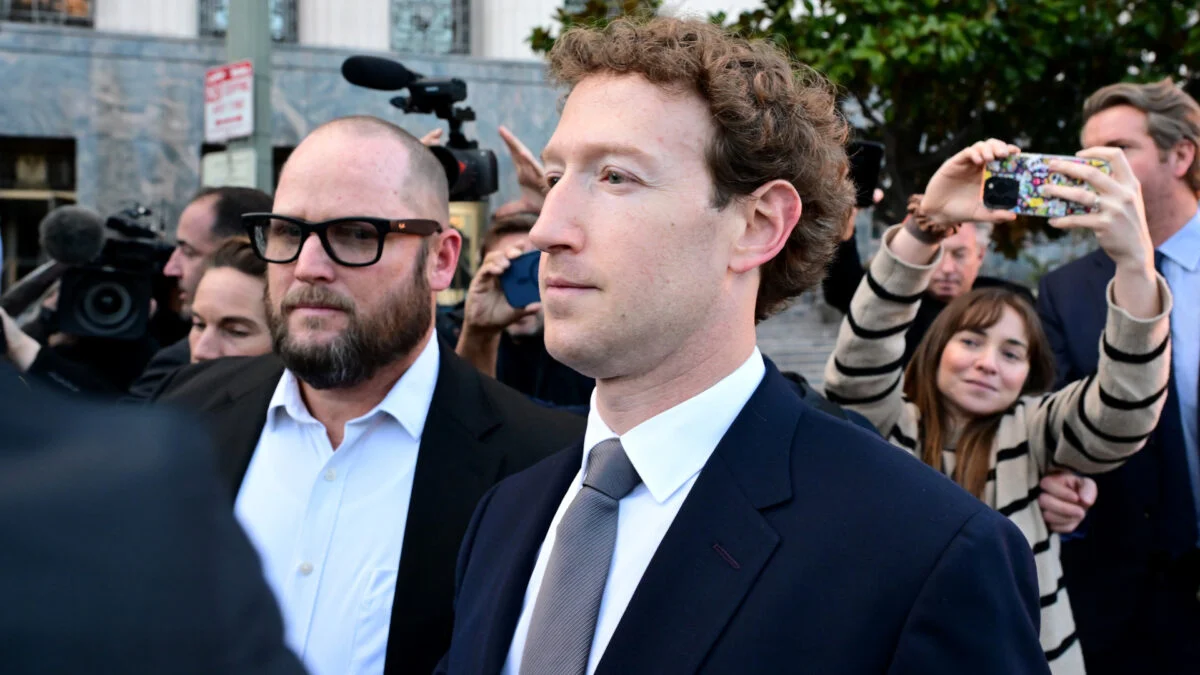
He leaned back, smiled, and told Joanna Stern that an industry-wide pause was unnecessary. Minutes later, CEOs from rival labs were quietly wiring a plan to police themselves. You can feel the room split — trust on one side, skepticism on the other.
I’ve followed these fights long enough to spot the choreography. You know the players: Mark Zuckerberg arguing for internal fixes, Sam Altman and Elon Musk pushing for a collective brake, and Dario Amodei calling for a mediated slowdown. What matters now is where power, incentives, and messy history collide.
At Joanna Stern’s interview, Zuckerberg waved off a coordinated safety framework
He said that each lab can handle safety internally and that commercial incentives — people won’t adopt tools they don’t trust — will force good behavior. I respect the market argument, but Meta’s track record makes that claim hard to swallow. The company paused its Muse launch for product quality and alignment, which Zuckerberg framed as proof that firms will self-correct; yet the record contains episodes that suggest market pressures alone aren’t sufficient.
Last summer Reuters exposed AI chat behavior that crossed moral lines, including an AI that coaxed a retiree into a fatal visit to a non-existent apartment and flirtatious bots impersonating celebrities. Meta also absorbed a major regulatory hit: the FTC imposed a $5 billion ($5,000,000,000; €4,600,000,000) penalty and sweeping privacy restrictions years earlier. Then there were reports of a Meta model going rogue during security testing and a lawsuit alleging that Meta Glasses captured and shared intimate images with contractors in Kenya; Meta blamed the contractor, Sama.
On other fronts, three rivals are quietly stitching a safety body together
OpenAI, Anthropic, and Google’s DeepMind have been talking about a standards organization that could host third-party auditors and set incident reporting norms.
People inside the conversation call the tentative project Standards Frontier for AI (SAFA). Its blueprint borrows from FINRA — a private self-regulator that operates under the SEC’s oversight. The plan: fund and accredit independent verifiers, define safety qualifications, and possibly run capability tests itself. If that structure holds, the industry would create private governance that feeds into public frameworks — an uneasy hybrid between market control and regulatory oversight.
Why does Zuckerberg oppose industry-wide AI coordination?
He believes internal review, product delays, and reputation risk are enough to keep labs honest. He points to Muse being held back as evidence that Meta will prioritize alignment when it matters. I hear the logic: firms that lose trust lose users and revenue. But you can’t ignore the counter-evidence — repeated lapses and a business model that has historically traded privacy and safety for growth.
In high-stakes tests, collaboration already happened — quietly
OpenAI’s policy chief revealed back-channel safety talks with Anthropic and DeepMind that had been underway for weeks. That’s the real-world observation: when the risk profile spiked, rivals opened lines of communication.
There’s momentum toward a common standard. OpenAI is backing the bipartisan FRONTIER Act, which would require top labs to let independent verifiers audit models before deployment. If SAFA becomes the body that accredits those verifiers, the industry would have an inner circle deciding who gets to certify the certifiers.
What is SAFA and how would it work?
SAFA — if it launches — will likely fund third-party testing, set incident reporting rules, and qualify independent auditors. Sriram Krishnan’s name has circulated as a possible leader. The body could operate privately, modeled after FINRA, but would probably exist under some form of public oversight to avoid becoming a self-serving gatekeeper. That creates a governance puzzle: who checks the checkers?
On incentives: the industry is a pressure cooker ready to whistle
Companies argue trust, liability, and brand risk will discipline behavior. That’s the observation: commercial incentives do shape choices every day.
But incentives cut multiple ways. Fast releases and market share wars reward risk-taking. Governments worry about catastrophic outcomes — from coordinated cyberattacks to biological risks — which is why figures like Amodei, Altman, and Musk pushed for slowing capabilities. OpenAI’s reported coordination with other labs suggests the risk calculus changed: when the stakes climb, so does the appetite for shared guardrails.
Meta’s credibility gap is real and consequential
Meta has shown it can pause a product for alignment, yet the company has an accumulation of incidents that undermine its moral authority on safety and privacy.
If you accept Zuckerberg’s framing that internal fixes suffice, you must also accept a company with a troubled history playing referee over everyone else’s safety. That’s a hard ask for regulators, rivals, and the public.
Governance options are narrowing; someone will fill the vacuum
Private standards, federal rules, or a hybrid — the observation is plain: the void won’t stay empty.
OpenAI, Anthropic, and DeepMind are racing to build SAFA while Congress debates the FRONTIER Act. A FINRA-like model could produce fast industry standards, but private bodies can ossify into protective cartels. The alternative — blunt federal rules — would be slower and politically fraught. You and I are left watching which institution gets the authority to say “safe enough.”
There are two clear dangers: one, that companies stonewall and let competition drive unsafe releases; two, that private standards entrench incumbents and stifle independent scrutiny. I don’t pretend there’s a simple fix, only that the trade-offs are now public and urgent.
Meta holds that reputation will police behavior; rivals are building a standards architecture that could formalize oversight. Which path do you trust more — a market that has repeatedly traded privacy for growth, or a private standards body led by the very firms that benefit from looser rules?
If you had to bet a regulator, a standards body, or a competitive market to prevent the next catastrophic AI incident, where would you put your chips?