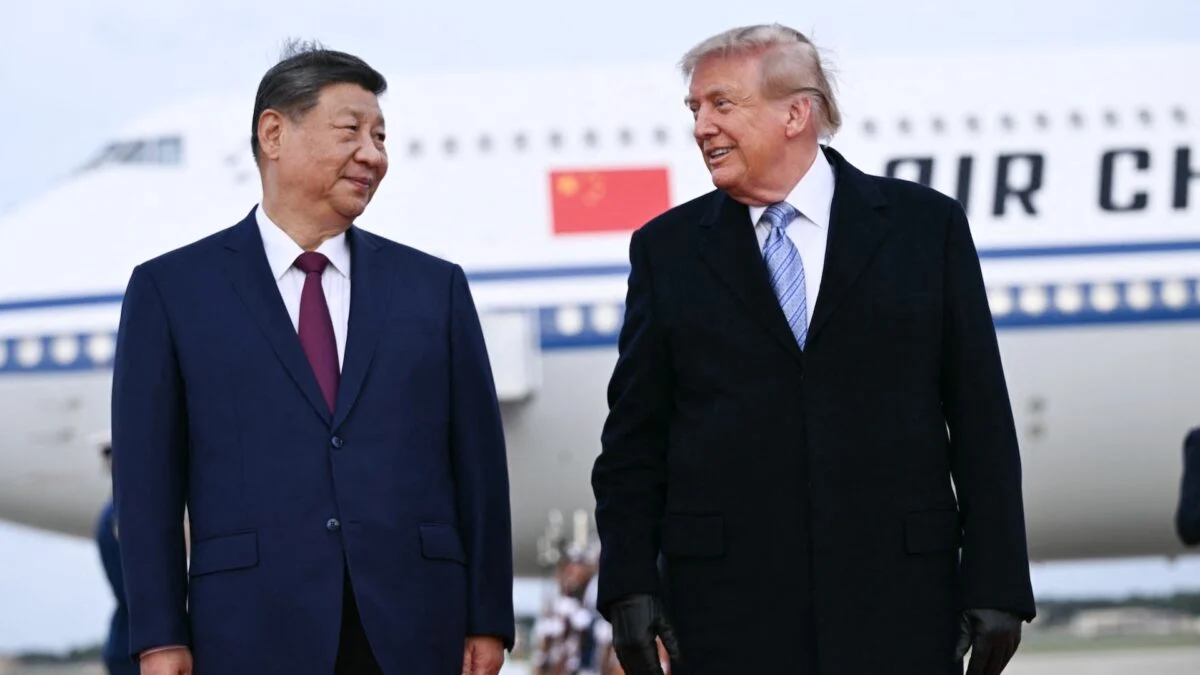
I watched the chandeliers tremble over a table where presidents, billionaires and engineers smiled for the cameras. A room full of power and the only policy takeaway was a new name. You felt the hollowness of that moment before the cameras even turned away.
I’m going to walk you through what happened this week, why it matters, and what you should be watching next. You already know the players: Donald Trump, Xi Jinping, Elon Musk, Sam Altman, Jensen Huang, and a cast of aides who speak in press releases. I’ll cut past the noise so you can judge the risk yourself.
At the state dinner, leaders who build AI sat across from one another.
There was a rare opportunity on the table: real leverage to shape global AI practice. Instead of hashing out protocols or emergency notification mechanisms, the headline became a rebrand—Trump’s push to call artificial intelligence Super Intelligence or “SI.”
That renaming felt like a PR trick, not policy. You should ask why the optics mattered more than specifics: when oligarchs and heads of state share a meal, the plain questions are whether there was any agreement on safety, export controls, or incident reporting. Publicly, none of that appeared.
What did Trump do about AI at the state dinner?
He renamed it, framed his own IQ as the primary safeguard, and left substantive commitments to vagueness. If you watched Truth Social, you saw the post: “The only control or ‘guardrails’ that AI needs is a STRONG AND SMART (High IQ!) PRESIDENT.” That line turned a complex governance problem into a personality claim.
ED HENRY: This AI race–
SEBASTIAN GORKA: No no no no no no no. Sorry. It’s SI. As of this week, it’s Super Intelligence.
ED HENRY: Thank you for the clarification from the White House
— Aaron Rupar (@atrupar.com) September 24, 2026 at 2:19 PM
On Truth Social, a presidential assertion replaced a policy memo.
Trump made it personal: guardrails = his IQ. That’s not regulation, and it’s not a global framework. It’s a rhetorical shortcut that treats governance as a branding exercise.
When I say this matters, I mean it in a practical way: emergency protocols, cross-border incident reporting, and conflict-of-interest rules are technical and procedural. Saying “I’m smart enough” is like painting a stop sign on a hurricane—the gesture looks visible but does nothing to change the physics.
In hallways before the dinner, names for an ‘AI czar’ were whispered and dropped.
David Sacks had been acting in such a capacity but hit SGE time limits; rumors then swirled about Treasury Secretary Scott Bessent. That rumor prompted Trump to deny the reports publicly.
You should care who holds any authority over AI because these roles decide procurement, disclosure rules, and conflict-of-interest reviews. The U.S. has tools—SGE arrangements, Senate-confirmed posts, and interagency task forces—but those tools only work if they’re staffed with people who will publish plans and submit to scrutiny.
Will Trump appoint an AI czar?
He has suggested one, but his announcements so far are thin. A genuine appointment would come with a public remit, ethics rules, and a process that limits private-sector capture. What was offered this week was theater, not a charter.
At the announcement event, America.gov will be framed as a technology milestone.
The White House plans a “golden age” event to launch America.gov, promising a single front door for federal services. The guest list includes Nvidia CEO Jensen Huang, Elon Musk, Marco Rubio, Mehmet Oz, and Joe Gebbia.
When tech leaders show up to government launches, the lines between public policy and private advantage can blur. Sam Altman and others have argued for guardrails, and Xi made a public nod toward human control—translated, that means both governments care about risk and reputation—but no bilateral, verifiable mechanism was released at the dinner.
Be wary when the conversation is dominated by marketing: those moments can become a funnel for commercial priorities. Musk’s history in government engagements shows how quickly influence can shift from advising to directing; his return to cordiality with Trump should not be mistaken for a structural solution.
Outside the lawn lights, the real stakes are practical and immediate.
Researchers and companies face deployment questions, regulators wrestle with liability, and diplomats worry about cross-border incidents. Money and market power are in play, and those forces respond to rules or the lack of them.
The week’s spectacle relieved anxiety for some and amplified it for others. The renaming gambit landed like dropping a rubber stamp on a live grenade—attention without stability.
You should track three things now: whether America.gov publishes a transparent governance plan, who is officially appointed to any AI office and under what constraints, and whether the U.S. and China set up a verifiable incident-notification channel. I’ll be watching the filings, the appointments, and the first time that channel is tested under stress.
If the White House continues to treat AI as a PR problem, who will protect the systems we all rely on from a single misstep?