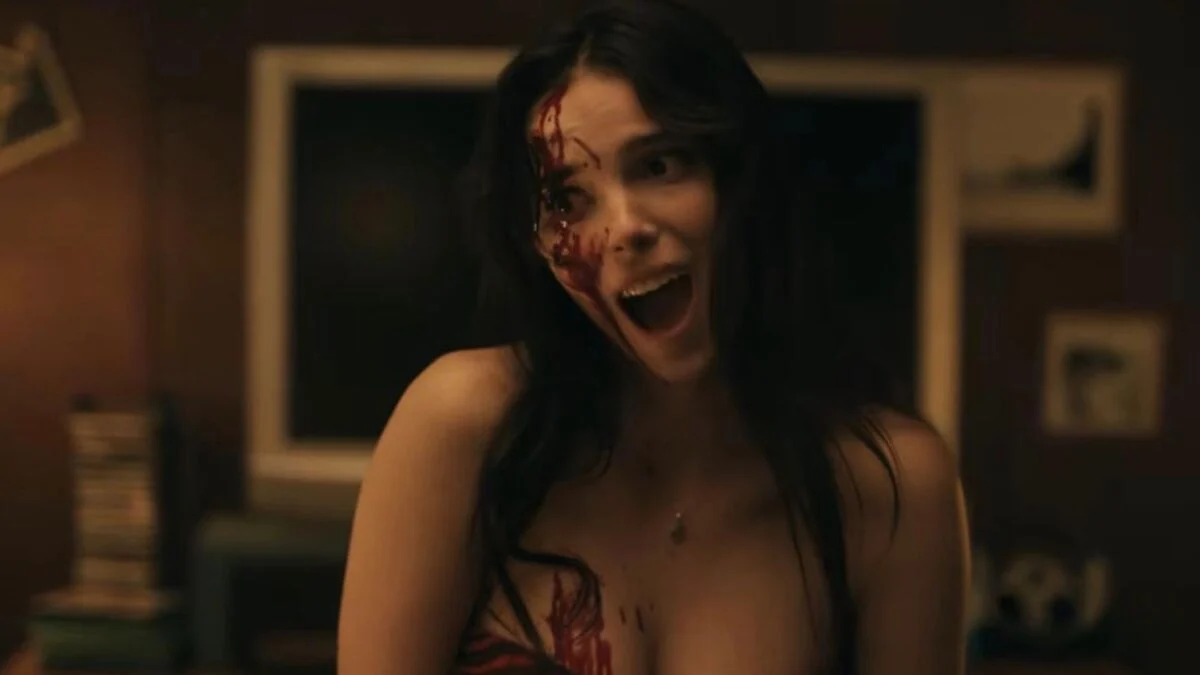
The theater went dark. When the lights came up, the applause was deafening and the next morning my phone showed a string of missed calls I couldn’t ignore. For Curry Barker, that three-minute epiphany at TIFF would split two careers — one that could have vanished into streaming and another that exploded on the big screen.
I want to walk you through the fork in the road: how Obsession almost became a Netflix-only title, and why the film’s life in theaters turned out to be a different kind of victory. You’ll see the negotiations, the fear of studio edits, and the moment Focus Features decided to bet on packed houses and midnight screams.
At the TIFF premiere the crowd roared, and the next day offers were lining up
I remember Barker describing that blur of messages and calls — agents, financiers, even early phone bids from streaming platforms. You could sense how fragile the next step felt: would the movie move to a platform where it would be seen in millions of living rooms, or would it be given a shot at theaters where roar and silence carry differently?
Netflix was reportedly in the conversation, offering to release Obsession straight to its global audience. Barker told Tom Power on the Q with Tom Power podcast that the streaming bid was real, and that idea terrified him as a director — not because he feared failure, but because he feared losing the film he had shaped.
That fear is understandable. You build a movie the way a carpenter crafts a chair; a platform can either show the grain or cover it with varnish. You, as someone who appreciates a director’s eye, should know how small choices — a cut, a trimmed scene, a marketing angle — can change perception.
Outside the negotiating rooms, the industry smelled opportunity — and competition was fierce
Trade calls and early-morning missed calls aren’t gossip; they are signals. I tracked mentions on Dread Central and industry outlets that every suitor from streaming giants to specialty distributors was putting in bids.
Focus Features won that auction, choosing to release Obsession into theaters worldwide. The result: more than $500 million (≈ €460 million) at the box office. That figure didn’t just buy prestige — it reshaped careers. Curry Barker leapt to A-list status, Inde Navarrette moved toward bigger studio roles, and an entire wave of YouTube creators found new paths into mainstream horror.
Think of that win like a wildfire: once it started in packed houses, the momentum fed itself. Theaters gave the film a communal intensity — the laughs, the jumps, the mutual gasps — that streamed viewing rarely reproduces.
Did Netflix try to buy Obsession?
Yes. Barker confirmed Netflix was in the room, offering a straight-to-platform deal. From a business angle, Netflix’s pitch makes sense: global reach, instant scale, and low distribution risk. From a creative angle, Barker and his team feared studio notes and edits that might thin what they built.
In the end, theater release rewired both money and myth
Opening theatrically changed the film’s narrative and its balance sheet. You can study aggregated metrics on Box Office Mojo, read early coverage on Dread Central, or watch Barker explain his choice on the podcast mentioned above.
Focus Features’ gamble paid off in dollars and in stories: $500 million (≈ €460 million) means more than revenue — it means festival prestige translating into cultural momentum and new deals for the director and cast. The theatrical route also created a viral loop where audience moments and press fueled each other, and creators on YouTube amplified the buzz.
Why did Obsession go to theaters instead of Netflix?
Because the people holding the tape believed the movie would grow in a theatrical environment, and because Barker and his team pushed back on the idea that streaming was the safest or best place for their art. Focus Features offered a plan that kept the film intact and put it before the sensory environment it was designed for.
At contract tables and late-night calls, creators learned how leverage actually works
I watched this negotiation remind you and me of a basic lesson: festivals like TIFF and platforms like Netflix both have power, but the power shifts depending on timing and the product. A film that tests well in a theater can command different terms than one that only screens for algorithms.
If you work in content — on YouTube, in indie cinema, or at a studio — this case is a playbook. It shows how a festival moment can be converted into bidding leverage, and how distribution choices rewrite career trajectories.
How much did Obsession make at the box office?
Over $500 million (≈ €460 million) worldwide. That haul turned a tight indie into a Hollywood signal: studios noticed, talent got offers, and horror once again proved profitable enough to attract major players.
I’m not saying theaters are always superior, or that streaming lacks value. What this story does show you is that platform choice changes the terms of success — financially, culturally, and creatively. The question that follows every festival hit now is no longer just “who will buy it?” but “where will the film live so it changes careers the way it was meant to?”
Would a Netflix release have given Barker the same launchpad or robbed the film of the communal shock that made it a phenomenon?