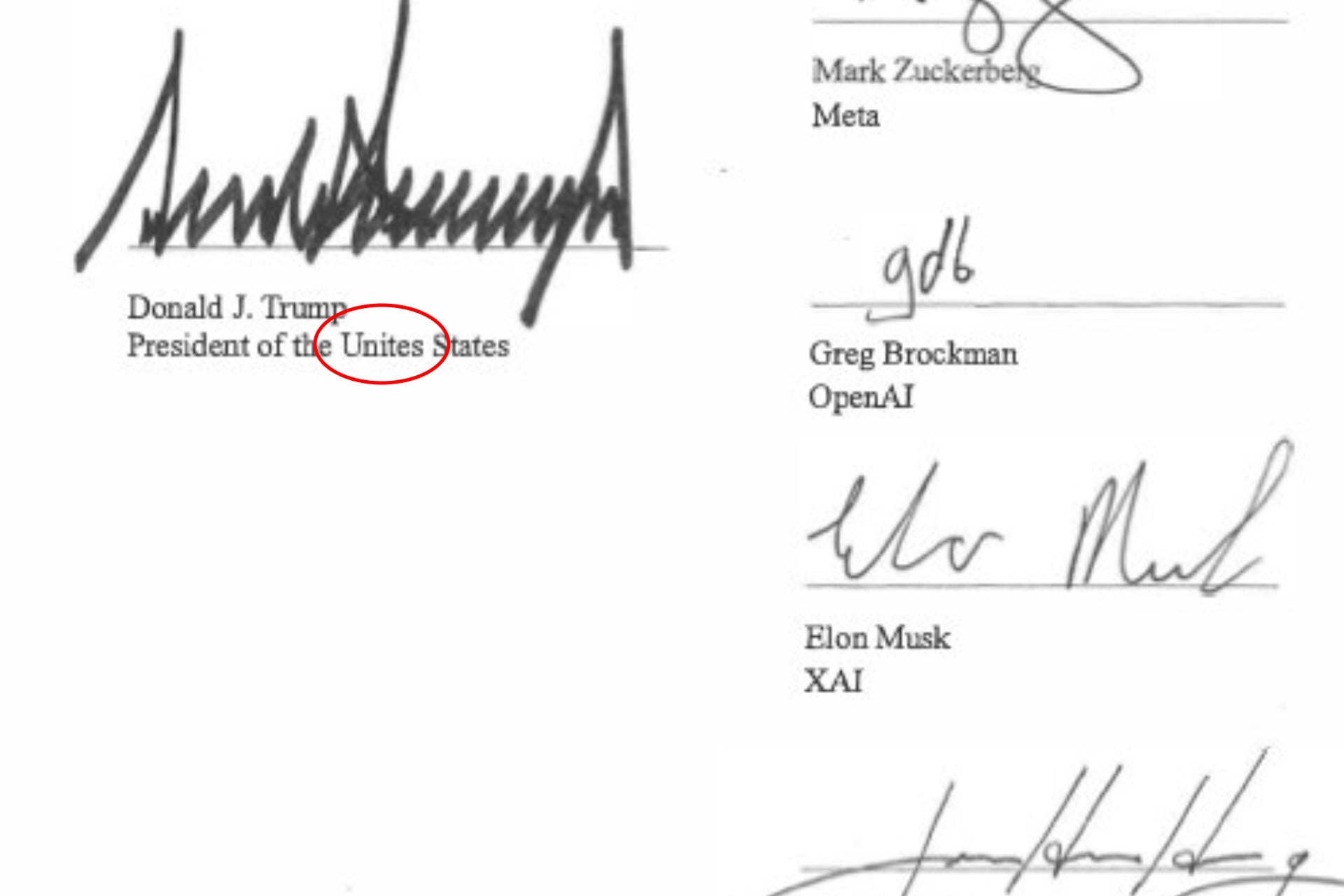
I watched a timestamped list of .si registrations climb from dozens to thousands in a few weeks. You saw the president step to a lectern and call AI “super intelligence.” Suddenly a small country’s domain extension was the quietest, loudest thing on the internet.
I’ll tell you what I think, and I’ll point to what we can actually verify. You’ll leave able to judge whether this is theater, opportunism, or a profit play with thin paper trails.
Domain registrations in Slovenia spiked after Trump’s UN speech.
The raw numbers are public: daily .si registrations went from dozens to hundreds in June 2026 and surged into the thousands by July and September. Adam Cochran tracked that pattern and tied parts of the spike to posts on Truth Social and X; local Slovene outlets reported a rush after Trump’s Sept. 22 UN appearance.
The obvious inference is simple: a name goes hot, speculators try to catch it. The internet is a gold rush. Speculators had months to react because the phrase superintelligence wasn’t born at the podium — Nick Bostrom and people inside Meta, OpenAI, and elsewhere had been using the term for years. So the timing looks suspicious, but it’s not proof.
A handful of domain purchases look Trumpy, but registration privacy muddies everything.
Researchers point to private registration records, pattern matching, and evocative domain names — 1776.si, for example — as circumstantial evidence. But privacy protections hide buyers, and bulk registrations often route through resellers, marketing firms, or domain brokers.
If you’re thinking insider trading, remember how hard it is to prove. Odd domain names are suggestive; they’re not a receipt with a signature. The room was a loaded deck when it comes to plausible deniability: public trends, private registrations, and political theater all fold together.
Is Trump profiting from .si domain registrations?
Short answer: there’s no definitive public evidence tying Trump or his immediate companies to the purchases. Cochran and others have flagged suspicious timing and themed names, but the registrant privacy and reseller routes make a smoking gun unlikely without a law enforcement subpoena or leaked records.
That doesn’t mean money didn’t change hands. You and I both know brand shifts create value — ask any marketer who’s flipped a domain. The question is whether this was coordinated insider trading or opportunistic speculating by strangers who saw a trend and pounced.
Tech CEOs echoed the term within days of Trump pushing it onstage.
Elon Musk, Jensen Huang, and Mark Zuckerberg all used the SI language in public comments and onstage moments. Huang called data centers “SI factories”; Musk corrected himself to SI when standing next to Trump; Zuckerberg talked about “superintelligence” in an op-ed and tweets.
That collective adoption could be choreography, but it’s also self-interest. Meta, OpenAI, and other giants have billions riding on public enthusiasm for more powerful systems: global capital investment in AI is forecast to reach $1 trillion ($1,000,000,000,000; €930 billion) in 2026, including $581 billion ($581,000,000,000; €540 billion) in the U.S., per Goldman Sachs. When investors and leaders want a narrative, language follows.
Why are .si domain registrations spiking?
Because the phrase entered mass circulation and speculators reacted. Because domain investors scan new vocabulary and buy short, memorable endings tied to headlines. Because Slovenia’s two-million-person country code is short, brandable, and perfectly suited to abbreviations. Combine that with a high-profile rhetorical nudge and you have a registration surge — not necessarily a conspiracy.
Money trails and political power often intersect in messy ways.
There are plenty of precedents where headlines met bank accounts: Meta used “pilot models” accounting to reduce taxes by roughly $2 billion ($2,000,000,000; €1.9 billion) in 2024 and $3.9 billion ($3,900,000,000; €3.6 billion) in 2025, The New York Times reported. Facebook once classified $4.1 billion ($4,100,000,000; €3.8 billion) in stock options as research, netting a $355 million ($355,000,000; €330 million) tax benefit.
Trump’s family earnings are part politics and part commerce: the president reportedly earned $2.2 billion ($2,200,000,000; €2.0 billion) last year while in office, his sons’ backed companies have won at least $3.2 billion ($3,200,000,000; €3.0 billion) in military contracts, and smaller alleged inside bets — a soldier’s $400,000 ($400,000; €370,000) gain on Polymarket, a teleprompter operator’s $100,000 ($100,000; €93,000) wager — show how privileged info can be converted into cash.
So yes: patterns exist where money and power cross. But correlation isn’t guilt. Proving coordination requires subpoenas, records, and cross-jurisdictional cooperation — all of which are hard to get when targets control institutions.
Words change markets; domains change traffic.
Companies are already snapping up simple redirects and brandable names. OpenAI launched Dot as a branded agent; SpaceXAI grabbed Dot.com and routed it to Elon’s Grok. Getting the right domain can funnel users, headlines, and investor attention toward a narrative.
That’s why tech CEOs and politicians treat language as product. If you rename a technology “super intelligence,” you change expectations. That can raise valuations, inspire policy shifts, and, yes, make certain domain suffixes temporarily valuable.
For now the most responsible take is skeptical curiosity: we should ask questions, demand records, and watch where money goes. I’ll keep following the registries, subpoenas, and tax filings; if you care about influence and profit, you should too. Is this political theater, a rudimentary market play, or a line that leads to something dirtier?
Trump Clearly Expects AI Leaders to Go Along With His ‘Super Intelligence’ Rebrand. Will They?
Huang: We used to call them data centers but the things that we’re building now, these are really SI factories, super intelligence factories pic.twitter.com/QS96ExXGKL
— Acyn (@Acyn) September 29, 2026