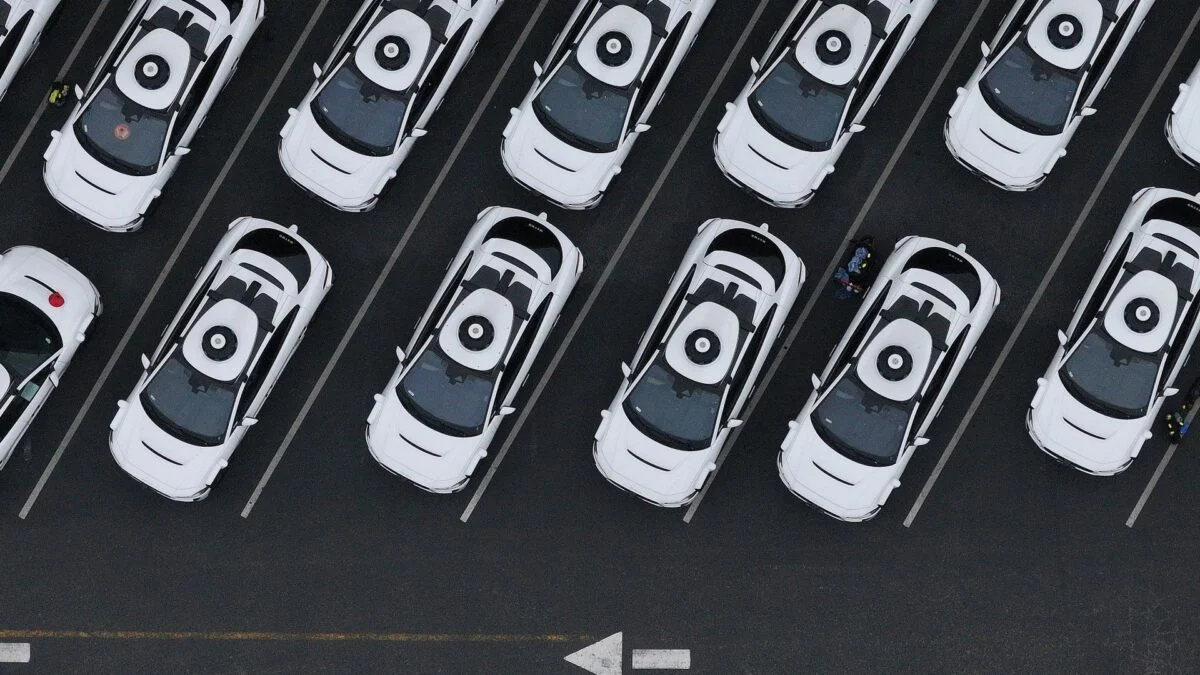
I watched a Waymo sit dead in an intersection as sirens threaded through the morning traffic—an autonomous car frozen like a stalled freight train while paramedics circled for a way through. You could feel the city holding its breath: a parade rerouted, a bike lane blocked, a small decision turning into a public-safety problem. I want to tell you how Sacramento answered.
I’ve followed these companies and regulators for years. I’ll walk you through what changed, why it matters, and what it means the next time a driverless fleet meets an emergency.
A San Francisco gridlock during Fourth of July celebrations showed the scale of the problem
The image of multiple robotaxis stalled on holiday streets wasn’t an isolated glitch — it was a public warning.
California’s legislature moved fast: Gov. Gavin Newsom signed a law this week sharpening oversight of autonomous vehicle operators and adding explicit emergency-response duties. Sen. Dave Cortese framed it plainly: innovation can’t come at the expense of public safety. The bill forces companies to think beyond code and sensors and answer for how their fleets behave when the city needs room to breathe.
What do California’s new robotaxi rules require?
Companies must dispatch on-site technicians — local incident technicians — when a vehicle crashes, breaks down, blocks traffic or emergency access, or when first responders request assistance. Operators must also tell local officials the status and location of vehicles affected by a system failure or outage. If an AV is remotely controlled, those remote drivers must now be based in the United States. Those measures change how fleets are managed in real time, not just on a lab bench.
First responders and city officials complained they were left waiting during outages and blackouts
Reporters and municipal crews documented long delays when fleets went dark or clustered, and demand for accountability grew louder.
The new law gives cities and counties standing to sue operators that ignore requests for help. Fines can reach $5,000 ($5,000 (€4,600)) for violations, and up to $10,000 ($10,000 (€9,200)) per vehicle if an AV interferes with an emergency operation for more than 30 minutes after a technician was requested. That’s a financial lever designed to force faster on-the-ground responses from companies that once treated incidents as rare edge cases.
How much can companies be fined for blocking emergency responders?
Local governments can seek penalties up to $5,000 ($5,000 (€4,600)) for general violations, and up to $10,000 ($10,000 (€9,200)) per vehicle for prolonged interference after officials have asked for help. Courts will decide enforcement, but the message is clear: lingering robotaxis will cost operators real money.
Federal regulators called the pattern a functional shortcoming
The National Highway Traffic Safety Administration identified repeated cases where driverless vehicles interfered with police and first responders.
NHTSA Administrator Jonathan Morrison wrote that the inability to detect and react to emergency scenes represents a functional insufficiency and urged AV firms to act. That federal nudge—paired with California’s law—creates overlapping pressure from both state and national authorities. Companies such as Waymo, Zoox (backed by Amazon), and Tesla, plus other testers in California, now face tightened rules and public scrutiny as they expand commercial services across the Bay Area, Los Angeles and San Diego.
When do the new rules take effect?
The law becomes effective on July 1, 2028, giving operators time to build staffing, notification systems, and U.S.-based remote-control centers. But the clock is running: regulators and cities will expect tangible progress before then.
Operators and cities must rework playbooks for outages and mass-stranding events
Waymo’s mass stalling during a power outage last December, when roughly 1,500 cars were affected, is an example officials cite again and again.
Companies argue they’ve improved safety and will keep refining software and operations; Waymo told Gizmodo it’s committed to making roads safer and adapting services. Still, I think companies will need practical changes: more local technicians, clearer reporting tools for dispatchers and police, and human teams ready to act when a system-wide bug or blackout occurs. The law forces that operational muscle to exist off the cloud and on the curb.
I’ve been tracking autonomous fleets since the early permits; you should expect more friction as testing scales into everyday use. The question for you and me is whether cities will demand speedier fixes or if fleets will keep buying time with software updates and PR—because when public safety hits a wall, patience runs out, and who pays for that wall becomes everyone’s problem?