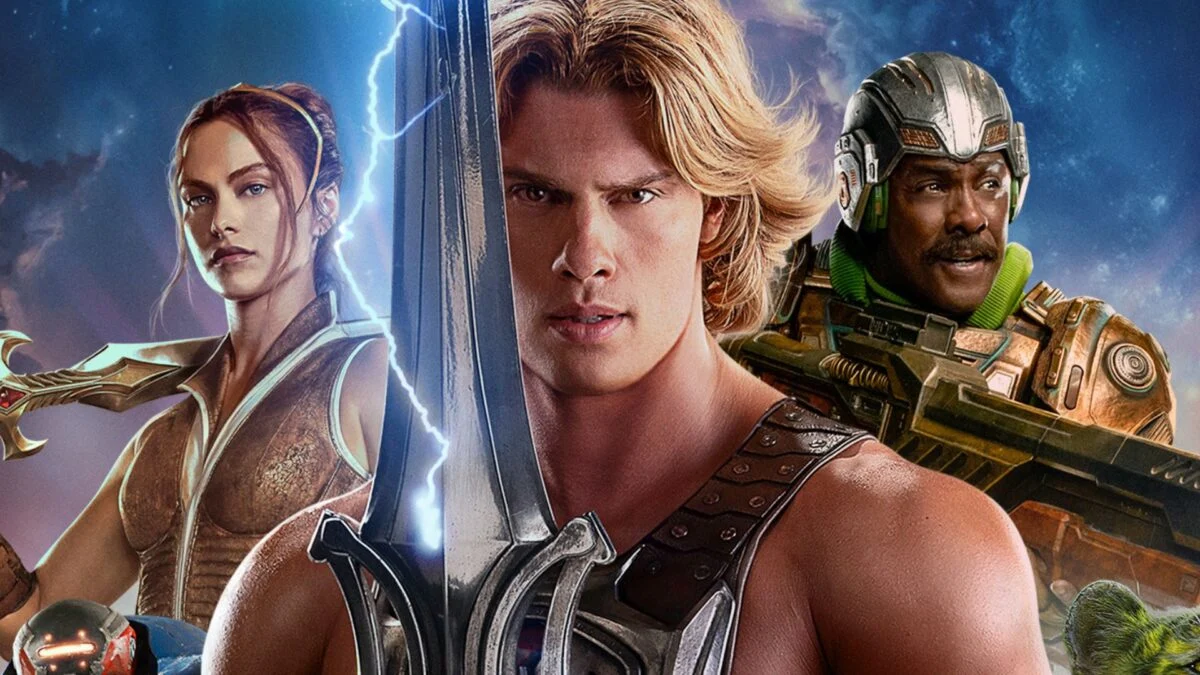
I stood in a near-empty screening room and felt the room’s silence do half the talking. You may have caught Masters of the Universe on a crowded opening night or later on Prime Video, where it suddenly became unavoidable. By the time Travis Knight talked about it, the film’s afterlife had already rewritten the story.
A theater lobby full of action-figure chatter: Why the theatrical run felt like an unfinished sentence
I’ve been inside enough premieres to tell when a studio has one foot in the lobby and one foot out the door. Travis Knight told The Hollywood Reporter that Amazon treated the film’s streaming future as more important than its theatrical life. I hear that, and you can sense the tension: filmmakers want their movie to live in the light of a theater; studios measure long-tail value on a dashboard.
The numbers are blunt. Theatrically, Masters of the Universe grossed $113 million (€104 million) worldwide — respectable, but not the kind of immediate franchise-launching bonanza. Then Prime Video absorbed the movie and it registered roughly 1.17 billion minutes of view time in its first week on the service, making it the most-watched media that period. Amazon insiders told THR the company weighs “the complementary value of theatrical and streaming” when greenlighting projects, which is a polite way of saying some titles are engineered for the small screen’s metrics.
A director in conversation at a press junket: What Travis Knight felt and why it matters
I asked myself what a director actually wants from a studio. Knight said he wanted Amazon’s faith in the filmmakers and the film to be rewarded in the theater — and that he didn’t fully understand the studio’s emphasis on streaming-first performance. The remark lands like a critique from someone who built a movie hoping audiences would meet it where it’s loudest.
As your watcher and guide here, I’ll point out the uncomfortable truth: studios now hold two ledgers. One logs opening-weekend dollars and buzz; the other logs minutes, retention, and algorithmic lift. When a film is more likely to climb Prime Video charts than to fill multiplexes, executives will chase what moves the needle in their balance sheet.
Why did Masters of the Universe underperform in theaters?
Box office shortfalls rarely come from a single cause. Marketing mix, release timing, and box office competition mattered — but so did strategic intent. If Amazon prioritized streaming traction, theatrical spend and exhibition windows can shrink. The result: a film that looked like a theater movie being nudged toward the streaming ecosystem. You can call it strategy; filmmakers sometimes call it a mismatch of expectations.
Will Masters of the Universe become a franchise?
The streaming spike suggests there’s appetite. One billion-plus minutes in a week is an attention currency executives value, especially at Amazon, which measures cross-platform synergies between Prime Video, merchandising, and subscription retention. Knight believes the film “deserved a better fate than it got,” and you can read that as hope for more stories, or as a lament that theatrical launch conditions weren’t ideal for franchise ignition.
A Friday night at home in your living room: What the streaming-first model does to audience experiences
When a movie arrives on Prime Video and finds you on the couch, it can feel like destiny rerouted. I’ve seen titles land with streaming momentum that dwarfs their box-office tails — and studios celebrate that as modern success. But there’s a cost: the communal roar of a theater, the shared gasp, the toy aisle boost the next morning — those are subtler metrics that don’t always translate to minutes watched.
Amazon has been candid about this calculus. Films such as Red One were mentioned internally as candidates for stronger performance on streaming than in theaters. That admission shifts power to platform metrics: retention graphs, unique viewers, rewatch rates. You end up with releases designed to serve a recommendation engine as much as a marquee.
So what now? For creators like Knight, the question is whether studios will ever square the artistic value of a big-screen debut with the commercial magnetism of streaming. For audiences, it’s about how you want to discover new franchises — in a packed theater under a trailer reel, or in your living room guided by an autoplay algorithm.
I’ll leave you with the bracing image Knight left on the record: he feels the movie “deserved a better fate than it got,” and you’ve seen how fate here is negotiated between creative intent and platform strategy. The release strategy sometimes felt like a message in a bottle and at other times like a slow fuse — who gets to decide which flame matters more?