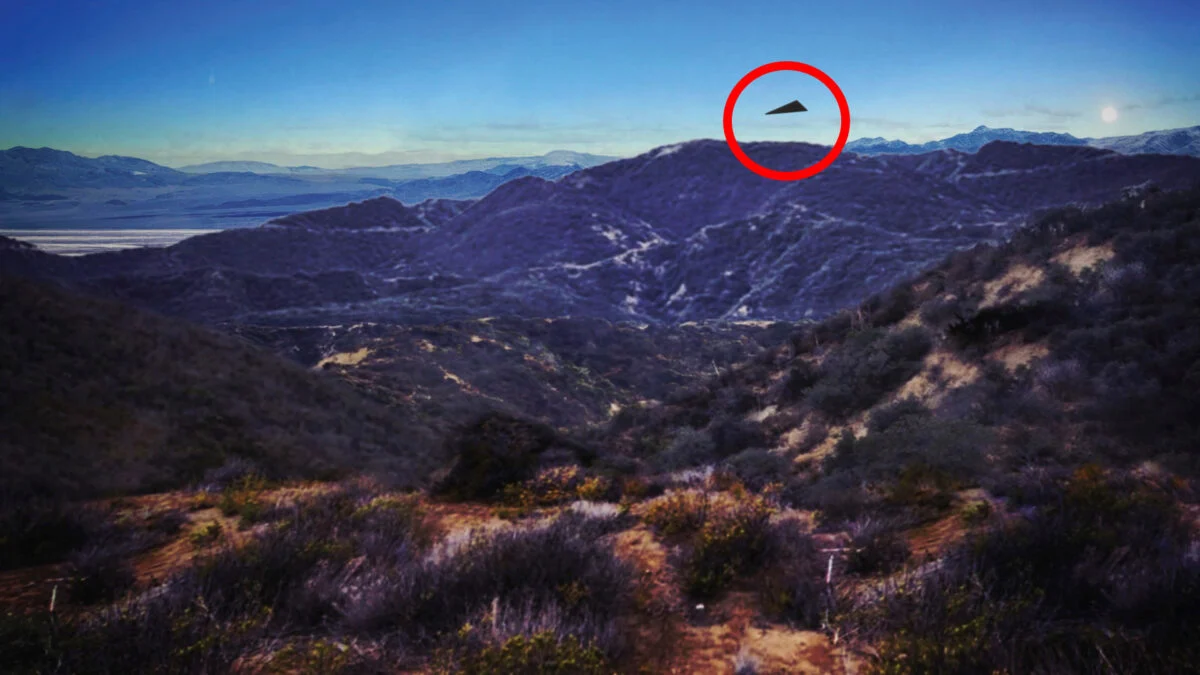
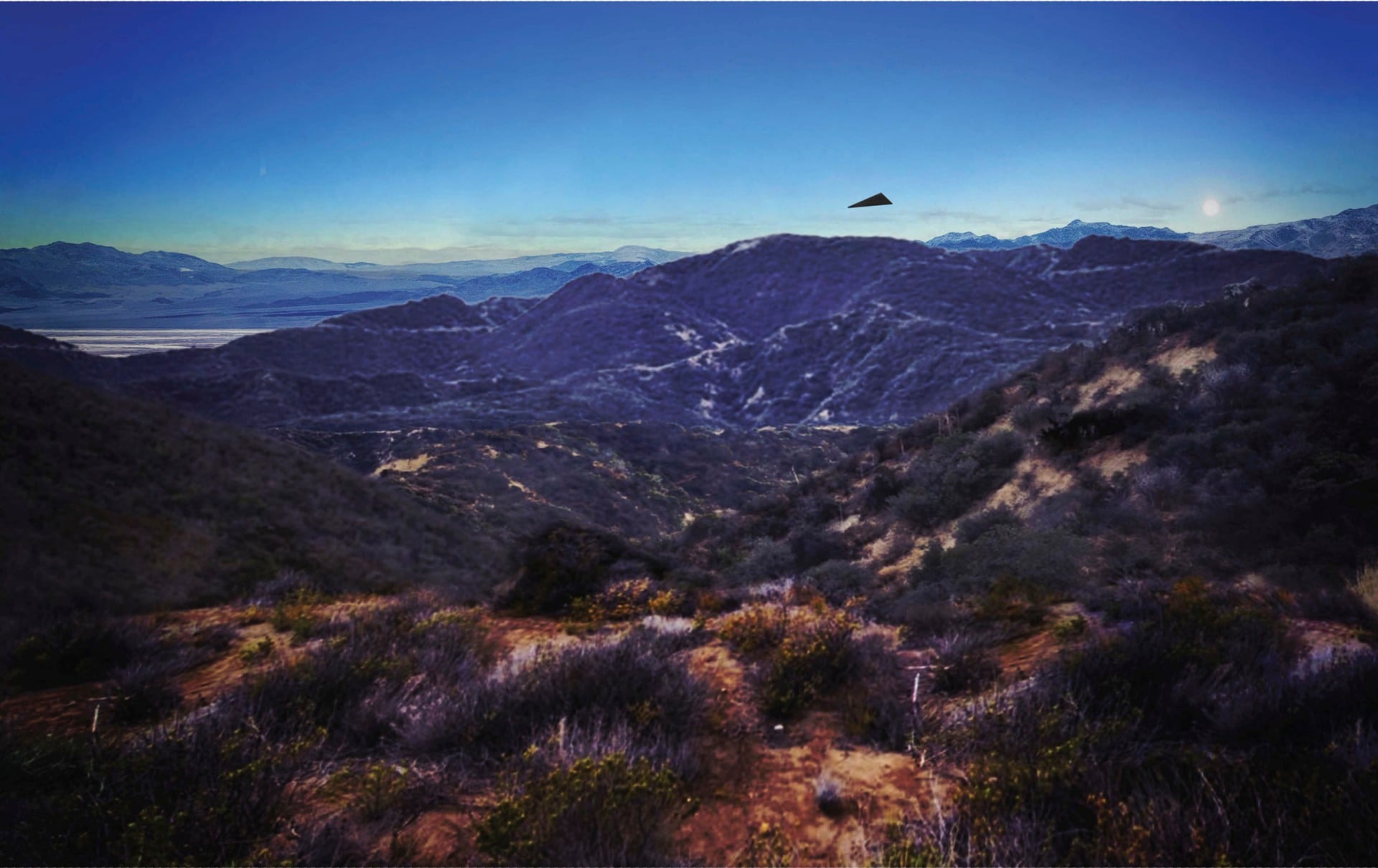
Two agents froze on a ridge as a matte-black triangle held its ground above a classified site. I felt the same small, ridiculous disbelief you get when a coin seems to hover in midair—only this object wasn’t a trick of light. For ten seconds it climbed straight up, stopped, and then vanished in a motion that left everyone asking how.
A matte-black triangle hovered over a classified ridge. The Department of Defense logged its shape, size, and impossible motion.
You should read the DOD summary yourself; the official document is blunt. Witnesses described a silent, matte-black craft “resembling a delta wing drone,” roughly 13–15 feet in wingspan with a fuselage of 6–9 feet and no more than one or two feet of vertical thickness. Those measurements put it in a class with experimental UAVs, but its behavior did not.
The report quotes the craft as having “maintained a completely fixed horizontal alignment [which] did not tilt, sway, or wobble during the controlled vertical ascent of approximately ten seconds.” It climbed to an estimated 200–300 feet above the ridge, arrested vertical motion instantaneously, hovered for about twenty seconds, then went from zero to high-speed horizontal flight and banked into a canyon in two to three seconds. That sequence—controlled vertical ascent, an exact hover, then a split-second high-speed maneuver—reads like a flight test that ignores known limits of aerodynamics and propulsion.
What did federal agents actually witness?
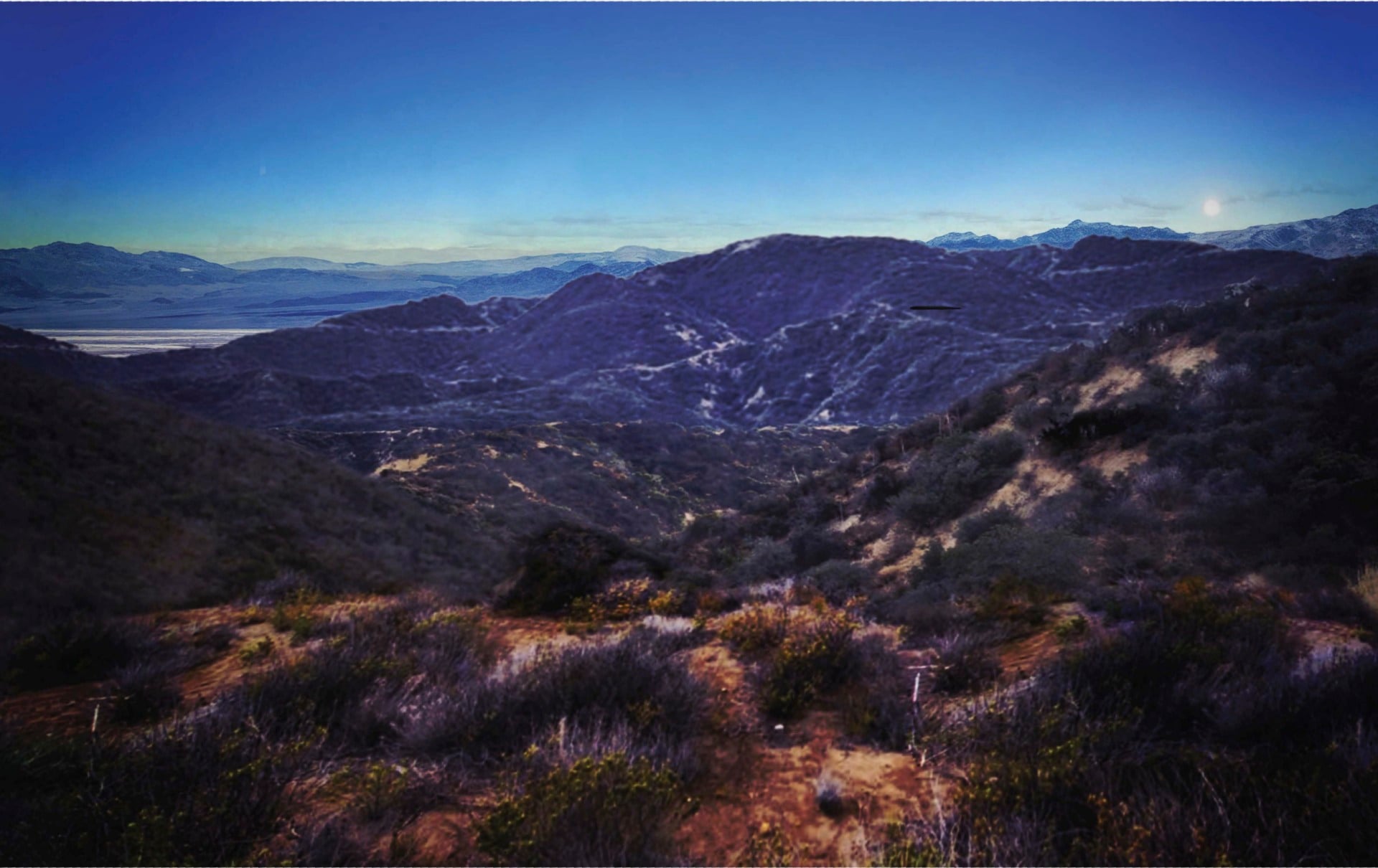
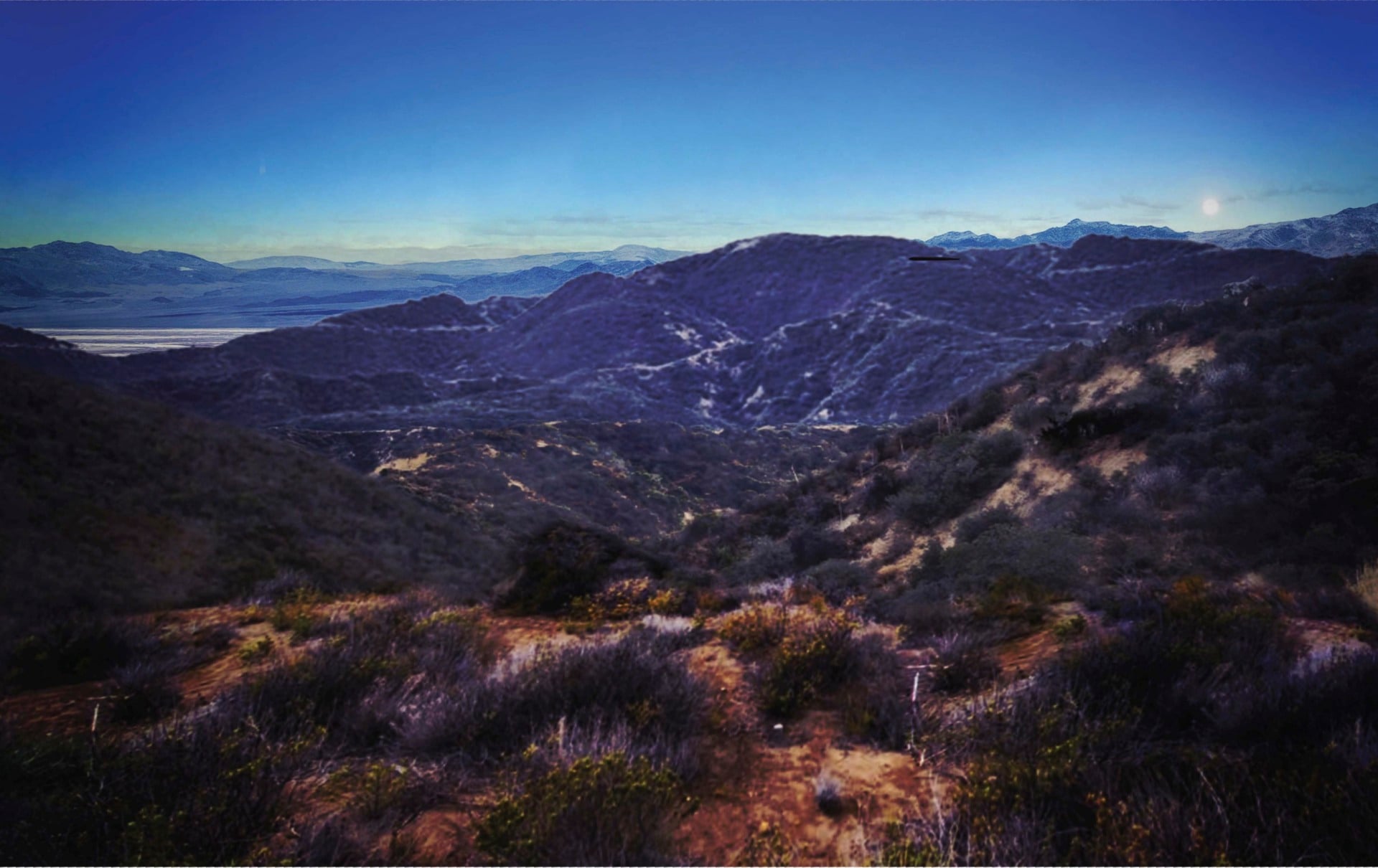
The agents observed a silent, triangular object performing a controlled vertical ascent and a near-instant shift to high-speed horizontal flight. The FBI later compiled nine images that, when viewed in order, give the impression of motion like frames in a flipbook. The FBI report, now public, does not confirm whether those images are raw photos, reconstructed frames, or artist renderings; it simply documents what agents reported.
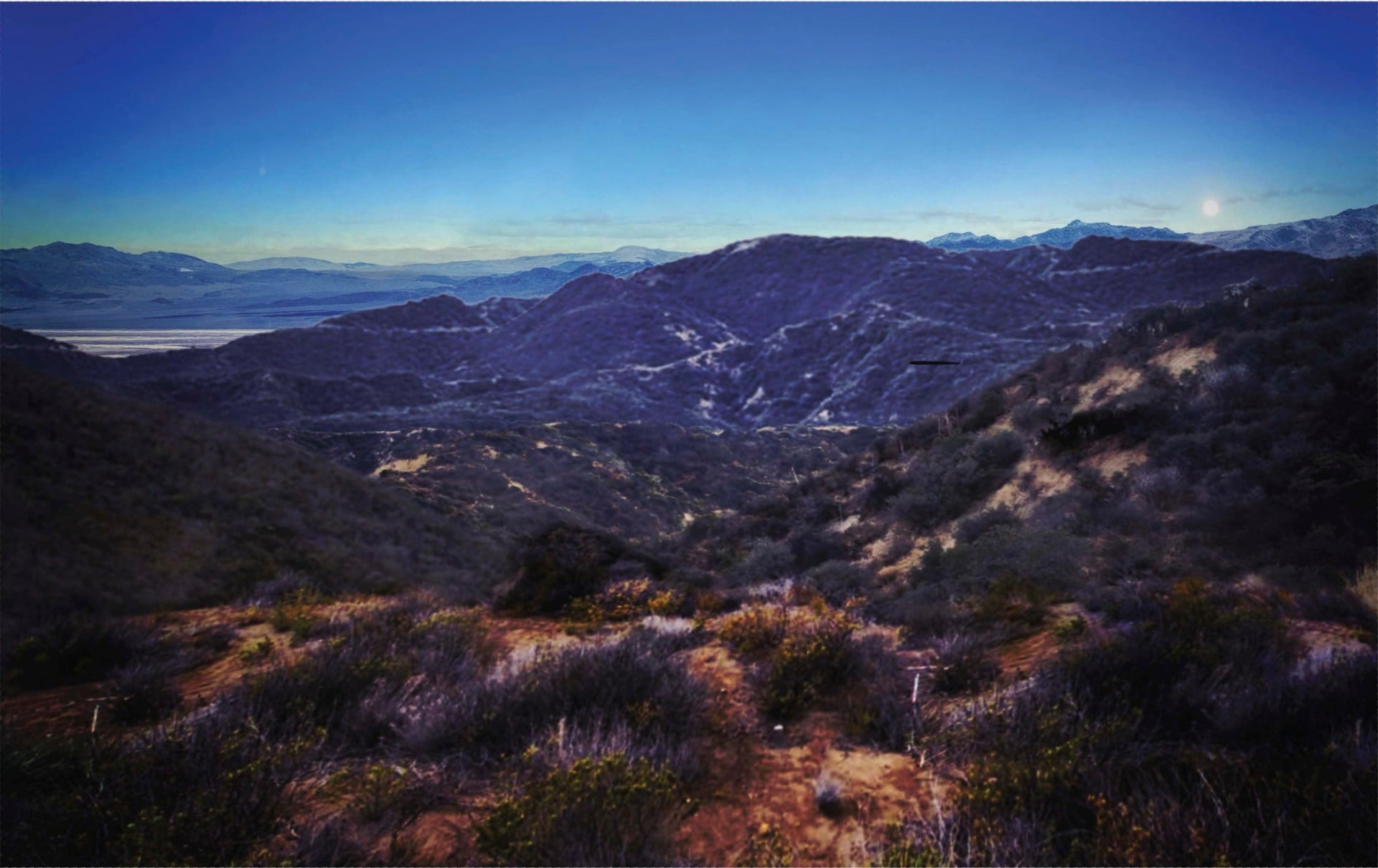
Nine images showed a black triangle against desert ridgelines. Analysts treated them like evidence, not art.
Gizmodo ran those images through SynthID.com, which detects invisible watermarks from AI tools tied to OpenAI and Google. No SynthID watermark appeared. I told you that to make a point: the lack of a specific watermark proves nothing except that those images weren’t stamped by those particular services. They could still be produced by other AI vendors, composited in Photoshop, or captured on-device.
The images play as sequential frames and, when scrolled quickly, shift position like a skater cutting ice—clean, precise, and harder to explain away as hand-held camera shake. That motion bolsters the witness reports of rapid banking and a silhouette that flattened into a triangle as it turned. Still, the report itself offers no chain-of-custody for the photos, and the FBI notes authenticity questions remain unresolved.
Could this be a secret military drone?
Yes. It could also be a foreign prototype, an advanced U.S. program, or something that defies current public engineering practice. The report’s specifics—near-silent flight, fixed horizontal alignment during vertical ascent, and a rapid acceleration to high-speed—are signatures that raise questions about propulsion and control systems. Agencies like DARPA, the Defense Advanced Research Projects Agency, and private aerospace firms have long experimented with vectored thrust and novel materials, but the mechanics documented here strain what is commonly observable.
Witnesses reported no physical effects and no equipment interference. The absence of sensor anomalies is its own puzzle.
The DOD explicitly recorded no physiological effects—no nausea, headaches, dermal sensations, memory gaps, or visual disturbance—and no electromagnetic interference or sensor degradation on personal or agency equipment. That matters. If a craft can hover inches from personnel without producing any detectable field, you are left with two unsettling possibilities: a system that avoids known EM signatures, or an observation error that omitted subtle signals.
Public releases of UAP material, managed by AARO and the Pentagon, have built a slow, uneven record. The first wave of disclosures promised answers; instead they produced more rigorous questions and a new vocabulary—unidentified anomalous phenomena. I follow these dossiers because you and I both want to know whether these are adversary technologies, misidentified natural events, clever hoaxes, or something else entirely.
Do these reports prove extraterrestrial origins?
No single document released so far proves an extraterrestrial origin. What the releases do show is methodical observation and careful language from federal investigators. The Pentagon and FBI are treating these cases as potential national-security issues, and agencies are collecting imagery, witness statements, and equipment logs. As an investigative journalist, I want evidence you can reproduce and test; right now the public record gives us provocative data and honest gaps.
I’ve watched government releases evolve from sensational press conferences to dry, annotated PDFs that actually matter to analysts and engineers. You should treat the documents the same way: as the start of a technical conversation, not its end. If this is advanced adversary tech—say from a near-peer like China—or a classified domestic program, the national-security implications are obvious. If it’s something else, the stakes are no smaller.
I will keep tracking the public files, the tools investigators use (from SynthID to forensic labs), and the analysts who parse them. You can follow the original DOD and FBI releases, read independent analysis from outlets like Gizmodo, and watch how AI-detection tools are applied to imagery as part of the evidentiary process. What you should take away is simple: we are getting cleaner, more testable reports—but the explanation that satisfies all the details remains missing. Which is the more worrying possibility: a secretive program that outpaces our understanding, or something that doesn’t fit anything we’ve built?