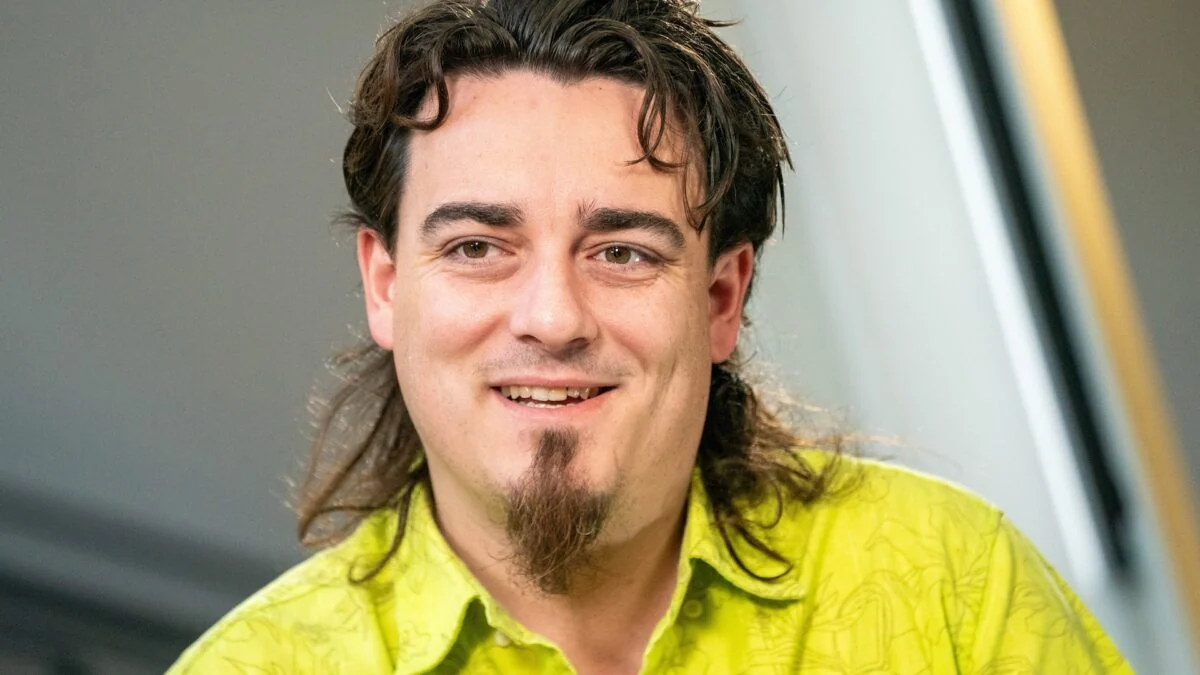
He stood on a small stage and smiled while friends hissed from the wings. The room smelled faintly of cheap cologne and expensive nerves. For a few minutes, Palmer Luckey had everyone guessing whether he would walk out of California or stand his ground.
I’ve followed these billionaire tantrums long enough that you can almost predict the choreography: threaten to leave, flood the airwaves with ads, hire consultants, then stay. You and I both know the reality is more boring and more telling — California isn’t just a tax jurisdiction, it’s a labor market, a brand, and a social scene rolled into one. If you want to understand why Luckey says he’ll stay while his peers threaten exodus, you need to read the politics and the incentives the same way you read a balance sheet.
On a sunny street in Silicon Valley, neighbors still spot Teslas and delivery robots before they notice a new tax policy.
That scene matters. It’s where talent, capital, and networks congregate — and where a one-time 5% wealth levy on billionaires will be felt as a headline more than a daily drag on operations. The proposed measure would extract a one-time 5% charge from the ultrawealthy; in return, California projects a windfall that could reshape Medi-Cal, public schools, and CalFresh funding. The billionaires’ instinct is defensive: marshal ads, threaten migration, and pressure peers to show “solidarity.”
Outside an L.A. fundraiser, a donor told me bluntly that leaving is performative.
That’s exactly what Palmer Luckey is saying when he refuses to flee. He told reporters he’s staying and wants to “fight for California,” even while criticizing the tax as harmful to companies he works with. I take his claim with a grain of skepticism — he’s not subsidizing everybody’s opinion — but you should also note who’s paying for the opposition: Building a Better California has poured more than $333,000,000 ($333 million; €306 million) into the fight.
Will billionaires leave California if the wealth tax passes?
Yes, some will threaten it — and some might actually change mailing addresses. But mass company migration is rare. Companies like Meta have floated the move to avoid higher state charges, and founders whisper about Miami and Austin, yet the specialized labor market and lifestyle trumps those pitches more often than not. The NBER working paper estimates the tax could bring roughly $100,000,000,000 ($100 billion; €92 billion) over five years — a shock that would take decades in lost income-tax revenue to match if everyone truly left.
At a San Francisco deli, staff talk more about housing and health clinics than billionaires’ resentment.
Those conversations matter for policy impact. Money from the levy is earmarked mainly for Medi-Cal, with portions for schools and CalFresh, and it’s meant to blunt federal rollbacks in support. If you’re focused on where the cash lands, note this: Medi-Cal frequently pays private insurers for coverage, so taxpayer funds ultimately route through corporate pockets too. The opposition frames the tax as an attack; the proponents frame it as a short-term repair job to keep the safety net intact.
How much money will the billionaire tax raise?
Estimates vary, but think in the neighborhood of $100 billion ($100,000,000,000; €92 billion) over five years if the measure passes and collections proceed as projected. Even aggressive emigration scenarios in economic models show a long erosion period; the immediate inflow beats the hypothetical long-term hit — which is precisely why many economists say worries about a sudden, crippling exodus are overblown.
Under a neon sign outside a tech meetup, someone joked that billionaires only threaten to leave when the Wi‑Fi is slow.
That joke lands because it senses the truth: lifestyle and human capital anchor people. Companies depend on specialized talent pools, venture networks, and proximity to partners — none of which transport cheaply. You should also watch how the messaging changes: founders talk about the tax as punishment while also pleading that their firms need workers and stable public services. Their duality is the political engine fueling the fight.
Who is Palmer Luckey and why is his stance important?
Luckey built a name in virtual reality and now runs defense-adjacent startups like Anduril and related hardware projects. His visibility matters because he’s emblematic of a new tech‑political class: loud, well-funded, and comfortable mixing public relations with policy. When someone like him refuses to join a mass exodus, it undercuts the narrative builders behind protracted ad campaigns on platforms like Meta and cable news.
I’ll tell you this plainly: the billionaire counteroffensive reads like a political playbook — expensive ads, a PAC with hundreds of millions, and threats of relocation meant to intimidate voters and lawmakers. The ads are effective at raising anxiety; the PAC’s spending felt like a velvet guillotine aimed at the ballot box. If the proposal passes, the money would be channeled into services that keep people housed and healthy and classrooms open — in other words, the basic conditions that maintain a reliable workforce. That funding could behave like a garden hose turned firehose for local health and education budgets.
So when Luckey declares he’ll stay, he muddies the spectacle. He won’t be the first billionaire to posture with a moving truck and then keep the beachfront house, and you should treat every public ultimatum as political theater with real economic edges. If these fights are about more than taxes — about who controls narrative, who pays for services, and who defines consequence — then maybe the question California voters should ask is whether five percent from the very top is protection for the rest of us or just another line on a balance sheet?