
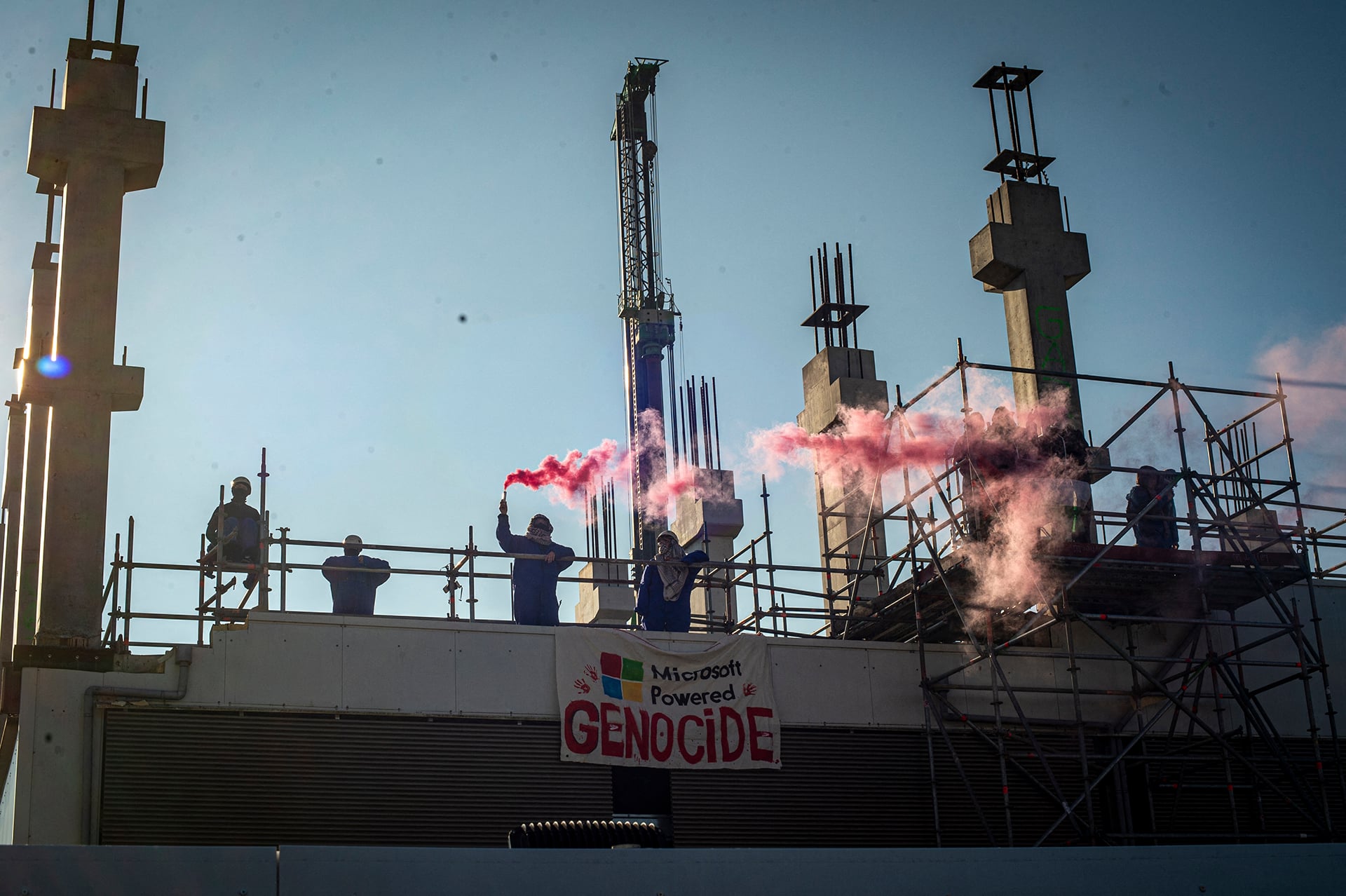
A flare smoked under a gray November sky as someone climbed the skeletal roof of the Microsoft site in Sloterdijk. You could hear the distant rasp of an angle grinder, then the hush that follows when a fence comes down. I watched footage that felt like a warning more than a stunt.
Cranes scrawled with graffiti: How the Amsterdam occupation unfolded
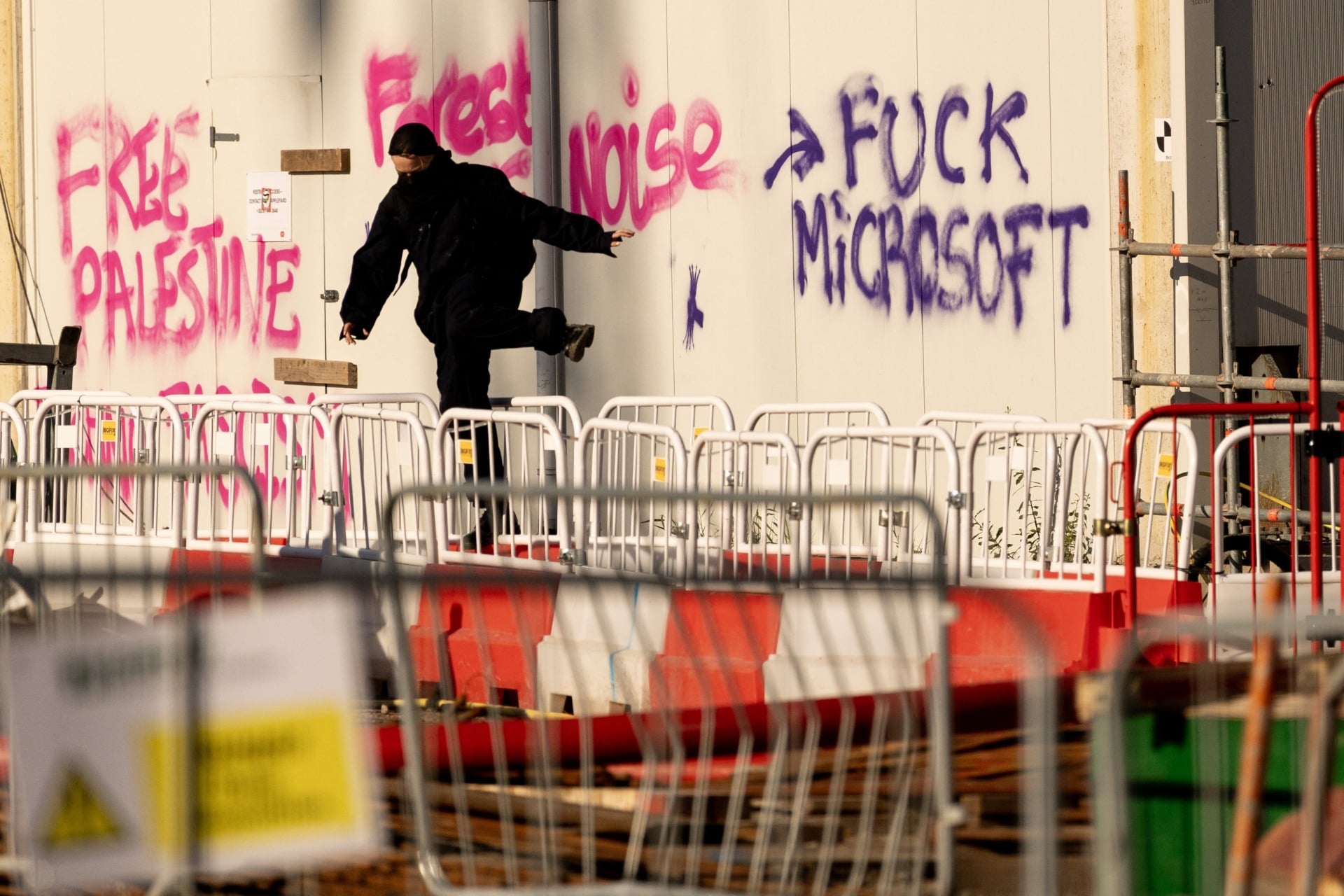
More than 100 people forced entry to a Pure Data Centres Group construction site on Friday after cutting open a gate, Amsterdam police said. Protesters climbed cranes, sprayed slogans and — according to officers — carried items including an angle grinder and climbing gear; at least one person was arrested.
Microsoft, set to be the sole tenant of the planned 78-megawatt facility, sent an email statement telling Gizmodo: “We respect their right to express those views peacefully. However, we do not condone any actions that are unlawful or that put people’s safety at risk. The wellbeing of everyone at and around the site, including workers, staff and neighbors is our first concern.”
“F*ck AI!”
Activists stormed Microsoft’s Amsterdam data centre site, broke through fences, climbed cranes, and sprayed graffiti. Riot police showed up with batons.
The site will reportedly use as much electricity as every home in Amsterdam. pic.twitter.com/EBu1992Rc9
— Chay Bowes (@BowesChay) November 6, 2026
Fences cut, tools confiscated: Who was on the ground and why
A campaigner with Fossil Free Netherlands told Bloomberg roughly 400 people had joined demonstrations connected to Friday’s action. The Dutch group Geef Tegengas — which helped organize the occupation — posted on Instagram claiming hundreds had blocked construction and painted the site with phrases like “Microsoft Powered Genocide.”
Geef Tegengas argued the center would consume electricity comparable to all the homes in Amsterdam and slow plans for 30,000 new dwellings. The Stop Dirty Data Centres coalition has called for a Europe-wide moratorium on large data hubs and listed protests across the U.K., Spain, France, Germany and Poland for November 6–7.
Why are people protesting data centers?
Because these projects touch money, power and scarce resources. Activists cite rising energy bills, water shortages, and climate impact. They also point to the role of AI and cloud platforms run by Microsoft, Amazon Web Services and Google Cloud in enabling surveillance, defense contracts and the concentration of economic influence.
Stop Dirty Data Centres argues elected officials should impose moratoria so communities can decide locally whether to approve such sites. That demand has political bite: local ballots in the U.S. this week favored restrictions in 40 of 41 contests, according to Ballotpedia.
Panels humming in the background: Energy, politics and the U.S. results
The protests come on the heels of U.S. midterms that shifted power in statehouses and, in many local votes, pushed back on new data center development. Reporting linked the broader tech sell-off — a rout that erased roughly $2.5 trillion (€2.3 trillion) in market value — to investor worries about regulation and political scrutiny of AI and cloud scale.
In Texas and Georgia, incoming governors signaled limits on new projects, echoing activists’ demands that the rapid expansion of data centers be paused while policymakers weigh public costs and benefits.
How much energy do data centers use?
Microsoft’s planned Amsterdam site is rated at 78 megawatts of capacity. That level of continuous demand can strain local grids and raise bills; it’s why cities debate zoning, sourcing and whether to require on-site renewables or heat-reuse systems tied to district heating.
Neighborhoods arguing in public: What this means for local politics
Voters are saying yes to limits more often than not. In dozens of municipal contests, residents backed restrictions ranging from temporary moratoria to outright bans. That friction is forcing companies and cities to negotiate over power delivery, water use and housing trade-offs.
Data-center politics are a high-stakes chess game: corporations, utilities, environmental groups and local governments move pieces with different time horizons. You should expect more local fights, more legal challenges and more activists occupying sites if developers keep moving at speed without broad buy-in.
Will data centers slow housing construction?
Local planners and activists argue that grid capacity and land used for data centers can constrain housing projects. Opponents of the Amsterdam site claim it will delay 30,000 homes; developers and Microsoft counter that infrastructure planning can balance both needs if regulators set clear rules on power sourcing and land allocation.
I report on these moments because they show where tech’s infrastructure meets everyday life: the cranes, the slogans, the court filings. The question isn’t whether data centers will exist — they will — but how you want their growth governed, paid for and policed; who will profit and who will be asked to sacrifice?
Will local communities in Amsterdam and beyond get a real seat at that table, or will decisions keep being made in boardrooms and back offices?