
I was on set the day the suit arrived: lights dimmed, a cloud of adhesive and foam, and a silence that felt taller than anyone in the room. You could tell it wasn’t just another prop—the air shifted around it. For two quiet weeks the shop stitched pieces together while the rest of the film held its breath.
I’ve watched the behind-the-scenes clips so you don’t have to squint through grainy photos. Here’s what I found when KM Effects and the creature crew handed VFX something that behaved like a monster in motion.
On set: The trailers promised motion before the monster
The trailers never showed Matt Hagen’s final face; they sold the transformation by what the body did. That was deliberate. When Clayface finally appears in the film, the payoff is an ending beat—so the costume had to read on camera as something alive, not just as sculpted foam.
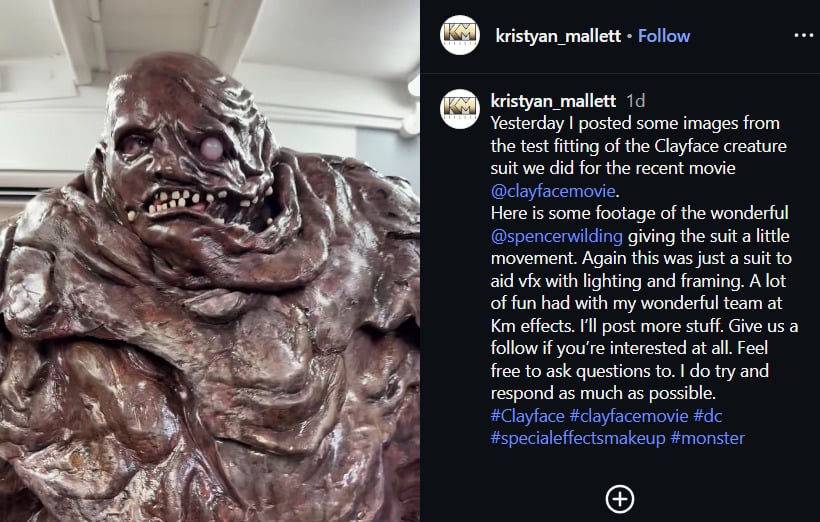
The studio kept the practical suit under wraps while cutting teasers that focused on contorting limbs, sticky hands, and the sense of a body losing its shape. When KM Effects later posted brief BTS clips and images—posts that were subsequently removed—fans got a peek at the method behind the mystery: a full practical suit crafted to guide lighting, framing, and performance before VFX finished the illusion.
You can smell the workshop before you see the finished head
The creative team did the old-school stuff: sculpt, mold, cast, and then hurry. Kristyan Mallett, KM Effects’ creative director, described prosthetic blood effects, fake dummies, props, and VFX lighting models among the deliverables. Francesco Fabiani posted both test and final sculpts of the head, calling it an honour to sculpt one of his childhood favourites.
What is the Clayface suit made of?
In short: layers. Individual clay-like pieces were sculpted, then molded and fabricated to fit together. Time pushed the shop away from coring during moulding; instead, they carved excess foam from the inside to create cavities so Spencer Wilding could move. The build combined foam armatures, molded heads, prosthetic surfaces, and practical effects—blood rigs, dummy parts, and lighting models—to give the VFX team something real to match to digital passes.
The manufacturing rhythm was compressed—about two weeks from start to wearable in the clip—so choices favored speed and performance over heavier, fully cored suits. The result reads on-camera the way a second layer of skin might read under stage lights: reactive, textured, and imperfect.
The performer’s presence makes the suit convincing
On set you hear footsteps long before you see them. That’s what Spencer Wilding brought. He isn’t anonymous muscle in a costume—he’s the performer whose gait, reach, and timing sell the thing.
Who plays Clayface?
Spencer Wilding—whose credits include playing Kilowog on the set of Green Lantern—wore the suit in motion tests. Because the practical pieces were built to accommodate his movement, the footage shows a creature that behaves like it has weight and intent, which gives the VFX artists realistic reference for reflections, subsurface scattering, and frame-to-frame interaction.
The suit was assembled like a mosaic of river stones—each piece rough, heavy where it needed to be, and slightly misaligned so the whole could breathe. That intentional imperfection made digital artists’ lives easier: when practical light behaves correctly, CG skin reads as believable.
How the practical feed shaped the VFX plan
The VFX team didn’t receive a lump of clay to guess from; they got a working model that moved. KM Effects built lighting models so the digital artists could map highlights and shadows. Mallett’s posts said the suit existed to help VFX figure out lighting and framing—the practical informs the digital, not the other way around.
Practical suits also let filmmakers test cinematic beats. If a prosthetic hand drips fake blood in-camera, the edit can rhythmically cut to that touch rather than inventing motion in post. That makes the eventual reveal feel earned.
Francesco Fabiani’s head sculpts (test and final) gave the production two things: a physical reference for animators and an emotional anchor for actors. When the creature can be looked at and reacted to in-camera, performances sharpen.
Small studio, big pedigree
KM Effects has recent credits on projects such as Supergirl and Neuromancer, which signals a shop comfortable moving between practical and digital workflows. Kristyan Mallett’s brief Instagram and the X (Twitter) clips that followed were the breadcrumb trail for effects fans who hunt process over spoilers.
That social traffic—Instagram posts, quick X clips, and artist pages—helps crews communicate craft to an audience hungry for process. You follow a sculptor like Fabiani or a creative director like Mallett to see how a childhood monster gets built for modern cinema.
The footage of Wilding moving in the suit reads like wet ink on paper: it spreads, clings, then sets into a readable gesture that VFX can trace. Practical work gives motion reference and human timing that purely digital builds struggle to match.
How do practical suits and VFX work together?
Practical and digital are partners. Practical suits provide tactile cues—occlusion, edge wear, specular highlights—for digital teams to sample and replicate. KM Effects supplied prosthetics, props, and lighting models; VFX matched textures and added the final goo, shine, and morphing that aren’t feasible at scale on set.
When both departments speak the same language—shared on-set charts, lighting passes, and reference plates—the blend sells. Short build windows force pragmatic decisions: cut foam to create movement, favor pieces you can photograph, and give animators frames that solve half their problems before post.
If you’re the kind of person who reads credits for the names of shops and sculptors, you saw KM Effects, Kristyan Mallett, Francesco Fabiani, and Spencer Wilding in the thread of this creature. These are the players who take a comic-book childhood memory and make its final form feel like an earned arrival.
So when you leave the theater, do you applaud the actor, the suit, or the invisible line where practical and digital meet—because which side won the performance?
CLAYFACE suit in motion
New BTS footage shows Spencer Wilding moving in the practical suit built by KM Effects.
Fun fact: Spencer also played Kilowog on set in 2011’s GREEN LANTERN.
KM Effects Ltd. pic.twitter.com/UcnWD9nkKF
— DC Film News (@DCFilmNews) November 6, 2026
Want more io9 news? Check out the best movies and TV shows to stream this month and all the upcoming sci-fi, fantasy, and horror books that should be on your radar.