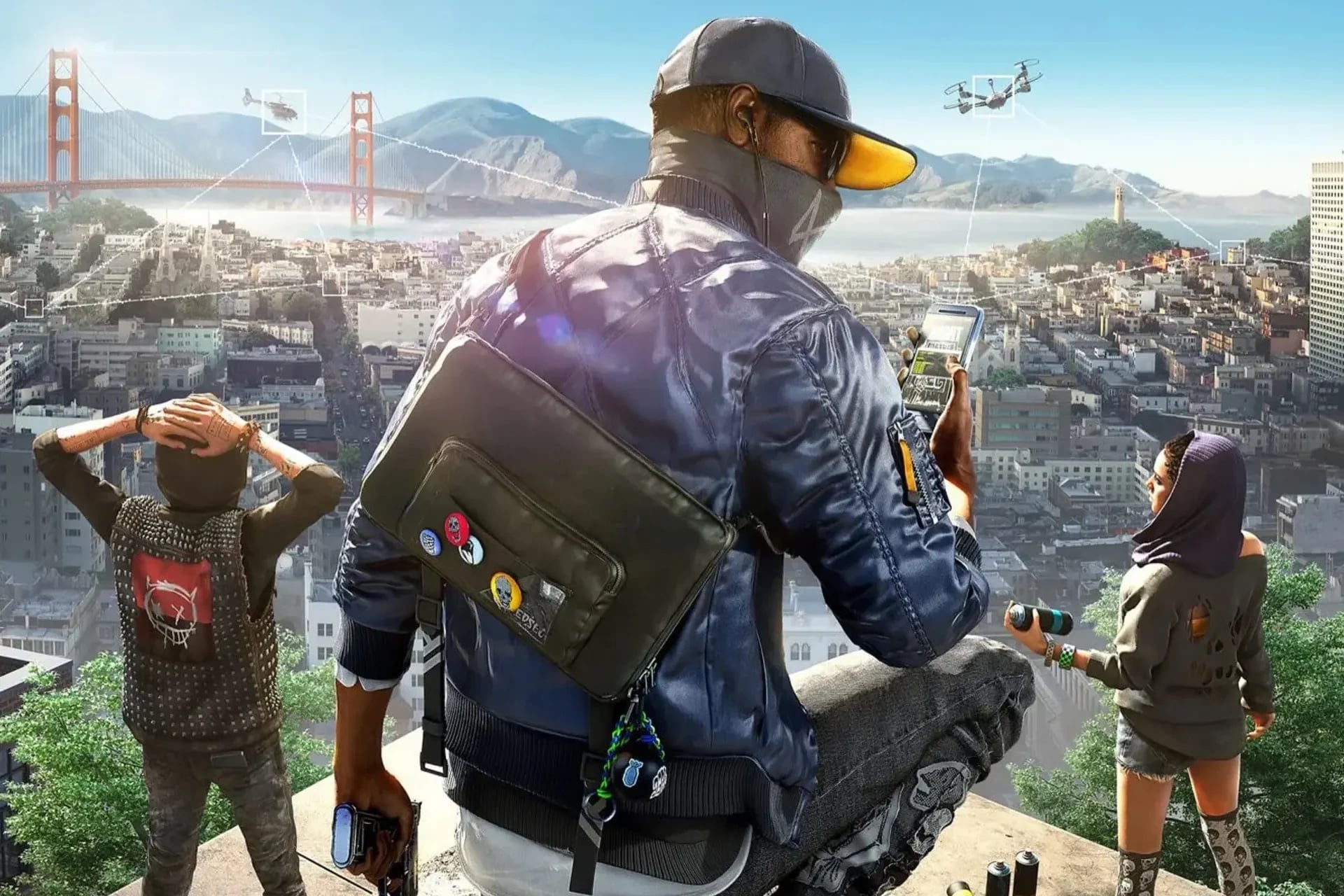
I watched a streamer upload a clip where Marcus Holloway dumped a CEO’s private messages into a live feed. You could hear the chat shift from giggles to a low, satisfied roar. In that moment it hit me: Watch Dogs 2 still remembers how to sting.
I’ve replayed it more than once, and I’m telling you straight: this is a game that refuses to be shy about who it punches. I’ll point out what still lands, what cracks show when you look closer, and why the fantasy of shaming tech moguls hasn’t aged out of taste or relevance.
Even the buses and billboards in real cities are tracking you. Why Watch Dogs 2’s satire still lands.
You don’t need me to remind you that your phone is already a tattletale. Watch Dogs 2 turns that nagging unease into a playground. Ubisoft Montreal’s DedSec isn’t subtle: they’re a streetwise crew that stages viral pranks and leaks to embarrass corporations and the police apparatus that enables them.
The game acts like a megaphone blasted through a server farm. That blunt instrument keeps the comedy sharp and the moral target clear. Marcus Holloway’s charm matters here — he’s a charismatic lead who carries the tone, and the world reacts like a social feed after a scandal: messy, loud, and oddly cathartic.
My feed still smells like PR spin. Where the game’s humor and anger meet friction.
You’ve seen companies hire reputation teams to scrub headlines. The missions in Watch Dogs 2 trade in that shame economy, and most of the time it feels earned. You help a movie star escape a cult, steal a prototype car from a set, or roast a pharma CEO in public — and the payoff is the city changing around you.
There are moments that bruise: the game kills off Horatio mid-story, removing a Black perspective that complemented Marcus. The loss isn’t just plot padding; it flattens ongoing moral friction the narrative could have exploited. Marcus can call in fake crime reports with no real-world fallout in gameplay terms — a dissonance between his backstory and what the mechanics let you do.
The writers also score unexpected wins. A Black trans ally is treated as a full character rather than a punchline. The Google stand-in sequence skewers tech culture with jokes about diversity (or lack of it) that sting because they’re familiar. And when the crew’s chemistry hits, the game hums — you can see why fans still quote its best set pieces.
Studios repurpose old franchises every year. What a Watch Dogs revival could look like.
It’s common to watch publishers dust off IPs and slap a new coat of paint on them. Ubisoft’s follow-ups — Legion and the 2020 experiments — aimed high with recruitable citizens and a sprawling London, but randomized protagonists scattered the narrative beats that made Watch Dogs 2 sing.
If Ubisoft tries another sequel or a re-release, they’ll juggle business pressure and studio politics. You should expect more crossovers: cameos from Aiden and Wrench, DLC that stitches named characters back into the plot, and marketing that leans on the outrage economy to sell headlines. I suspect the publisher will pitch it with the same PR muscle it once mocked in-game.
Is Watch Dogs 2 still worth playing in 2026?
Yes, if you want a game that ages like a sharp headline. It’s still entertaining on PlayStation, Xbox One, and PC and holds up as a character-led satire. The pacing is generous, the side missions are often funnier than the main beats, and Marcus remains a lead you want to spend time with.
What platforms is Watch Dogs 2 available on?
The game launched on PC, PlayStation 4, and Xbox One on November 15, 2016. If you’re replaying on modern hardware, expect improved performance on PC and backward-compatible consoles; search engines, Steam, and the PlayStation Store are the fastest routes to scores and mods if you care about tweaks.
The series wandered after this entry. Legion tried to expand the concept, and rumors of a re-release or film keep surfacing. You can see Ubisoft’s fingerprints everywhere — the company’s talent pool, the way it leans on franchise recognition, and the occasional misstep when studio pressures collide with creative aims.
There’s an odd pleasure in playing a game that lets you orchestrate schadenfreude against tech giants. Marcus and his crew make you want to pull one more prank, one more expose, because the system they fight feels familiar and infuriating. Marcus sometimes feels like a jazz solo cutting through static — improvised, unpredictable, and fun to watch.
If you want a compact, stylish critique of platform power that still lands laughs and moral teeth, Watch Dogs 2 is worth revisiting. Do you think a modern sequel would sharpen the satire or just dress it up for clicks?